

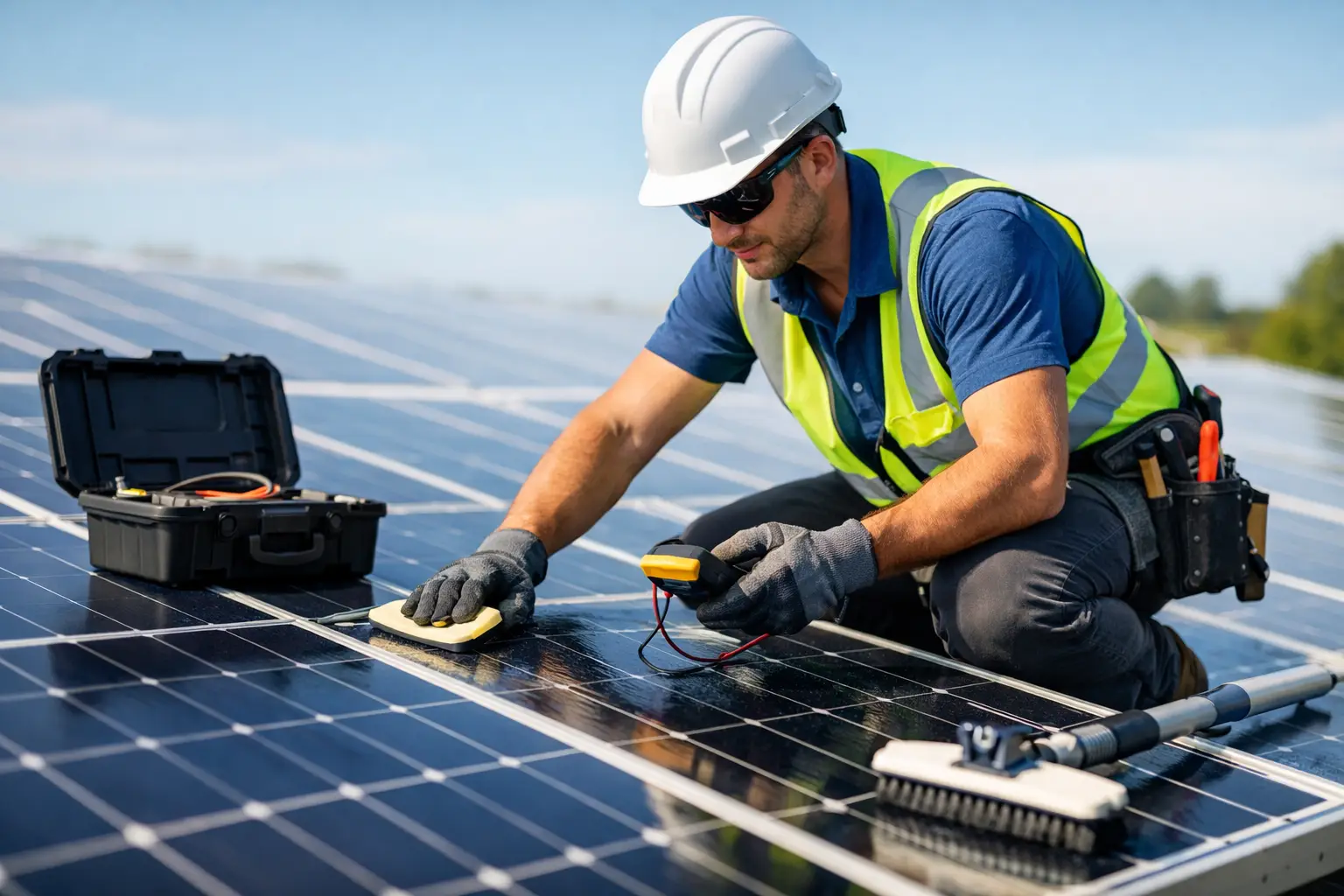
A drop in generation is often the first sign something is wrong. You may notice lower savings on your electricity bills, an inverter warning light, or panels that simply are not performing as well as they used to. That is where a solar panel maintenance service becomes valuable – not as an extra for the sake of it, but as a practical way to protect output, safety and the lifespan of your system.
For homeowners and businesses alike, the main concern is simple. If you have invested in solar, you want it working properly. Most systems are reliable and do not need constant attention, but that does not mean they should be ignored for years. Weather, dirt, wiring issues, roof movement and component wear can all affect performance over time.
What a solar panel maintenance service actually includes
A proper solar panel maintenance service is more than a quick clean. In many cases, cleaning is only a small part of the job. The real value comes from checking whether the full system is operating safely and efficiently.
A qualified installer or maintenance specialist will usually inspect the panels for visible damage, check mounting points and roof fixings, assess cabling and connectors, and review inverter performance. They may also test generation levels against expected output, look for signs of shading changes, and check whether bird activity or debris has created problems around the array.
If your system includes battery storage, monitoring equipment or an EV charger connected as part of a wider setup, those elements may need reviewing as well. Not every visit needs to be extensive, but it should be thorough enough to spot issues before they become expensive repairs.
That matters because a solar fault is not always obvious from the ground. A cracked panel, a loose connection or water ingress may not stop the whole system immediately. Instead, it can quietly reduce performance or create safety risks over time.
How often should solar panels be checked?
There is no single schedule that suits every property. A newer domestic system in a clear location may only need occasional inspections, especially if monitoring shows stable performance. A commercial system, or one on a roof exposed to heavy dirt, seagulls or nearby trees, may need more regular attention.
As a general rule, it makes sense to arrange a professional check if you notice a drop in output, receive inverter alerts, see physical dirt build-up, or have not had the system looked at for a few years. For some property owners, a periodic service offers peace of mind. For others, it is more reactive and based on system behaviour.
The right approach depends on your roof, your local environment and how easily issues can be spotted. Coastal areas, for example, may see faster build-up from salt and bird mess, while urban roofs can collect more grime. In places such as Cardiff, Newport or Bristol, conditions can vary enough that maintenance needs are not always identical from one property to the next.
Cleaning matters, but not always as much as people think
Many people assume solar maintenance mainly means washing the panels. Sometimes it does. If panels are heavily soiled, output can drop and cleaning may help restore performance. Bird droppings, leaves, moss and traffic film are common culprits.
But not every system needs regular cleaning, and not every cleaning job needs a specialist visit. The angle of the roof, local rainfall and surrounding environment all make a difference. Light dirt often washes away naturally in British weather, while stubborn build-up tends to collect in specific areas.
The key point is that cleaning should be done safely and properly. Climbing onto a roof without the right equipment is risky, and harsh methods can damage the panel surface. Abrasive tools, aggressive chemicals and high-pressure washing are all poor choices. If cleaning is required, it should protect the panels rather than add another problem.
Signs you may need a solar panel maintenance service
Some warning signs are clear, while others are easy to miss. If your inverter displays a fault code, that should be checked promptly. If your energy bills have risen even though your usage has not changed much, reduced solar generation could be part of the reason.
You may also notice visible dirt, bird nesting under the panels, loose mounting hardware, or damaged cabling. In some cases there is no obvious physical issue, but app-based monitoring shows output consistently below expected levels. That is often enough reason to arrange an inspection.
For commercial properties, maintenance can be even more important because a poorly performing system affects a larger energy bill and can be harder to assess without structured checks. A business with multiple roof sections or integrated battery storage may benefit from a more planned maintenance approach than a small domestic setup.
Why professional maintenance is usually the safer choice
Solar systems combine rooftop access with electrical equipment, so this is not an area where guesswork pays off. Even when the problem appears minor, the cause is not always straightforward. A dirty panel might be the issue, but so might a failing connector, an inverter fault or shading that has changed since installation.
Using a qualified professional helps reduce the risk of misdiagnosis. It also gives you a clearer picture of whether the system simply needs basic upkeep or whether a repair is required. That distinction matters, because paying for repeated cleaning will not fix an electrical fault, and replacing parts too quickly can mean unnecessary cost.
For many customers, the challenge is not deciding whether maintenance matters. It is knowing who to trust with the work. That is why accredited installers are so important. Working with MCS-accredited professionals gives added confidence that the service is being carried out by people who understand both performance and compliance.
Repair or maintenance – what is the difference?
The two often overlap, but they are not the same. Maintenance is about checking, preserving and optimising the system before major faults develop. Repair is what happens when something has already gone wrong and needs fixing.
A maintenance visit might identify a loose connector, degraded seal or blocked drainage area before it causes significant damage. Left unchecked, that same issue could turn into a repair call later. In that sense, maintenance can save money, though the amount varies by system and by timing.
It is also fair to say that not every property will see dramatic savings from routine servicing. Some systems run well for long periods with very little intervention. The benefit is often less about constant hands-on work and more about catching the right problems early.
Choosing the right solar panel maintenance service
The best provider is not always the cheapest one. A low-cost visit has limited value if it only covers a superficial look at the panels and misses the electrical side of the system. Equally, a more expensive package is not automatically better if it includes checks you do not really need.
What matters is clarity. You should know what the service includes, whether cleaning is part of it, whether inverter and performance checks are covered, and whether the provider can also handle repairs if a fault is found. It helps to ask whether they work with domestic and commercial systems, and whether they have experience with installations similar to yours.
If you are comparing providers, look for straightforward explanations rather than vague promises. A trustworthy company should be able to explain what they will inspect, what common issues they see, and when maintenance is genuinely worthwhile. That kind of guidance is often more useful than a hard sell.
For customers who want to save time, using a service that helps compare vetted local installers can make the process much easier. Instead of ringing around and trying to judge credentials alone, you can focus on qualified options and choose the one that suits your system and budget.
Solar panel maintenance service for long-term peace of mind
Solar is often described as low maintenance, and that is broadly true. But low maintenance does not mean no maintenance. A system that is checked when needed, cleaned properly when necessary, and repaired quickly when faults appear is far more likely to deliver the savings you expected from the start.
Whether you own a house, manage a commercial property or are responsible for a larger site, the goal is the same – keep the system safe, efficient and worth the investment. Good maintenance supports that without adding unnecessary complication.
If you are unsure whether your system needs attention, start with the basics. Look at your generation data, note any recent changes, and get professional advice before a small issue turns into a bigger one. A well-timed check can be the difference between a minor adjustment and a much more costly problem later.

