

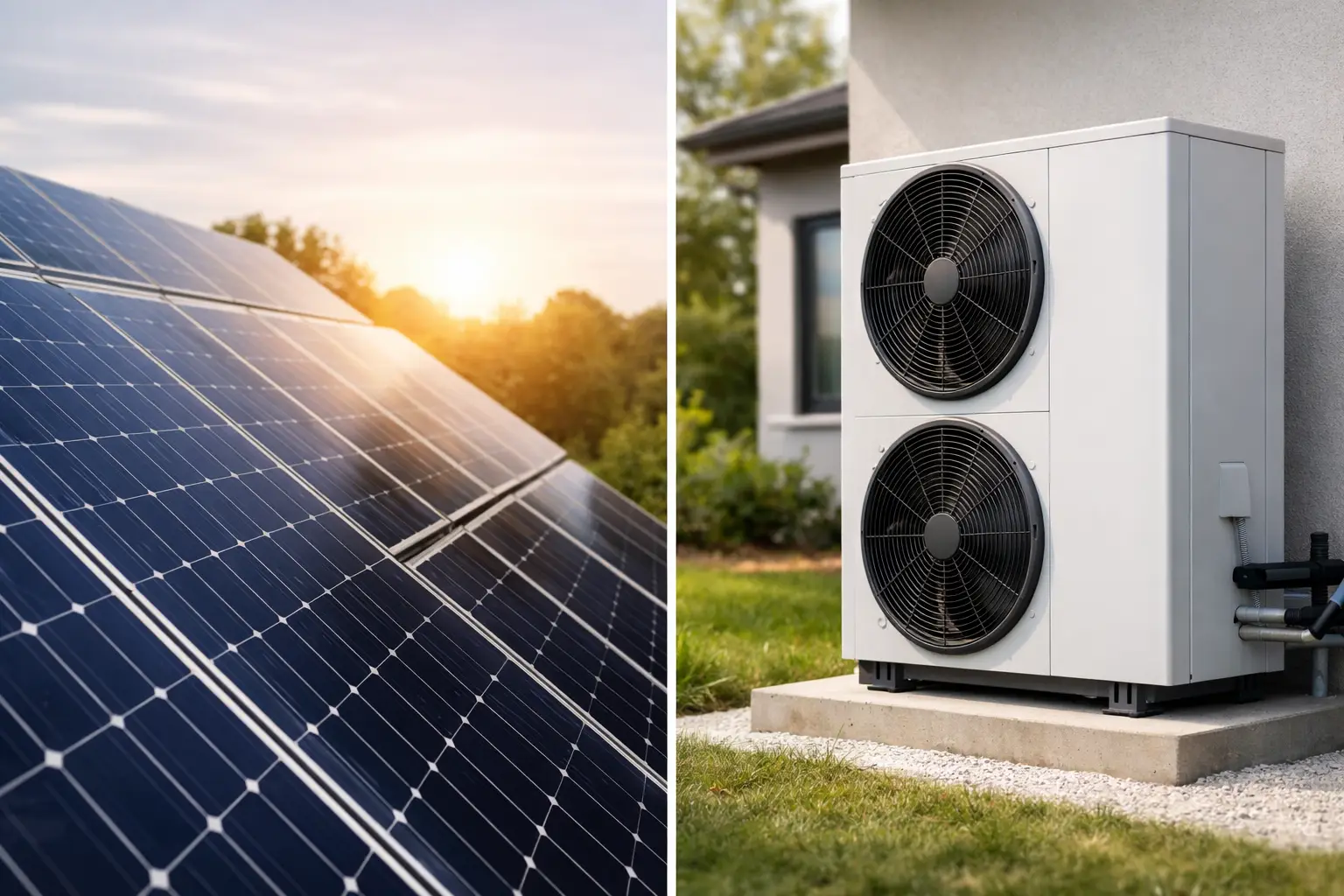
A rising electricity bill and a cold house can feel like two separate problems, but they often lead homeowners to the same question: solar panels vs heat pumps – which should come first? The straightforward answer is that they do different jobs. Solar panels generate electricity, while a heat pump provides heating and hot water. The best investment depends on what your property needs most, how it is currently heated and how you use energy.
For many homes and businesses across South Wales and Bristol, the strongest long-term result is not choosing one technology over the other. It is planning them together, in the right order, with a properly assessed system and an accredited installer.
Solar panels vs heat pumps: the key difference
Solar photovoltaic, or solar PV, panels convert daylight into electricity. That power can run appliances, lighting, EV chargers and, when conditions allow, parts of your heating system. Any electricity you do not use immediately can be exported to the grid, or stored in a battery for later.
An air source heat pump takes low-level heat from the outdoor air and upgrades it to warm your home and hot water. It runs on electricity, but it does not create electricity. A well-designed heat pump can produce several units of heat for every unit of electricity it uses, making it a far more efficient alternative to a conventional electric heater and, in the right property, a lower-carbon replacement for a gas boiler.
So this is not a like-for-like choice. Solar reduces the amount of electricity you need to buy. A heat pump changes the way you heat your property. Their value comes from solving different parts of your energy bill.
When solar panels are likely to be the better first step
Solar panels often make sense first when your main goal is cutting daytime electricity costs. They can be particularly attractive if your roof has a clear, suitably sized area with limited shading and your household or business uses a meaningful amount of electricity during the day.
A home office, an electric vehicle charged at home, a family that is regularly in during daylight hours, or a small business with daytime operations can all make good use of solar generation as it is produced. A battery can increase the proportion of power you use yourself, although it adds to the upfront cost and should be sized around your actual consumption rather than chosen as an afterthought.
Solar can also be a sensible starting point if your existing boiler is relatively new and reliable. Replacing a working heating system solely to install a heat pump may not be the most practical immediate move. Solar lets you begin reducing purchased electricity now while you prepare for a future heating upgrade.
The limits matter too. Panels generate most in the brighter months, while household heating demand is highest in winter. They will still produce electricity in colder weather, but output is lower. Solar alone will not replace a boiler or guarantee free heating through January.
When a heat pump may deliver more value
A heat pump can be the stronger priority where an old, inefficient or unreliable boiler is approaching replacement. It can also be a good choice for properties using oil, LPG or direct electric heating, where running costs may be high and fuel deliveries or price changes add uncertainty.
Heat pumps work best when the property can retain heat. That does not mean every home needs to be newly built, but it does mean insulation, draught-proofing and suitable windows deserve attention. A professional survey should assess heat loss room by room, rather than offering a one-size-fits-all unit size.
The system design is equally important. Heat pumps generally deliver heat at lower flow temperatures than gas boilers, so some homes need larger radiators, underfloor heating or targeted radiator upgrades to stay comfortable on the coldest days. Hot-water cylinder space is also normally required.
For a household with high heating demand, the biggest financial opportunity may be replacing expensive fuel and improving comfort, rather than reducing ordinary electricity use. In that case, a heat pump assessment should come before deciding on solar capacity.
The costs and savings are not directly comparable
It is tempting to ask which system has the fastest payback, but the calculation is different for each. Solar savings depend on system size, roof orientation, shading, electricity prices, export payments and how much generation you use on site. Battery storage, EV charging habits and daytime demand can shift the figures considerably.
Heat pump savings depend on your current heating fuel, the heat loss of the building, the quality of the design, electricity tariff, household temperature preferences and the pump’s real-world efficiency. A heat pump installed in a poorly insulated home, or set up incorrectly, may disappoint. A carefully designed system can provide reliable, efficient heating for many years.
Upfront costs also vary significantly by property. Solar pricing is driven by panel number, roof access, inverter choice, battery storage and electrical work. Heat pump costs reflect the unit, cylinder, pipework, radiator changes, controls and the work needed to make the building suitable.
Financial support and export arrangements can change, so it is wise to ask installers to explain what is available at the time of quotation and whether eligibility requires MCS accreditation. Do not compare headline prices alone. Compare system design, predicted performance, warranties, aftercare and what is included in the installation.
Why solar and heat pumps work well together
A heat pump increases a property’s electricity use, particularly during the heating season. Solar can offset part of that use, especially in spring and autumn, and can contribute to hot-water heating in summer. A battery may help store surplus daytime generation for evening use, but it cannot store enough summer energy to heat a home all winter.
The combined benefit is still compelling. Solar lowers the cost of running electric equipment over the year, while a heat pump can reduce dependence on fossil-fuel heating. Smart controls can help the system use solar generation when it is available, for example by heating a hot-water cylinder during sunny periods where appropriate.
The best approach is to avoid treating each installation as an isolated purchase. If you plan to add a heat pump later, tell your solar installer now. They can consider expected future electricity demand, battery options, inverter capacity and the space needed for equipment. If you are installing a heat pump first, ask for an electricity-use estimate that helps you assess future solar panel sizing.
What to check before you choose
Start with the property, not the product. A solar survey should consider roof direction, pitch, shading, structural suitability and your annual electricity consumption. A heat pump survey should include a detailed heat-loss calculation, radiator assessment, insulation review and discussion of your hot-water needs.
It is also worth looking at your energy habits. If you are out all day and use most electricity in the evening, solar is still valuable, but a battery, timer-based appliances or an EV charger may improve self-use. If you keep your home warm for long periods, have a large family using hot water, or operate a business from the premises, a heat pump design needs to reflect that demand rather than rely on broad averages.
For commercial properties, the pattern can be especially favourable for solar because offices, workshops and retail premises often consume power during daylight hours. Heat pumps can also be effective, but commercial heating requirements, building controls and peak demand require a more tailored assessment.
Choosing installers with confidence
Renewable technology should make life simpler, not leave you managing several contractors and conflicting recommendations. Ask for clear, written proposals that set out the equipment, expected generation or heat performance, installation timetable, warranties and any assumptions behind projected savings.
For heat pumps and solar, MCS-accredited installers provide an important quality marker. Accreditation does not remove the need to compare quotes carefully, but it gives reassurance that the installer works to recognised standards and may be necessary for certain schemes or export arrangements.
Solar Planet can help homeowners and businesses compare quotes from vetted local installers, avoiding the time-consuming task of approaching firms one by one. A comparison is most useful when every installer has the same clear picture of your property and priorities.
There is no universal winner in solar panels vs heat pumps. If your boiler is healthy and electricity costs are the immediate concern, solar may be the natural first move. If your heating system is due for replacement and your home is ready for lower-temperature heating, a heat pump could have the greater impact. When both fit your plans, a joined-up design can make each investment work harder. The most helpful next step is a proper survey that turns your roof, insulation, energy use and future plans into numbers you can compare with confidence.

