

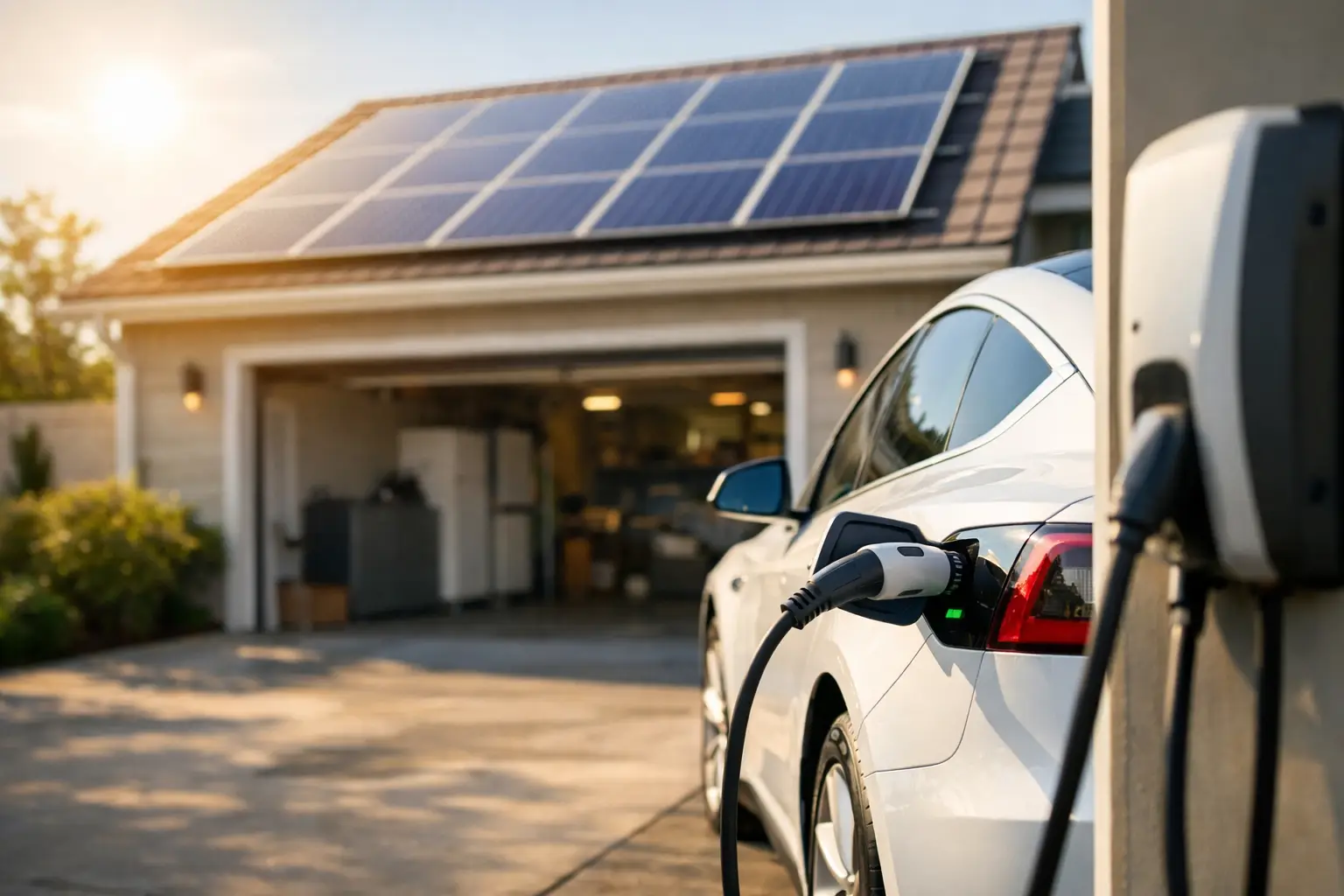
A car sitting on the drive for hours is an opportunity many households overlook. Can solar panels charge electric cars? Yes – and for many UK homeowners, pairing an EV with rooftop solar can turn surplus daytime generation into lower-cost miles. The important detail is that the system needs to be planned around when you generate electricity, when you are at home and how far you drive.
Solar panels do not send power straight from the roof into your car in a simple, fixed way. Your home uses solar electricity first, and an EV charger can use available generation alongside other appliances. When the sun is weaker, your charger can take electricity from the grid, just as it does without solar. Smart charging helps you make the most of the cheaper, cleaner power your system produces.
How solar panels charge electric cars
Your solar panels produce direct current electricity, which is converted by an inverter into usable alternating current for your property. That electricity can power household appliances, charge a home battery or supply your EV charger. Any shortfall comes from the grid automatically, so there is no risk of the car being left unusable simply because it is cloudy.
A standard home EV charger is usually rated at 7kW. A typical domestic solar array may generate between 3kW and 5kW at its peak, depending on its size, orientation and the weather. This means your panels will not always cover the full charging rate on their own. They can still make a meaningful contribution, particularly if charging is slowed or adjusted to follow surplus generation.
A smart charger is the practical link between the two. It can monitor how much solar power your home is producing and vary the charging speed accordingly. Rather than exporting spare electricity to the grid, you can direct it into the car battery. Some chargers also let you schedule overnight charging on an off-peak tariff, giving you a dependable low-cost option when solar output is limited.
What size solar system do you need?
There is no single system size that suits every driver. The right design depends on your roof, electricity use, annual mileage and charging habits.
As a broad guide, a 4kW solar panel system in the UK can generate roughly 3,400kWh of electricity per year, although the real figure varies by location, shading and roof direction. An efficient electric car may use around 0.25 to 0.35kWh per mile. In theory, that annual generation could cover a substantial share of 8,000 to 10,000 miles of driving if the electricity were available at the right time.
In practice, household demand takes a share first. Your fridge, cooking, washing, lighting and other appliances all draw from the same solar supply. Summer production is usually much higher than winter production too, while a typical commuter may need charging throughout the year. It is more realistic to see solar as reducing the grid electricity required to run your EV, rather than expecting it to cover every mile.
For households with higher mileage, an electric heat pump, or a growing family’s electricity use, a larger array may be worthwhile if roof space allows. A professional survey can assess output, cable routes, charger location and whether your existing consumer unit needs upgrading.
A worked example
Imagine a household in Cardiff with a 4kW solar array and an EV driven about 7,000 miles a year. If the car uses 0.30kWh per mile, it needs around 2,100kWh annually. The solar system may produce more electricity than that over the year, but not all of it will be available while the car is plugged in.
If the driver works from home a few days a week and uses a solar-aware charger, a good proportion of midday surplus could be put into the car. If the car is normally away during daylight hours, the household may instead rely more on a battery, weekend charging or an off-peak overnight tariff. The same panels can still reduce bills, but the savings profile will be different.
Do you need a battery to charge an EV with solar?
No. A home battery is useful, but it is not essential. If your car is plugged in during the day, a smart charger can use solar generation as it happens. This is often the most direct and cost-effective route to higher solar self-consumption.
A battery stores excess solar for use later, such as during the evening. It can help reduce household imports and may provide more flexibility if you arrive home after sunset. However, most home batteries are much smaller than an EV battery. A 5kWh or 10kWh home battery can support evening use, but it will not normally store enough energy to fully charge a large electric car.
There is also a financial trade-off. Adding battery storage increases the upfront cost, and electricity passes through extra charging and discharging stages before reaching the car. For some properties, putting surplus solar directly into the EV is the better use of generation. For others, especially homes with significant evening consumption, a battery can make excellent sense. Your installer should model both options rather than assuming one answer fits every household.
When solar charging works best
Solar EV charging is strongest when your car spends time at home in daylight. Home workers, shift workers, retirees and households with a second car often have a natural advantage. But it can work for commuters too, particularly with weekend charging and smart scheduling.
The following factors have the greatest effect on how much solar electricity reaches your car:
- The size, orientation and shading of your solar array
- Whether the car is plugged in while panels are generating
- Your household’s daytime electricity demand
- The charger’s smart solar matching and scheduling features
- Your annual mileage and the EV’s efficiency
South-facing roofs generally provide strong total output, but east- and west-facing arrays can be valuable for EV owners because they spread generation across the morning and afternoon. A west-facing roof, for example, may produce more useful electricity later in the day when you return home.
Can solar panels charge an electric car in winter?
Yes, but expectations should be realistic. Solar panels still generate electricity in winter, even on overcast days, but shorter daylight hours and lower sun levels reduce output. Your EV charger will top up from the grid whenever solar generation does not meet demand.
This does not undermine the value of solar. Summer surplus can be substantial, and year-round generation can reduce your property’s imported electricity. The most cost-conscious approach is usually to combine solar charging whenever available with a suitable time-of-use tariff for overnight or winter charging. Smart technology can prioritise surplus solar during the day and cheaper grid electricity at other times.
Choosing the right charger and installer
Not every charger offers the same level of solar integration. Look for a unit that can monitor generation, adjust charging speed, set schedules and work with your energy tariff. It should also be sized appropriately for your electrical supply and installed where cable runs are safe and practical.
The quality of the solar design matters just as much as the charger. Poorly planned systems can leave homeowners with unnecessary shading losses, undersized equipment or little clarity about expected output. Choosing an MCS-accredited installer provides reassurance that the work is completed to recognised standards and that the system is properly specified for your property.
Solar Planet can help homeowners compare no-obligation quotes from vetted local installers, making it easier to assess solar panels, battery storage and EV charging as one joined-up project. Comparing proposals also gives you a clearer view of generation estimates, equipment warranties and the likely payback for your circumstances.
A well-designed solar and EV setup is not about chasing perfect self-sufficiency on every journey. It is about making more of the electricity your roof produces, relying less on expensive grid power and building a home energy system that fits the way you actually live.

