

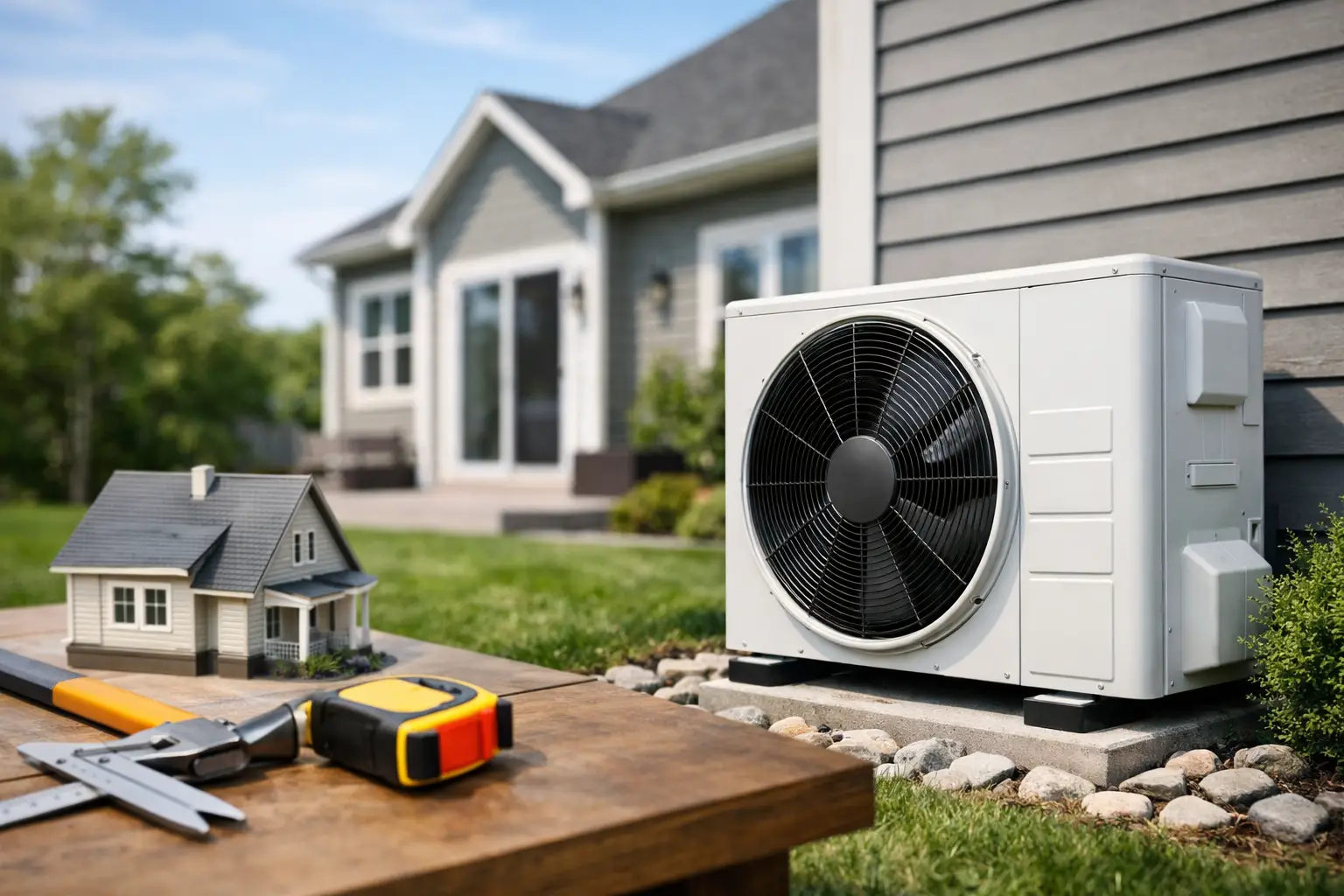
A heat pump that is too small can leave a home struggling to stay warm on the coldest winter days. One that is too large may cost more than necessary, cycle on and off too often, and run less efficiently. That is why the question is not simply what size heat pump needed for a three-bedroom house or a certain floor area. The right answer comes from how much heat your particular property loses.
For most homes, a properly designed air source heat pump will be somewhere between 5kW and 12kW. But this is only a broad starting point, not a specification to buy from. Two similar-looking homes in Cardiff or Bristol can need very different systems because their insulation, glazing, layout and heating habits are different.
What size heat pump is needed? Start with heat loss
Heat pump capacity is measured in kilowatts (kW). In simple terms, the kW figure tells you how much heat the unit can supply. Your home needs a system capable of replacing the heat that escapes through its walls, roof, windows, doors, floors and ventilation when outdoor temperatures are low.
An installer works this out through a room-by-room heat-loss calculation. It considers the size and construction of each room, the insulation present, window areas, air leakage and the local outdoor design temperature. This produces a heat-loss figure for the whole building and shows how much heat each individual room needs.
That detail matters. A living room with a large bay window may need more output than a small, well-insulated bedroom. The calculation helps an installer select not only the heat pump but also the correct radiator sizes or underfloor heating layout.
A rough rule based on floor area can be useful for early budgeting, but it is not reliable enough to choose equipment. For example, a 100m² home might need a 5kW heat pump after thorough insulation improvements, while another 100m² property with solid walls, draughts and older glazing could need 9kW or more.
The factors that change the heat pump size you need
Insulation and draughts
Insulation has the biggest influence on sizing. Loft insulation, cavity wall insulation, floor insulation and modern glazing all reduce heat loss. Less heat loss usually means a smaller heat pump can comfortably do the job.
Draught-proofing also counts. Uncontrolled gaps around doors, suspended floors and older windows can make a house lose warmth faster than expected. Ventilation is still needed for healthy indoor air, but it should be planned rather than left to gaps in the building fabric.
If you are considering insulation upgrades, arrange these before the final heat pump design where possible. Sizing a system around the home as it will be after improvements can avoid paying for capacity you no longer need.
Property age, construction and layout
A Victorian terrace, a 1970s detached house and a new-build home should not be treated alike. Solid-wall properties can lose heat differently from cavity-wall homes, while extensions, conservatories and rooms above garages may create colder areas that need extra attention.
Ceiling height matters too. A room with a high ceiling contains more air to heat, while open-plan spaces can distribute warmth differently from smaller closed rooms. The installer’s survey should account for these practical details rather than relying on the number of bedrooms alone.
Your radiators and flow temperature
Heat pumps work best when they can deliver heat at lower water temperatures than a traditional gas boiler. This is one reason they are so efficient, but it can mean some existing radiators need to be larger.
A radiator that keeps a room warm with boiler water at 70°C may not provide enough heat when supplied with water at 45°C or 50°C. Larger radiators, fan-assisted radiators or underfloor heating give off more heat at lower temperatures. They allow the heat pump to run efficiently without compromising comfort.
This does not mean every radiator must be replaced. A room-by-room assessment shows which emitters are already adequate and which ones need upgrading. Avoid accepting a heat pump size recommendation without this check, as radiator performance and heat-pump capacity are closely linked.
Hot water demand
If the system will also provide domestic hot water, the hot-water cylinder and household routine need consideration. A larger family, frequent baths or several showers used close together may require a larger cylinder or a different heating schedule.
Hot water demand does not always mean fitting a much larger heat pump. In many cases, it is better addressed by selecting an appropriate cylinder and allowing enough time for reheat. Your installer should explain how the proposed system will meet both space heating and hot-water needs in normal daily use.
The local climate
A heat pump must be sized for the colder conditions your home can reasonably experience, not just an average autumn day. South Wales and the Bristol area have relatively mild winters compared with some parts of the UK, but cold snaps still happen. The design calculation uses local weather data so the system can maintain the target indoor temperature when conditions are most demanding.
Typical heat pump sizes, with a sensible caveat
The following ranges can help set expectations. They are not a replacement for a professional heat-loss survey.
| Property situation | Common starting range | | — | — | | Small, well-insulated flat or terrace | 4kW to 6kW | | Average insulated two or three-bedroom home | 5kW to 8kW | | Larger three or four-bedroom home | 8kW to 12kW | | Large or poorly insulated property | 12kW+ or fabric upgrades first |
It is tempting to choose the next size up “just in case”. With heat pumps, bigger is not automatically better. Oversizing can cause short cycling, where the unit repeatedly starts and stops rather than operating steadily. That can reduce efficiency, increase wear and make the system harder to control.
Equally, undersizing should not be disguised by relying on an immersion heater to cover routine winter heating. An immersion can provide useful backup and hot-water support, but it is more expensive to run than the heat pump. A sound design makes sure the heat pump itself can meet the home’s calculated heating load.
Why a heat-loss survey is worth more than a quick estimate
A quality survey gives you a clear basis for comparing quotes. Ask prospective installers how they calculate heat loss, what flow temperature they are designing for, and whether the proposed radiators have been checked room by room. You should also understand the expected hot-water arrangement and any recommended insulation work.
For an MCS-accredited installation, a detailed design process is part of doing the job properly. It supports eligibility for relevant schemes where applicable and, more importantly, helps protect your comfort and running costs over the long term.
Be wary of anyone who recommends a heat pump solely from a photograph, a property listing or your old boiler’s output. Boilers are commonly oversized, especially in older homes, and their kW rating is not a dependable guide to what a heat pump should be.
Can solar panels affect heat pump sizing?
Solar panels can reduce the cost of electricity used by a heat pump, particularly in spring and autumn when there is useful daylight and heating demand. A battery may also help you use more of your own generation at certain times. However, solar panels do not reduce the amount of heat your home loses on a cold evening.
For that reason, solar should be considered when estimating running costs and the wider energy plan, not as a reason to install an undersized heat pump. The heat-loss calculation remains the foundation of the heating design.
Getting a recommendation you can trust
The best route is to compare proposals based on the same essentials: a full survey, transparent heat-loss figures, radiator recommendations, projected running costs and an explanation of the controls. Price matters, but the cheapest quote can become poor value if it omits the design work that makes a heat pump perform well.
Solar Planet can help homeowners compare no-obligation quotes from vetted, MCS-accredited local installers, making it easier to ask the right questions without spending weeks researching providers individually.
A well-sized heat pump should feel uncomplicated once it is installed: quiet, steady warmth through winter, dependable hot water and a system designed around your home rather than a generic estimate.

