Can You Get Free Solar Panels and Solar Panel Grants in 2023?
Solar panel grants from the government
Only one grant—ECO4—can assist you in buying solar panels.
As part of the Green Deal, the government once offered grants and loans without interest, however, this programme ended in 2015. In April 2019, the Feed-in Tariff also ended, and the new Smart Export Guarantee (SEG) kicked off in January 2020 to take its place.
Below are a few additional choices that can help you to purchase a solar panel system without going bankrupt.
| Grant/discount | Details | Eligibility |
|---|---|---|
| SEG | A programme supported by the government that requires major energy providers to reimburse homeowners for the renewable energy they feed back into the National Grid. | Anyone generating energy in any of the following ways (with a maximum capacity of 5 MW): • Solar panels • Wind turbines • Micro combined heat and power • Hydro • Anaerobic digestion |
| ECO4 | The government's Energy Company Obligation (ECO) program's fourth stage aims to assist low-income households that are unable to improve their homes and heating systems. | Anyone receiving one of the following benefits: • Income-based Jobseekers Allowance (JSA) • Income-related Employment & Support Allowance (ESA) • Income Support (IS) • Pension Credit Guarantee • Credit Working Tax Credit (WTC) • Child Tax Credits (CTC) • Universal Credit (UC) • Housing Benefit • Pension Credit • Savings Credit |
| VAT discount | A government initiative that allows homeowners to pay 0% VAT on energy-saving materials like solar panels. | Any of the following home improvements: • Solar panels • Air source heat pumps • Controls for central heating and hot water systems • Draught stripping • Ground source heat pumps • Insulation • Micro combined heat and power units • Wood-fuelled boilers |
| Regional grants | Numerous county-level grants are available for solar panels, which may persuade local residents to make the investment. | Each grant's eligibility requirements will vary, therefore it's important to visit the website of your local council to determine your eligibility. |
Get a free no obligation Solar Panels Installation quote
ECO4
You could be able to purchase solar panels under the ECO4 programme if the heating system in your home is powered by electricity, such as an electric boiler or air source heat pump. If you meet any of the following requirements, you are eligible to participate in the government-funded initiative, which launched in July 2022 and will last through March 2026:
- Your household earns less than £31,000 per year
- You’ve been referred by your energy provider, local authority, or doctor
- You receive certain benefits
0% VAT for solar panels
Homeowners won’t be charged any VAT on energy-saving equipment like solar panels from April 2022 to March 2027.
The following eco-friendly house improvements are subject to the new rate:
- Solar panels
- Air source heat pumps
- Controls for central heating and hot water systems
- Draught stripping
- Ground source heat pumps
- Insulation
- Micro combined heat and power units
- Wood-fuelled boilers
Prior to the most recent change, those receiving certain benefits or if the cost of the goods or materials was less than 60% of the cost of installation were subject to a 5% VAT rate instead of the previous 20% rate that applied to energy-saving materials.
This 0% rate will result in savings of £240 for the typical home when purchasing new solar panels, which should entice Britons to join the solar revolution and lower their carbon emissions and energy costs.
Get a free no obligation Solar Panels Installation quote
The Smart Export Guarantee (SEG)
The void created by the defunct Feed-in Tariff has been filled by the Smart Export Guarantee (SEG). However, the SEG will ensure that energy companies compensate homes for any solar-generated electricity that is not consumed, as opposed to being relied on payments from the government.
The SEG enables energy suppliers to choose their own prices, unlike the Feed-in Tariff, when Ofgem controlled the rates. This should encourage businesses to provide higher payback rates in a competitive market, improving the terms for the homeowner. In an ideal world, you’ll be relaxing in your solar-powered home as suppliers compete for your business.
Furthermore, compared to the Feed-in Tariff, the SEG is much fairer. Even though homes were exporting as much as 80% of their electricity back to the grid, the government used to only reimburse homeowners for 50% of their unused solar-generated electricity.
Energy providers now pay homes for every single bit of energy they send back thanks to the SEG, and the process is made much easier if your home is equipped with a smart metre.
How much can you earn with the SEG?
Homeowners are finally reaping the full rewards of their solar panels’ efforts thanks to the SEG. This is how:
- You save money on your energy bills using solar electricity, typically £522 annually.
- All excess solar energy is exported to the National Grid and purchased by an energy provider for up to 15p per kWh by businesses.
- Normally, you’ll receive £73 annually.
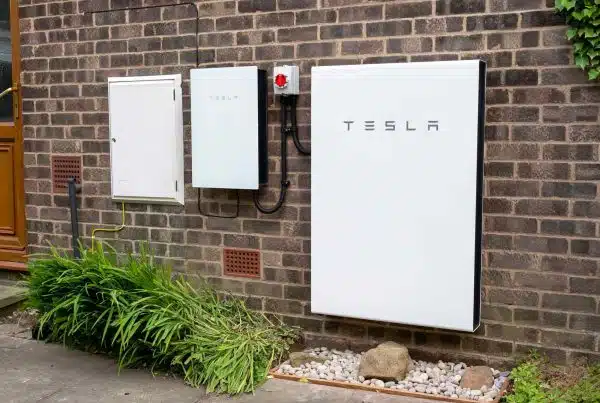
A “solar-plus-storage” system, which combines solar panels and a solar battery, is the best way to get the most out of your solar panels. While you’re away from home, a solar battery will store some of the electricity produced by the sun so that you can utilise it at night.
Visit our guide to solar batteries to learn how much a solar battery will cost you and to see the top types available.
In 2023, will I be eligible for free solar panels?
Sadly, the short answer is “no”
It’s unbelievable to think that back in 2010, when the Feed-in Tariff programme first started, companies would essentially pay for your solar panels. They would instal them on your roof, you would save money on your energy bills (and use all that green electricity), and they would keep all the Feed-in Tariff revenue. Although it was an effective system, the Feed-in Tariff payments were cut by 64% in 2016, which had a negative impact on the initiative, and it was shut down in 2019.
Is installing solar panels still worthwhile?
The short answer is yes. According to our calculations, the break-even point for a typical three-bedroom property has decreased to just 10.4 years since Ofgem’s new price cap went into effect in April 2022.
There are 15 years of pure profit since solar panels normally last at least 25 years.
Additionally operational is the Smart Export Guarantee, and solar panels continue to offer a wide range of important advantages.
Here are the main advantages of installing solar panels on your home:
Your energy bills will cost less money for you. Our calculations show that a 3.5 kW solar array (10 panels) will result in annual savings of £522 for the typical dwelling.
Environmentally friendly. Solar panels can aid in the emergency caused by human activity on the planet’s environment. 13 tonnes of CO2 will be saved by a typical 3.5 kWp solar PV system (as compared to a household that uses no renewable energy.
They’ll give you control over your own electricity. You won’t be as dependent on energy providers, and thus you won’t be subject to their pricing decisions. Although you’ll still need to purchase some electricity from the grid, a solar battery’s storage capacity gives you the chance to get fully off the grid.