

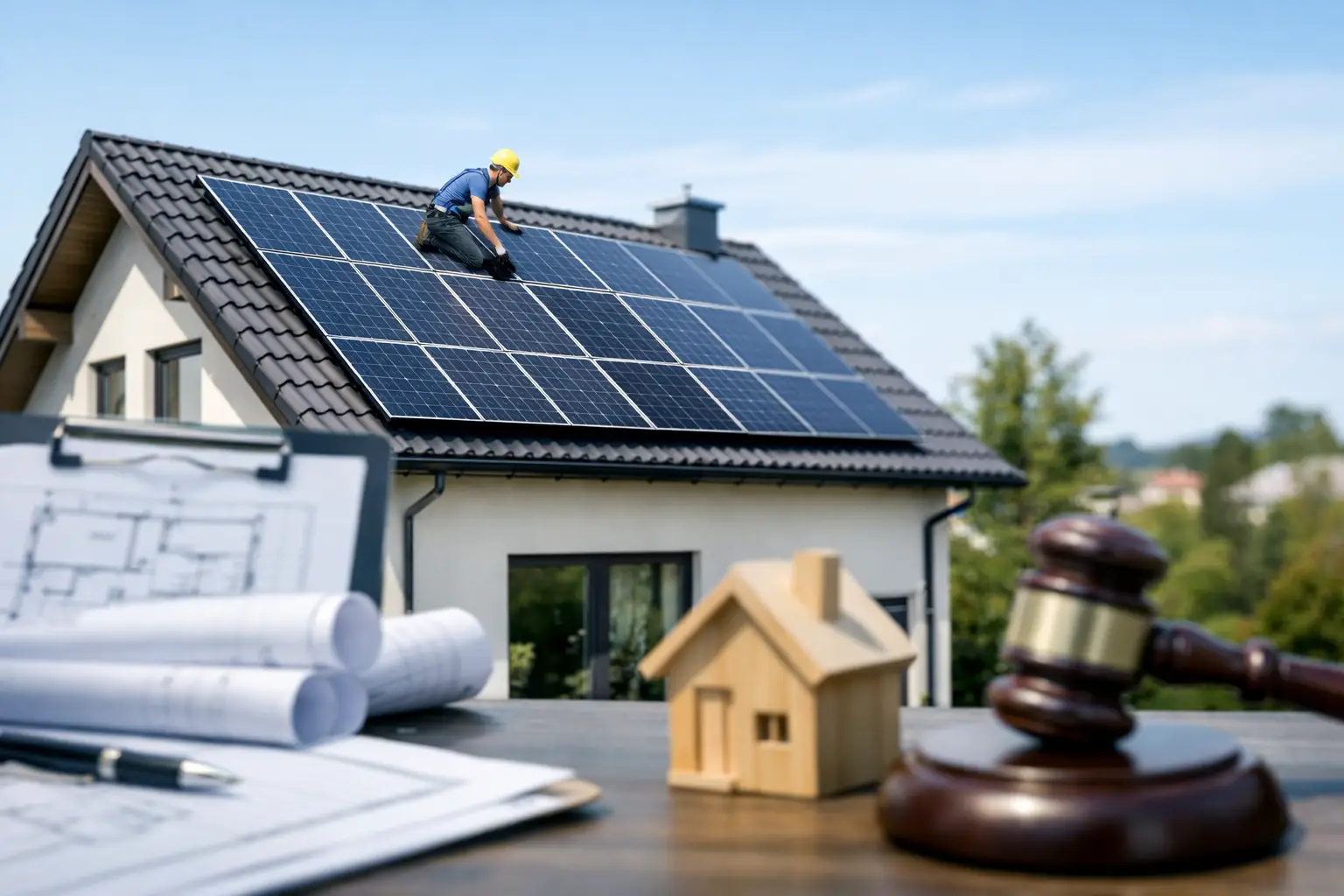
If you are ready to cut your electricity bills, the last thing you want is a planning issue slowing everything down. The good news is that when people ask, do solar panels need planning permission, the answer is often no for standard domestic installations. But there are exceptions, and they matter.
For most homes in the UK, solar panels fall under permitted development. That means you can usually install them without making a full planning application, as long as the system meets certain rules. Those rules cover where the panels sit, how far they project from the roof or wall, and whether your property has any special planning restrictions.
Do solar panels need planning permission for most homes?
In many cases, rooftop solar on a house does not need planning permission. This is especially true when the panels are fitted to the existing roof slope and do not stick out too far beyond the roof surface. The aim is to let homeowners make sensible energy improvements without adding unnecessary paperwork.
That said, permitted development is not a free-for-all. Solar panels should be sited, so far as practical, to minimise their effect on the external appearance of the building and the wider area. Equipment that is no longer in use should also be removed as soon as reasonably practical. These are standard expectations, but they can become more relevant in sensitive locations.
If you own a fairly typical house in Cardiff, Newport, Swansea or Bristol, and the panels are going on a normal pitched roof, planning permission is often not the main hurdle. The bigger practical questions are usually roof suitability, system size, and making sure the installer follows current building and electrical standards.
When planning permission may be required
There are several situations where the answer changes from probably not to possibly yes. This is where it pays to check before booking an installation.
Listed buildings and protected areas
If your property is listed, the planning side becomes more sensitive. Even where solar is technically possible, listed building consent may be needed, and local authorities will look closely at how the panels affect the character of the building.
Homes in conservation areas, World Heritage Sites, or similar designated locations may also face stricter controls. A common issue is roof panels on a wall or roof slope that fronts a highway. In these cases, planning permission may be required even if a similar installation elsewhere would be permitted development.
Flat roofs and stand-alone panels
Panels on flat roofs can still be allowed, but the layout matters. Height, visibility and the way the mounting frame is designed can all affect whether the installation stays within permitted development limits.
Stand-alone solar arrays in the garden are another area where the details matter. Small domestic ground-mounted systems may be allowed without full planning permission, but there are conditions around size, height, location and distance from boundaries. If you are considering this route because your roof is shaded or unsuitable, it is worth checking the exact rules early.
Flats, maisonettes and commercial buildings
Flats and maisonettes often have more planning complexity than houses because permitted development rights can differ. Leasehold arrangements can also create another layer of approval, even if planning permission is not strictly required.
For commercial premises, solar can still be straightforward, but it depends on the building type, location and installation method. A warehouse with a large hidden roof area is very different from a retail unit in a conservation area. In business settings, planning, landlord consent and structural assessment often need to be looked at together rather than separately.
Planning permission is only part of the picture
A lot of people focus on planning because it sounds like the big legal step. In reality, there are a few other approvals or checks that can be just as important.
Building regulations are one of them. Solar panel installations must meet structural and electrical requirements, even when planning permission is not needed. Your roof has to be able to take the load safely, and the electrical work must be completed properly.
Grid connection is another point. Smaller domestic systems are often straightforward, but some installations need permission from the Distribution Network Operator before they can be connected. A good installer will handle this for you, but it is worth knowing that planning approval and grid approval are different things.
If your home is leasehold, in a managed development, or subject to restrictive covenants, you may also need freeholder or management company consent. Again, that is separate from planning. It is one reason people can hear that solar is permitted development and still run into delays.
How to check if your solar panels need planning permission
The simplest approach is not to guess. Start by confirming what type of property you have and whether it sits in a designated area. If your home is listed or in a conservation area, treat that as an early warning sign to check properly.
Next, look at where the panels will go. A standard roof-mounted system on the rear or side roof slope of a house is often the easiest route. A front-facing installation in a sensitive area, or a large ground-mounted array, needs more caution.
After that, speak to an experienced installer who understands local requirements. This is where working with vetted, MCS-accredited professionals can save time. They should be able to flag common issues early, advise whether the design is likely to fall within permitted development, and tell you if a planning check is sensible before work starts.
For complete peace of mind, you can also contact your local planning authority directly or apply for a lawful development certificate. This is not always essential, but some homeowners like having written confirmation that permission is not required. It can also help later if you sell the property and a buyer’s solicitor asks questions.
Common misunderstandings about solar and planning
One of the biggest misconceptions is that all solar panels need planning permission because they change the look of the property. In practice, the planning system generally supports domestic solar, provided it is installed within the usual limits.
Another misunderstanding is that if your neighbour installed panels without planning permission, you can do exactly the same. That is not always true. Small differences in roof position, property type or conservation area status can change the answer.
There is also confusion between planning permission and installer accreditation. MCS accreditation does not replace planning rules, but it is still important. If you want confidence in installation quality and eligibility for certain export and battery-related arrangements, choosing an accredited installer is a sensible step.
Why getting the right advice early matters
A solar project usually moves fastest when the checks are done in the right order. There is no benefit in rushing to order panels before you know whether the roof is suitable, whether any permissions are needed, and whether the numbers stack up.
Good advice upfront can prevent redesigns, delays and extra cost. It can also help you avoid over-cautious decisions. Some property owners assume planning will be too difficult and drop the idea too early, when in fact the installation would have been perfectly acceptable.
That is especially relevant in areas with a mix of older housing, modern estates and protected streetscapes. Across South Wales and the South West, the planning position can vary from one road to the next, so broad assumptions are rarely as useful as a quick, property-specific check.
The practical answer for most homeowners
So, do solar panels need planning permission? For most standard house roof installations, usually not. But if your property is listed, in a conservation area, part of a flat or maisonette arrangement, or you are planning a non-standard installation, the answer may be different.
The safest move is to treat planning as one part of the decision rather than the whole decision. Make sure the design suits the property, check whether any local restrictions apply, and use an installer who can guide you through the process without making it feel complicated.
If you are serious about solar, clarity beats guesswork every time. A quick check now can save weeks later and gets you much closer to a system that delivers the savings you want with far less hassle.

