

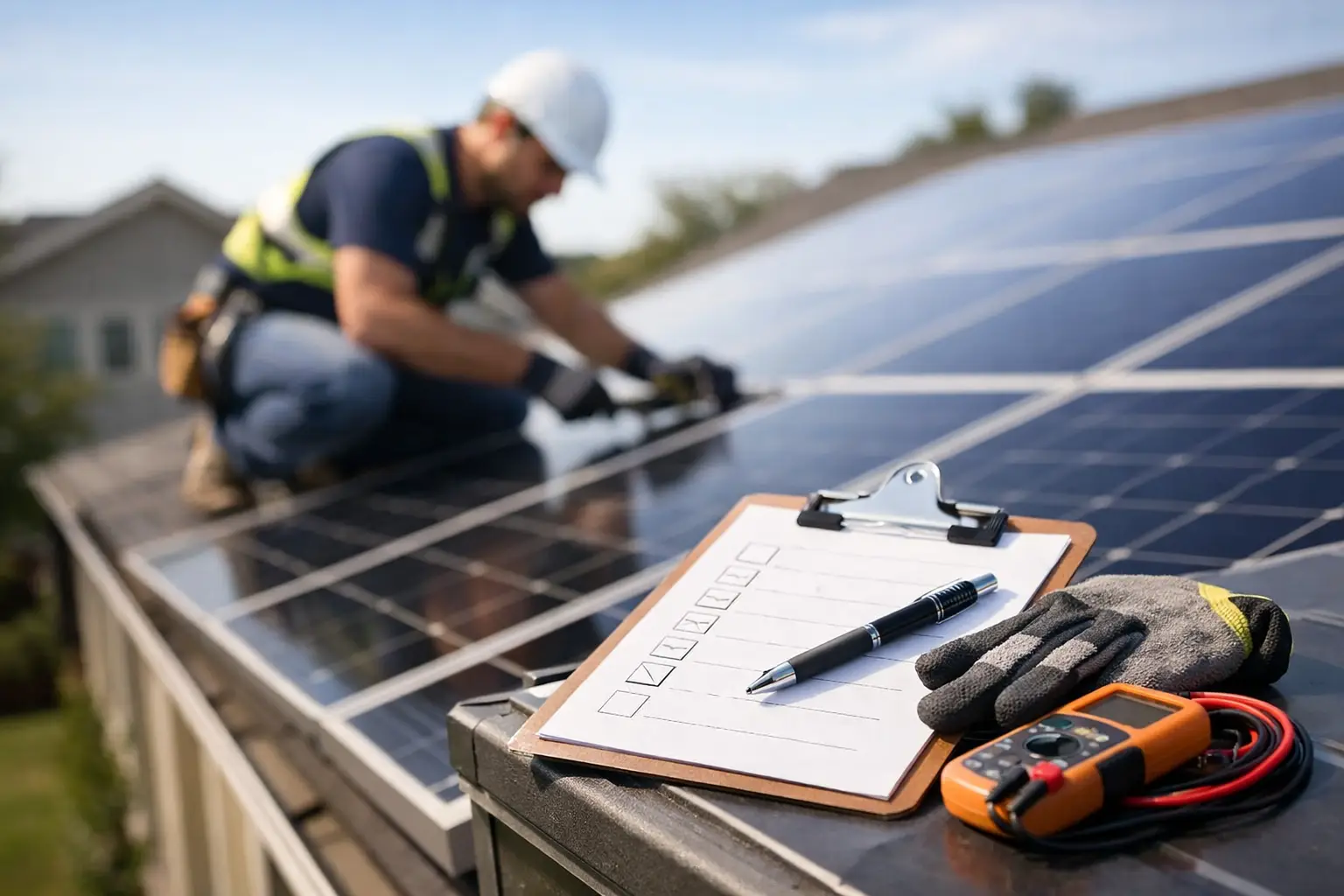
One missed warning light on your inverter can quietly chip away at your savings for months. A good solar maintenance checklist for homeowners helps you catch small issues early, keep your system generating properly and avoid the stress of wondering whether your panels are still doing their job.
The good news is that most solar upkeep is simple. You do not need to climb onto the roof or become an expert in electrical systems. What matters is knowing what to look for, what to leave to a qualified professional and how often to check each part of the system.
Why a solar maintenance checklist for homeowners matters
Solar panels are low maintenance, but they are not no-maintenance. Dirt, shading, loose cabling, inverter faults and ageing components can all affect performance over time. In many cases, the drop in output is gradual, which makes it easy to miss.
That matters because poor performance is not always obvious from your electricity bill alone. Seasonal weather changes, changes in your energy use and export tariffs can mask a problem. A simple routine gives you a clearer picture of whether your system is performing as it should.
For homeowners in places such as Cardiff, Newport or Bristol, where weather can swing from bright sun to wind and rain in a single week, visual wear and debris build-up are also worth keeping an eye on. Local conditions do make a difference.
Your core solar maintenance checklist
Start with the checks you can do safely from the ground or inside your home. These are the habits that make the biggest difference without adding risk.
1. Check your generation figures regularly
Look at your inverter display or monitoring app at least once a month. You are not looking for perfection. You are looking for obvious changes, such as output that seems unusually low for the time of year, missing data or a system that appears to have stopped generating altogether.
It helps to compare like with like. Compare this June with last June, rather than with December. Weather will always affect solar performance, so a fair comparison matters.
If your system includes battery storage, check charge and discharge patterns as well. A battery that is no longer charging properly may point to a wider system issue, or it may simply need its settings reviewed.
2. Look for warning lights or fault messages
Your inverter is often the first place a fault shows up. A red or amber warning light, an error code or repeated system restarts should not be ignored. Some issues are minor, but some point to electrical faults or communication problems that need professional attention.
Keep a note of any fault code and when it appeared. That small detail can save time if you need an engineer to investigate.
3. Inspect panels visually from ground level
Walk outside and look up at your panels every few weeks, or after bad weather. You are checking for visible dirt, bird mess, fallen leaves, cracked glass, obvious discolouration or anything resting against the panels.
Do not go onto the roof to inspect them closely. If you cannot see clearly from the ground, use binoculars or ask a professional to carry out a proper inspection.
A little dust is rarely a major issue in the UK, where rain often does some of the cleaning for you. Thick grime, heavy bird fouling or built-up debris is different and can reduce output.
4. Check for new shading
Trees grow. Neighbours add extensions. Antennas, chimneys and even satellite dishes can start to cast shade where there was none before. If one section of your roof is getting less sun than it used to, your system may produce less electricity than expected.
This is one of the more overlooked parts of any solar maintenance checklist for homeowners because the system itself may be working perfectly. The problem is the changing environment around it.
5. Keep an eye on roof and mounting condition
From outside, look for anything unusual around the mounting area, such as slipped tiles, visible gaps or signs that something has shifted after strong winds. Inside the loft, if accessible and safe, check for damp patches or daylight where it should not be visible.
This does not mean solar panels commonly damage roofs. In most well-installed systems, they do not. But roofs age, storms happen and it makes sense to notice changes early.
6. Check cabling where visible
If any cabling is visible near the inverter or meter area, make sure it looks secure and undamaged. You should not touch electrical wiring or remove covers. You are simply looking for obvious wear, loose trunking or signs of pests chewing through insulation.
Rodents are not common in every property, but where they are present, cabling can be vulnerable.
7. Review your electricity bill and export payments
Your system may still be generating while delivering less financial benefit than expected. Review your bill from time to time to see whether imported electricity has crept up unexpectedly. If you are on an export tariff, check that your payments or exported units look reasonable.
This is especially useful if your monitoring app is basic or unreliable. Sometimes the bill tells you there is a problem before the technology does.
Cleaning solar panels – when to leave them alone and when to act
Many homeowners worry about cleaning more than they need to. In Britain, rainfall usually takes care of light dust and pollen. Regular cleaning is not always necessary, and overcleaning can create avoidable risk if it involves ladders or roof access.
Cleaning becomes more worthwhile when there is obvious soiling, persistent bird droppings, sap or debris that rain is not shifting. Even then, safety comes first. Roof work should be handled by trained professionals with the right equipment.
Avoid abrasive tools, strong detergents or pressure washers. Panels are durable, but they are not designed for harsh treatment. If cleaning is needed, a specialist solar maintenance provider is usually the safer choice.
What should be checked by a professional
There is a clear line between homeowner checks and qualified electrical work. Anything involving internal components, wiring, isolators or roof access should be carried out by a competent professional.
A professional inspection may include testing electrical connections, checking inverter operation in detail, inspecting mounting integrity, reviewing system performance against expected yield and confirming that safety devices are working correctly. If your system is older, this becomes more valuable.
If you are not sure who to contact, it is wise to use an MCS-accredited installer or maintenance specialist. That gives you a better level of confidence that the work will be carried out properly and in line with recognised standards.
How often should solar maintenance happen?
A light monthly check is enough for most homeowners. That means reviewing generation, looking at the inverter and doing a quick visual inspection from the ground.
A more careful review every six to twelve months is sensible, particularly after winter or after severe weather. Professional inspections depend on the age of the system, the quality of the original installation and whether you have noticed changes in performance.
If your panels are newly installed and everything is running well, you may not need frequent call-outs. If your system is older, includes battery storage or has started showing faults, a more proactive maintenance plan makes sense.
Signs your system may need attention sooner
Some problems should not wait for your next routine check. If your system stops generating, your inverter shows repeated faults, your output drops sharply without an obvious weather explanation or you notice visible damage after a storm, arrange an inspection.
The same applies if you hear unusual sounds from the inverter, spot signs of water ingress near electrical equipment or suspect roof damage around the array. These are not watch-and-wait issues.
A practical record-keeping habit that pays off
You do not need a complicated spreadsheet, but keeping a simple record helps. Make a note of your monthly generation, any faults, cleaning dates and any professional visits. Over time, patterns become easier to spot.
This is particularly helpful if you plan to sell your property later. Buyers are often reassured by clear evidence that the solar system has been looked after properly.
When expert help saves time
Solar is meant to reduce hassle, not create it. If your checks raise questions, getting a few professional opinions can be far easier than chasing individual firms and trying to judge credentials yourself. For homeowners who want a quicker route to trusted local support, Solar Planet helps compare vetted installer options without the usual legwork.
A sensible routine does not need to be complicated. Check performance, watch for visible changes, leave risky work to accredited professionals and act early when something looks off. That is usually all it takes to keep your system working well and your savings on track.

