

If you are comparing solar quotes and one installer recommends a string system while another suggests microinverters, it is easy to feel like you are being asked to choose between two bits of jargon rather than two real design options. The string inverter vs microinverter decision matters because it affects how your system performs, what it costs upfront, and how it behaves over time on your particular roof.
For some properties, the answer is fairly straightforward. For others, especially roofs with shading, multiple roof faces or plans for future expansion, the better option depends on the layout more than the headline price. That is why it helps to look beyond the sales pitch and focus on how each system actually works in day-to-day use.
String inverter vs microinverter: what is the difference?
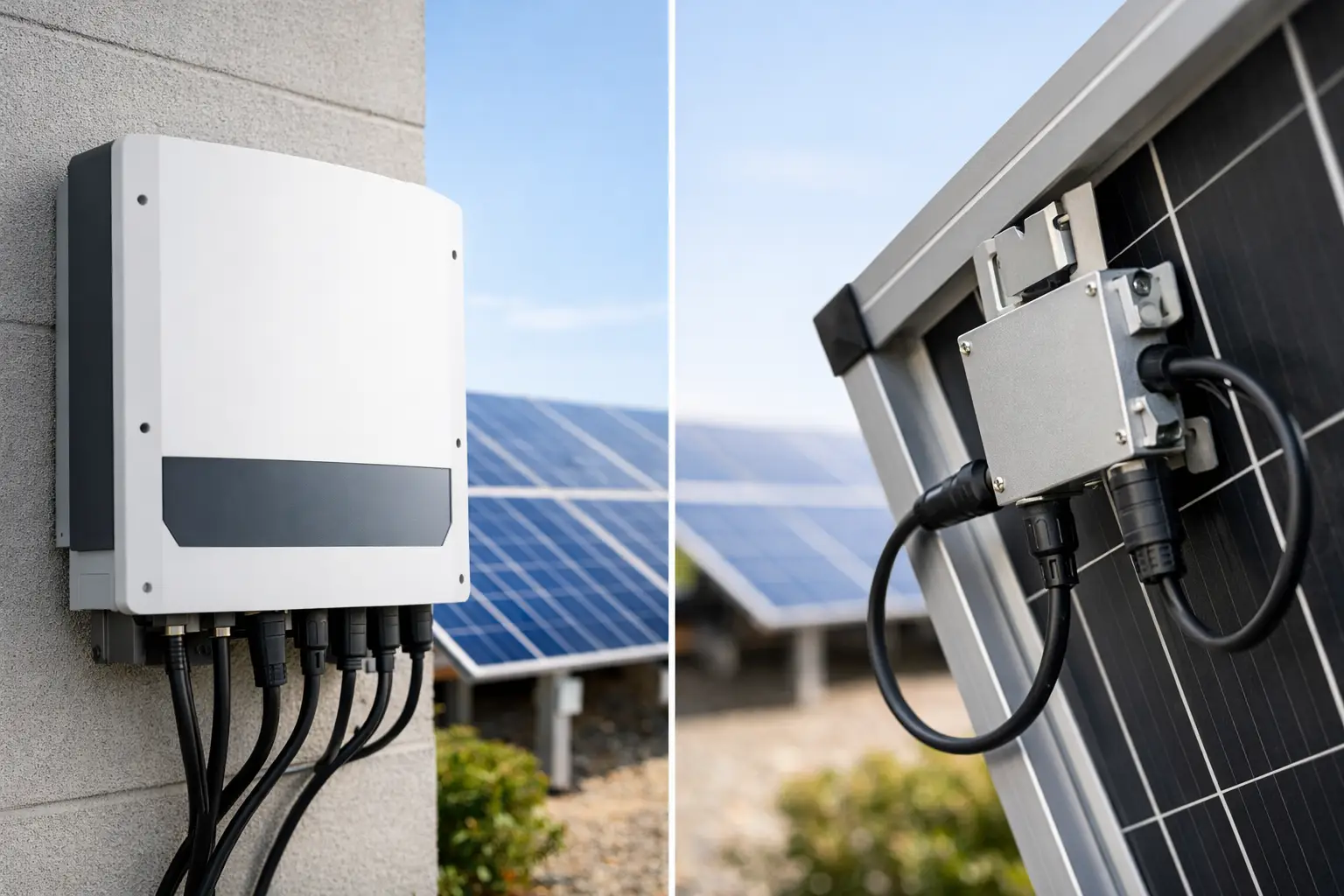
A string inverter system connects several solar panels together into a “string”. Those panels send DC electricity to one central inverter, usually fitted near your consumer unit, which converts it into AC electricity for use in the building.
A microinverter system works differently. Instead of one central inverter handling a group of panels, each panel has its own small inverter fitted underneath or alongside it. That means each panel converts electricity independently.
On paper, both systems do the same job. They turn the electricity generated by your panels into usable power. The difference is in where that conversion happens and how the system responds when one panel is underperforming.
With a string inverter, the performance of panels in the same string is linked. If one panel is heavily shaded or producing less than the others, it can reduce the output of the whole string. With microinverters, each panel works on its own, so one weaker panel has less effect on the rest.
When a string inverter makes more sense
For many homes, a string inverter remains the most cost-effective option. If your roof is simple, gets consistent sunlight, and has little or no shading from trees, chimneys or nearby buildings, a string system can deliver excellent value.
This is especially true on straightforward pitched roofs where all panels face the same direction and are installed at the same angle. In that situation, panels tend to perform similarly, so the central inverter can manage them efficiently without much energy loss from mismatch.
String inverters also tend to have a lower upfront cost. For homeowners focused on payback and keeping the initial installation price down, that can be an important factor. Commercial sites with large, open roof spaces often favour string systems for the same reason. If the array design is clean and uniform, the simpler setup can be very effective.
There is also a maintenance point worth considering. Because the inverter is usually installed in an accessible location, it can be easier to inspect or replace than roof-mounted electronics. That does not automatically make it the better long-term choice, but it is part of the picture.
When microinverters are worth the extra cost
Microinverters usually cost more upfront, but they can earn their keep on roofs that are less predictable. If your roof has panels spread across different orientations, such as east and west, or if part of the array is shaded at certain times of day, panel-level operation can improve overall yield.
This is often relevant on UK homes where roof space is not always ideal. A chimney stack, dormer, neighbouring property or mature tree can create partial shading that moves throughout the day. In places with tighter housing layouts, including parts of Cardiff, Newport and Bristol, that can make a real difference to system design.
Microinverters are also attractive if you want more detailed monitoring. Because each panel works independently, you can often see the performance of individual panels rather than just the output of the whole system. For some owners, especially commercial buyers or detail-focused homeowners, that extra visibility is useful.
They can also make future expansion easier. If you think you may add more panels later, perhaps after a loft conversion or a roof extension is completed, a microinverter setup can be more flexible. New panels do not have to match an existing string in quite the same way.
Performance in real UK conditions
The string inverter vs microinverter debate is often framed as if one option is always more efficient. In practice, the result depends on the roof and the site.
On a clear, unshaded roof with panels all facing the same direction, the performance difference may be modest. In that case, paying more for microinverters may not give a meaningful return.
On a more complex roof, microinverters can help recover energy that a string system might lose. That does not mean string inverters are poor technology. It simply means they are less forgiving when panel conditions vary significantly across the array.
This is why a proper survey matters. An experienced, MCS-accredited installer should assess roof orientation, likely shading, panel placement and future plans before recommending either option. If the recommendation comes without much discussion of your roof shape or shading profile, it is worth asking more questions.
Cost, maintenance and lifespan
Upfront cost is usually where the difference is felt first. String inverters are generally cheaper to install because there is one main inverter rather than multiple units attached to individual panels. That lower equipment cost can make the whole system more affordable.
Microinverters add more hardware to the roof, so they typically increase installation cost. For some households, that will be justified by better energy production. For others, it may simply lengthen the payback period without adding much practical benefit.
On maintenance, there is no one-size-fits-all answer. A central string inverter is a single point of failure, which means if it goes down, the whole system may stop producing until it is repaired or replaced. On the other hand, it is normally easier to access.
With microinverters, one unit failing usually affects only one panel rather than the entire system. That is a strength. But because the equipment is mounted on the roof, replacement can be more involved. Reliability, warranty terms and installer support matter here just as much as the technology choice itself.
Which is better for battery storage?
If you are planning to add battery storage, inverter choice should be discussed early. Not every battery works with every solar setup in the same way, and system design can become more specific once storage is involved.
A string inverter system can pair very well with battery storage, particularly when designed as part of an integrated package. Microinverter systems can also work with batteries, but the arrangement may differ depending on whether the battery is AC-coupled or DC-coupled.
This is where generic online advice tends to fall short. The right answer depends on whether you want solar only today, solar plus battery now, or a system that can be upgraded later. If your goal is greater energy independence rather than simply the cheapest install, it is worth designing around that from the start.
Questions to ask before you choose
Before you decide between string inverter vs microinverter, ask the installer why they are recommending it for your roof specifically. A good answer should mention shading, roof orientation, panel layout, expected generation and budget – not just brand preference.
You should also ask how the system will be monitored, what warranties apply to the inverter hardware, and how faults are handled if something goes wrong. If one quote looks cheaper, check whether that is because the design is simpler or because corners have been cut elsewhere.
Most importantly, make sure you are comparing like for like. Two solar quotes may use the same number of panels but very different electrical designs. Without understanding the inverter setup, it is difficult to judge value properly.
The right choice depends on the roof, not the trend
There is no universal winner in the string inverter vs microinverter debate. A string inverter is often the right fit for simple, unshaded roofs where value for money is the priority. Microinverters come into their own where roof design is awkward, shading is a factor, or panel-level performance matters more.
The best solar system is not the one with the most impressive brochure claims. It is the one designed properly for your building, your usage and your long-term plans. If you are comparing quotes, a trusted installer should be able to explain the trade-offs clearly and help you choose with confidence rather than guesswork.
A sensible solar decision starts with a design that fits your roof as it is now, while leaving room for where your energy needs may go next.

