

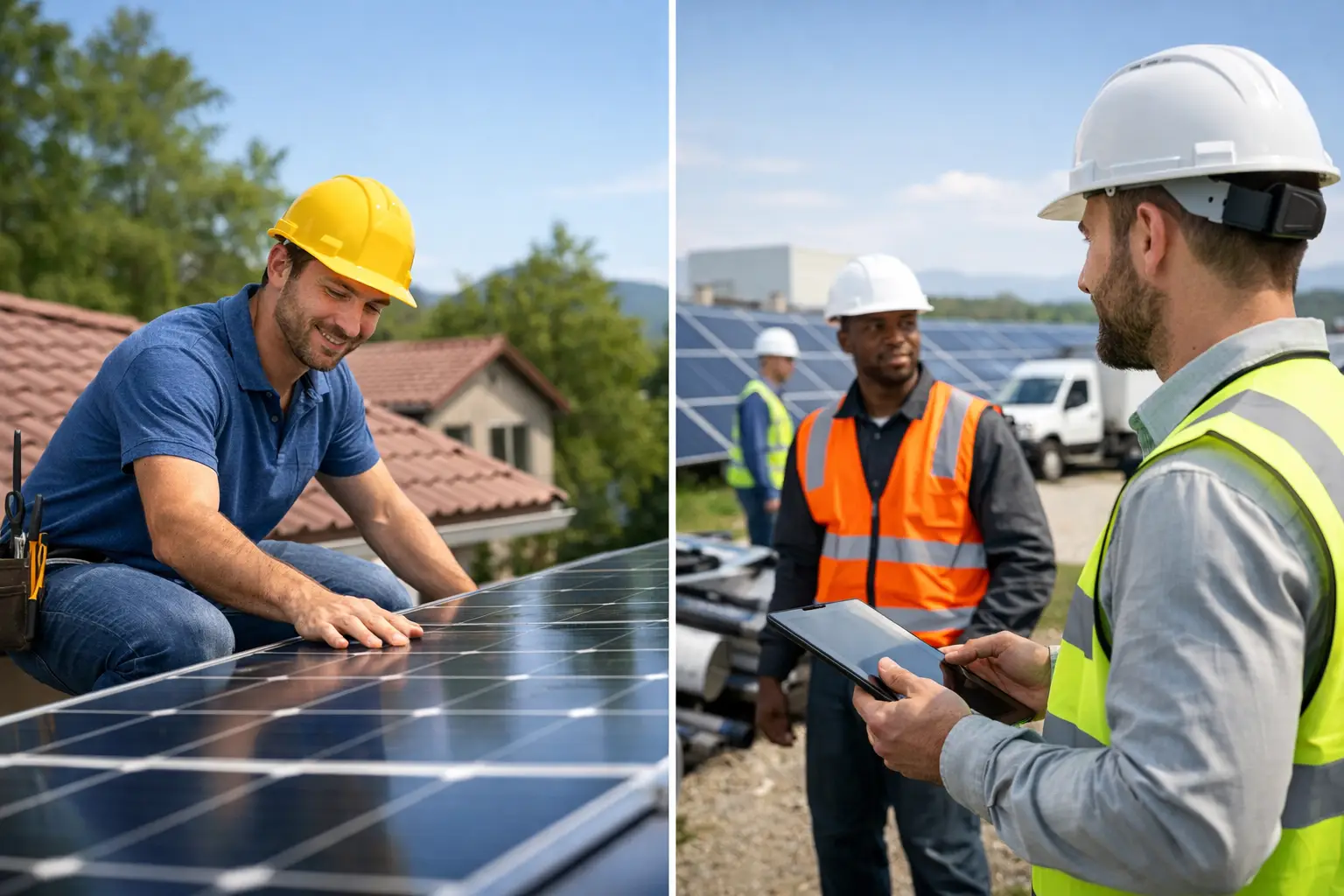
When you start getting solar quotes, one question tends to shape the whole decision – local installer vs national company. On paper, both can fit solar panels, batteries or EV chargers. In practice, the experience can feel very different, especially when you care about price, communication, aftercare and whether the system is actually designed around your property.
For most homeowners and business buyers, this is not really about size. It is about trust and fit. A bigger name can feel safer at first glance, while a local firm may offer more direct advice and a more personal service. The right choice depends on what matters most to you, how complex your project is, and how much value you place on ongoing support once the installation is complete.
Local installer vs national company: what is the real difference?
The clearest difference is usually how the job is handled from first enquiry to aftercare. A local installer often works within a defined area, knows the housing stock well, and relies heavily on reputation. That can mean more careful surveys, more practical recommendations and a stronger incentive to keep customers happy.
A national company may have broader brand recognition, larger marketing budgets and more standardised processes. That can be helpful if you prefer dealing with a well-known business or if you want the reassurance of a company with wide coverage. But scale can also create distance. The person who gives the quote may not be the person managing the installation, and support can sometimes feel more centralised than personal.
Neither model is automatically better. The important question is how each company delivers the basics: honest advice, qualified installers, clear pricing and reliable aftercare.
Why local knowledge matters in solar
Solar is not a one-size-fits-all purchase. Roof shape, shading, orientation, inverter placement, battery location and even local planning considerations can all affect the final design. That is where local knowledge can make a noticeable difference.
An installer working regularly in places such as Cardiff, Newport or Bristol is more likely to understand the common roof types in the area and the practical issues that come with them. They may already know what tends to work well on Victorian terraces, newer estates or small commercial units nearby. That familiarity can speed up surveys and help avoid awkward surprises on installation day.
Local firms can also be easier to reach if anything needs checking after the work is done. If your monitoring app stops reporting properly or you have a question about battery performance in winter, speaking to someone nearby can be far more reassuring than going through a national call centre.
Price is not as simple as it looks
Many buyers assume a national firm should be cheaper because it buys at scale. Sometimes that is true. Larger companies may negotiate strong supply deals or run national promotions. But lower headline pricing does not always mean better value.
A local installer may have lower overheads in other areas and can be more flexible in how they price labour, scaffolding or system design. They may also be less likely to push a standard package that looks attractive upfront but is not the best long-term fit for your usage.
This is where quote comparison matters. The most useful quote is not simply the cheapest. It is the one that clearly sets out panel brand, inverter specification, battery capacity, workmanship, warranties and what is included in the installation. If one company looks much cheaper than the others, it is worth finding out why. Sometimes it is a genuine saving. Sometimes key parts of the job have been left vague.
Service and communication often decide the outcome
Good solar projects usually feel clear from the beginning. You know who you are dealing with, what is being proposed and what happens next. Poor projects often show warning signs early – slow replies, vague surveys, rushed recommendations or pressure to sign quickly.
This is one area where local installers often perform strongly. Their reputation depends on word of mouth, local reviews and repeat business. That tends to encourage a more responsive, relationship-led approach. You are more likely to speak to the same people throughout the process, and that continuity can make decisions easier.
National companies can still offer excellent service, but the experience may be more segmented. Sales, survey, installation and aftercare may sit with different teams. That structure can work well when it is organised properly, but it can also lead to mixed messages if communication slips.
For homeowners who want a straightforward experience, and for commercial buyers trying to minimise disruption, clear communication is often worth as much as a small price difference.
Local installer vs national company for aftercare
Aftercare is where the decision becomes real. Solar is designed to last for years, so the relationship should not end when the panels are switched on. If an inverter fault appears, a battery needs checking or generation drops unexpectedly, you want support that is easy to access.
A local installer may have the advantage here because they can often arrange follow-up visits more quickly and know your system history first-hand. If they installed it, they usually understand exactly how it was configured and why certain choices were made.
A national provider may offer broader service infrastructure, but response times and ownership of the issue can vary. If support is routed through a central team, simple problems can take longer to resolve. That does not mean national aftercare is poor by default, only that you should ask more questions before signing.
Ask who handles warranty claims, whether labour is included for remedial work, and what happens if a component fails in year three, five or ten. Those answers tell you far more than a polished sales brochure ever will.
Accreditation matters more than company size
If you are choosing between a small local business and a larger national one, accreditation should carry more weight than brand size. For solar, battery storage and related technologies, working with MCS-accredited installers is one of the best ways to protect yourself.
Accreditation does not guarantee a perfect experience, but it is a strong baseline. It shows the installer meets recognised standards and helps give customers confidence in system quality, compliance and eligibility for relevant schemes where applicable.
That is why many buyers find the best route is not picking local or national in the abstract. It is comparing vetted, accredited options side by side. A trusted comparison service can save time by narrowing the field to installers who already meet those standards.
When a national company may be the better fit
There are cases where a national provider makes sense. If you are strongly reassured by a household name, prefer a highly structured process, or are managing sites across different regions, a larger company may suit your needs. Some commercial buyers also prefer dealing with providers that have wider operational reach and dedicated project teams.
You may also find a national firm offers finance options, product bundles or manufacturer relationships that are attractive for your project. If the quote is transparent, the accreditation is in place and the support terms are clear, there is no reason to dismiss that option purely because it is larger.
The key is not to assume scale equals quality. Ask the same practical questions you would ask any installer.
When a local installer may be the better fit
For many domestic installations, a local specialist is hard to beat. If your priority is personal service, tailored system design and easier access to aftercare, local firms often have the edge. That can be especially valuable if your roof is unusual, your electricity usage varies significantly, or you want thoughtful advice on batteries, EV charging or future expansion.
Local installers also tend to understand regional expectations. They know that customers want realistic timelines, tidy workmanship and straightforward answers. In areas where reputation travels quickly, that accountability matters.
For people who do not want to spend weeks researching contractors one by one, using a service that matches you with vetted local installers can offer the best of both worlds – local expertise without the hassle of doing all the screening yourself.
What to ask before you choose
Whichever route you take, ask who will carry out the survey, who installs the system, what equipment is included, what workmanship warranty is provided and how aftercare works in practice. Ask how long the installation is likely to take, whether scaffolding and monitoring are included, and whether the design is based on your actual usage or a standard package.
Most of all, pay attention to how the company answers. Good installers do not avoid detail. They explain things clearly, without jargon and without pressure.
If you are comparing local installer vs national company, the smartest move is usually not choosing by label alone. It is choosing the team that gives you confidence they will do the job properly and still be helpful after the panels are on the roof. That is usually where long-term value starts.

