

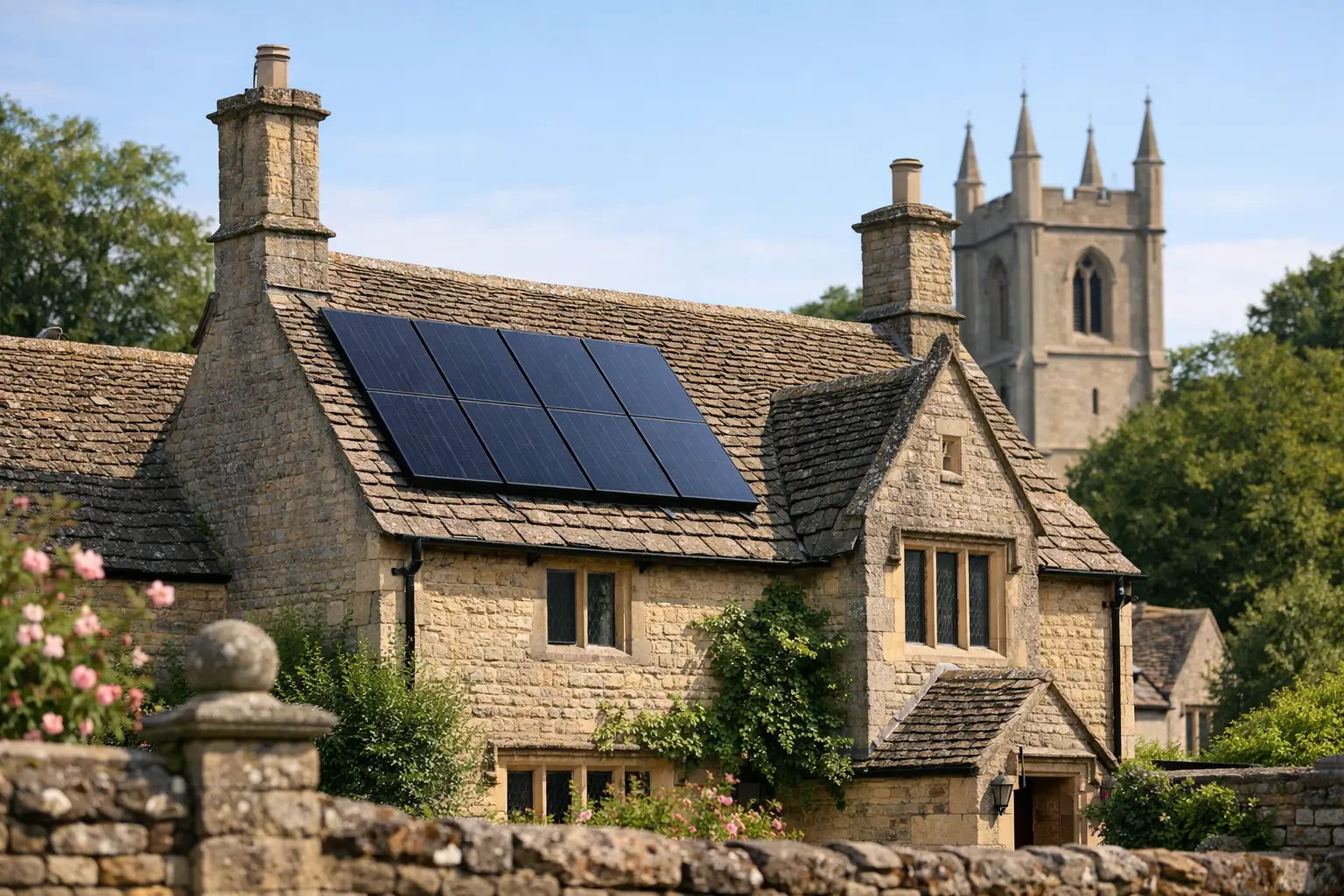
A listed home can still produce its own clean electricity, but solar panels for listed buildings need more care than a standard installation. The question is rarely a simple yes or no. It is whether the proposed system protects the building’s historic character, avoids unnecessary change to original fabric and has the right permissions before work begins.
For homeowners and businesses, that can feel daunting. A good local installer and a clear consent process make it far more manageable. The best projects begin with an honest assessment of the property, not a promise that every roof is suitable.
Why listed status changes a solar installation
Listed buildings are protected because of their architectural or historic interest. This protection can cover more than the front façade. Roof coverings, chimneys, old timbers, outbuildings and features within the property’s setting may all matter.
That means the usual permitted development rights that can allow solar panels on ordinary homes should not be assumed to apply. You may need listed building consent, planning permission, or both. The exact position depends on the building’s grade, the proposed location, the local authority’s policies and how visible the work will be.
Consent is not intended to prevent every improvement. Planning teams regularly consider sensitive upgrades that help older buildings remain practical and affordable to run. Their priority is ensuring the design causes the least possible harm to the significance of the property.
Solar panels for listed buildings: where they are most likely to be accepted
A discreet installation has a stronger chance than one that changes the principal appearance of the building. Panels on a rear roof slope, a concealed outbuilding or a modern extension can be more acceptable than panels on a prominent front elevation. This is particularly relevant where the building can be seen from a main street, public footpath or historic landscape.
The panel layout matters as much as the location. A compact, symmetrical array that sits close to the roof can look more considered than panels spread across several roof faces. All-black panels and frames may be less visually intrusive on some roofs, although the conservation officer will assess the whole proposal rather than approve a product simply because it is dark.
There are situations where a ground-mounted array, carport canopy or solar installation on a newer detached garage is the better route. These options are not automatically consent-free. A ground array can still affect the setting of a listed building, and its visibility, scale and cabling will be considered. Yet they can reduce intervention to a historic roof and may be easier to support in the right setting.
Start with the right professional survey
Before choosing panels or comparing prices, arrange a detailed site survey. An experienced installer should look beyond the available roof space. They need to consider roof orientation, shade from trees and chimneys, access for scaffolding, roof condition, electrical routes and the location of the inverter and battery.
For older properties, the roof itself deserves particular attention. Slate and clay-tile roofs can be suitable for solar, but fixing methods must avoid breakage, water ingress and unnecessary disturbance. If the roof needs repair or re-covering soon, it is usually sensible to deal with that first. Removing and reinstalling an array later adds cost and disruption.
Ask potential installers how they will minimise impact on historic fabric. Useful questions include whether existing fixing points can be avoided, how cables will enter the building, whether equipment can be placed away from significant interior spaces, and what their plan is if fragile roof materials are found.
An MCS-accredited installer brings valuable technical assurance for the installation itself. MCS certification is also required by many providers offering payments for exported electricity through the Smart Export Guarantee, although you should check the terms of your chosen supplier. Accreditation does not replace conservation expertise or consent, but it helps protect the quality and long-term performance of the work.
Get consent before ordering equipment
The local planning authority is the first place to confirm what your proposal requires. In Cardiff, Newport, Swansea, Bristol and surrounding areas, local policies and conservation advice can differ, so do not rely on a neighbour’s experience or general online guidance.
A listed building consent application normally needs enough detail for the authority to understand exactly what will change. This may include photographs, roof plans, elevation drawings, panel specifications, mounting details, cable routes and a heritage statement explaining why the chosen design is the least harmful practical option.
The heritage statement does not need to be dramatic or overly academic. It should clearly set out the building’s relevant features, explain why solar is proposed, compare reasonable alternatives and show how the design limits visual and physical impact. Where a project is complex, an architect or heritage consultant may be worth involving.
Do not sign a contract for installation dates or allow preparatory works to start until written consent is in place. Carrying out unauthorised work to a listed building can lead to enforcement action and costly reinstatement. It may also create problems when remortgaging or selling the property.
Balance generation against heritage impact
The largest system is not always the best system. A modest, well-sited array paired with a battery can make more sense than forcing extra panels onto a conspicuous historic roof. Battery storage lets you keep more of the electricity generated during the day for use in the evening, which can improve savings where daytime demand is low.
Your likely return depends on several factors: household or business electricity use, the amount of shade, the system size, export tariff rates and how much power you use as it is generated. Heat pumps and electric vehicles can increase the value of solar if their charging or operation can be timed around generation, but they also need careful electrical planning.
For a listed commercial property, demand patterns may be especially favourable. Offices, shops and workshops often use electricity during daylight hours, when solar output is strongest. The same consent principles apply, but the roof structure, fire-safety requirements and three-phase electrical supply may need additional assessment.
It is also worth considering future maintenance. Panels generally need little routine attention, but access must be safe and roof repairs must remain possible. Choose equipment with credible warranties, keep installation paperwork and make sure the system monitoring is explained clearly at handover.
Choosing an installer without added stress
A specialist installer should be comfortable working alongside planners, conservation officers and roofers. They should never tell you that listed building consent is unnecessary without checking the property and local authority requirements. Nor should they push a standard design where a smaller or less visible alternative would better suit the building.
When comparing quotations, look beyond the headline price. Make sure each quote states the panel model and output, mounting system, scaffolding allowance, electrical work, monitoring, warranties, battery specification where relevant and any assumptions about consent. A lower initial quote can become poor value if important work has been excluded.
It helps to compare more than one local, MCS-accredited installer. Solar Planet can connect property owners with vetted installers, making it easier to discuss different designs and obtain no-obligation quotations without researching every provider individually. Share any listing details, previous planning decisions and photographs early, so installers can give advice that is grounded in the property rather than guesswork.
A careful proposal can protect both the building and your budget
Listed status calls for patience, but it does not automatically rule out renewable energy. The strongest applications show respect for the building first, then make a practical case for the energy benefits. With a discreet design, sound roof assessment and consent secured before work starts, solar can become a useful part of keeping a historic property comfortable, lower-cost and ready for the years ahead.

