

One of the biggest reasons homeowners delay going solar is simple – they are not sure what actually happens after they ask for a quote. The residential solar installation process is not especially complicated, but it does involve a few important stages, and knowing what comes next makes it much easier to compare installers and plan with confidence.
For most households, the process starts long before any panels go on the roof. A good installer will first look at whether solar is suitable for your property, how much electricity you use, and what sort of system makes financial sense. That early planning matters because the best system is not always the biggest one. It is the one that fits your roof, your budget and the way your household uses energy.
How the residential solar installation process usually begins
The first step is an initial enquiry and desktop assessment. At this stage, the installer will usually ask for your address, a rough idea of your electricity use and sometimes photos of the roof or loft space. They may also review satellite imagery to check roof direction, likely shading and available space.
This is where a lot of homeowners want a quick answer on cost, and understandably so. But early figures are often estimates rather than firm prices. If one company gives a very low number before checking the property properly, that is not always a good sign. A reliable quote depends on details such as roof pitch, tile type, access, scaffold requirements, inverter location and whether your consumer unit needs any electrical upgrades.
If your home is in Cardiff, Newport, Swansea or nearby areas where housing styles vary a lot from street to street, this matters even more. A modern detached home and a Victorian terrace can need very different installation approaches, even if the system size ends up being similar.
Survey, system design and realistic recommendations
Once your property looks suitable, the installer will usually arrange a survey. This can be remote in some cases, but many projects still benefit from an in-person visit. The survey is there to confirm the practical details, not just to tick a box.
The installer should assess the roof condition, orientation and any shading from trees, chimneys or neighbouring buildings. They will also check where the inverter and, if included, the battery could go. Cable routes, safety clearances and access for maintenance all need thought at this stage.
This is also when the system design takes shape. A sensible installer should explain expected generation, likely savings and payback in plain English. They should also be honest about trade-offs. For example, adding more panels can increase generation, but only if the roof space, budget and export arrangements make it worthwhile. A battery can improve self-use of your solar power, but it does not automatically make every system better value. It depends on your daytime usage, electricity tariff and whether you want more independence from the grid.
If you are comparing quotes, this is the point where differences between installers become clearer. One may recommend a premium panel with a longer product warranty. Another may suggest a more affordable setup with strong value for money. Neither is automatically right or wrong. What matters is whether the recommendation matches your goals.
Permissions, approvals and paperwork
A common question is whether planning permission is needed. For most homes, solar panels fall under permitted development, so formal planning permission is not usually required. There are exceptions, though. Listed buildings, conservation areas and unusual roof layouts can change the picture, so it is worth checking early rather than assuming.
There is also grid paperwork to consider. In domestic solar, the installer will normally deal with the relevant network notification or application. The exact route depends on the size and configuration of the system. From the homeowner’s point of view, the key thing is that a reputable installer should manage this properly and explain if there is any chance of delay.
Paperwork may not be the most exciting part of the residential solar installation process, but it protects you. It should include a clear quote, scope of works, equipment details, estimated timescales and warranty information. If anything is vague, ask. A trustworthy company should be comfortable answering straightforward questions.
Installation day – what actually happens
Once the design and paperwork are agreed, the installation date is booked. For a standard residential system, the work itself often takes one to two days, though more complex jobs can take longer. If scaffolding is needed, that is usually erected in advance.
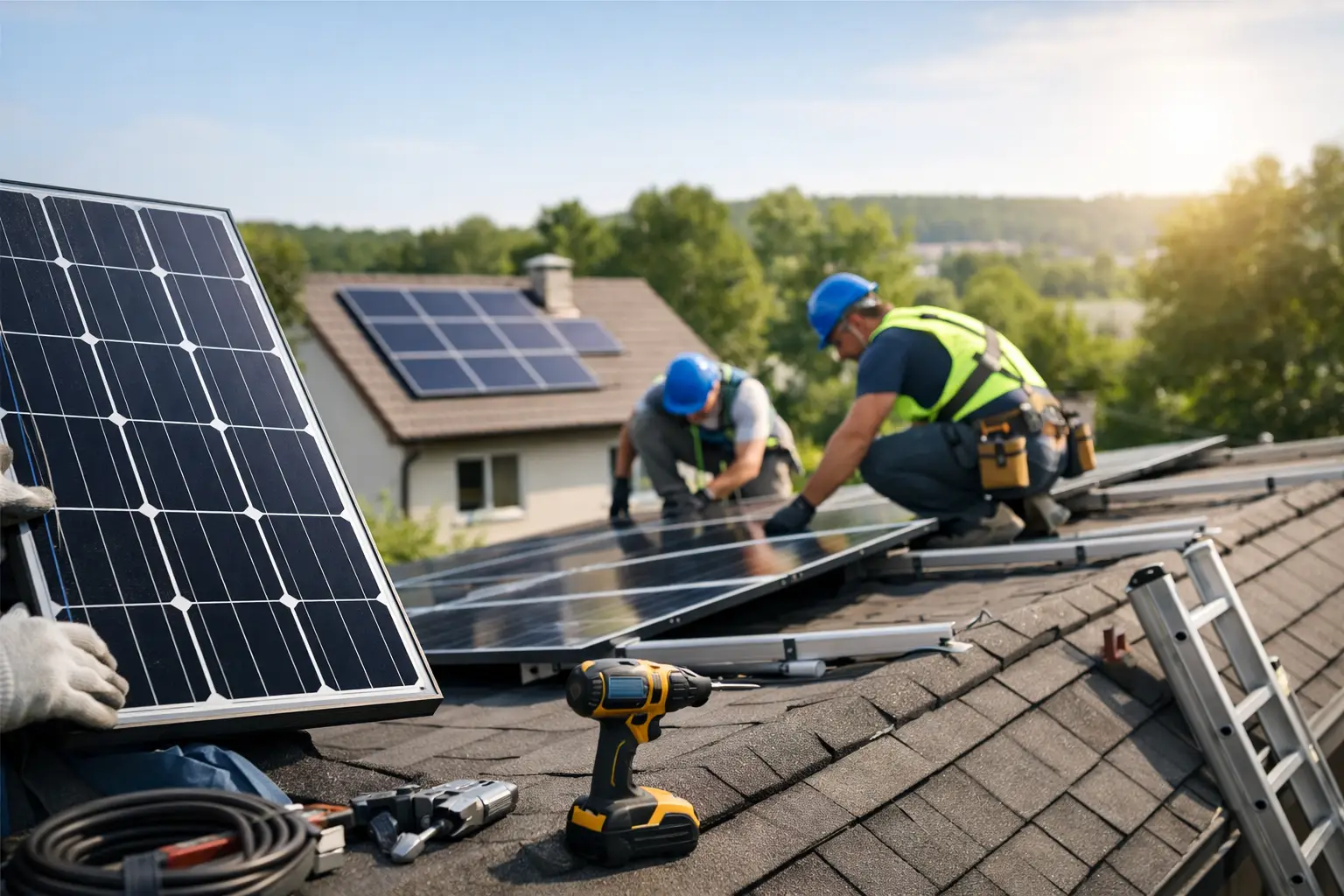
On the day, the team will start with roof mounting equipment. This involves fixing the mounting system securely to the roof structure, then attaching the solar panels. Inside the property, the electrician will install the inverter and any generation meter, isolators or battery equipment included in the design.
Most homeowners are pleasantly surprised by how tidy the work is when handled by an experienced team. There will be some disruption, of course. You may need access to the loft, meter area or internal walls for cable runs, and power may be switched off briefly while electrical work is completed. But a well-organised installation should feel controlled rather than chaotic.
What matters most here is not speed for its own sake, but quality. Panels need to be fitted securely and neatly. Cabling should be routed sensibly. Electrical connections must meet the required standards. A rushed installation can create problems that are far more expensive than the time saved.
Testing, commissioning and handover
After the physical installation, the system needs to be tested and commissioned. This is the stage where the installer checks that the electrical components are working correctly, verifies safety measures and confirms that the system is generating as expected.
You should then receive handover information explaining how the system operates. That usually includes what the inverter display means, how to monitor performance if there is an app, and what to do if you notice a fault. If a battery is installed, the installer should also explain how charging and discharge settings affect performance.
This handover matters more than many people expect. Solar is low maintenance, but it is still worth understanding the basics. If your generation drops unexpectedly, you want to know whether it is normal seasonal variation, shading, a temporary issue with monitoring or something that needs attention.
You should also receive the relevant certificates and documentation after installation. If an installer is MCS-accredited, that gives additional reassurance around standards and is often important for export tariff arrangements. For many homeowners, this is one of the clearest ways to separate professional installers from firms that are simply trying to win work on price alone.
What can affect timescales and cost
No two properties are exactly alike, so timescales vary. Some jobs move from survey to installation quite quickly. Others take longer because of equipment availability, grid approvals, roof access issues or extra electrical work.
Cost can vary for the same reasons. A straightforward roof with good access is usually more economical than a complex layout needing extra scaffold or specialist mounting. Adding battery storage, bird protection or a hot water diverter will also change the price. None of those extras are automatically necessary, but each may be worthwhile depending on how you use energy and what you want from the system.
This is why comparing like-for-like quotes is so important. A cheaper quote may leave out scaffolding, use lower-spec components or exclude work needed to complete the installation properly. A higher quote may include longer warranties, better monitoring or more suitable equipment. The right choice is not always the lowest figure on the page.
Choosing the right installer makes the whole process easier
The residential solar installation process feels far simpler when you are dealing with qualified, communicative installers who set clear expectations from the start. Good companies do not hide behind jargon. They explain what is included, what is optional and where there are genuine decisions to make.
That is especially helpful if you are at the early stage and still deciding between system sizes or whether to include a battery. Being able to compare vetted, MCS-accredited installers can save a lot of time and reduce the risk of ending up with a poor recommendation or a patchy quote.
For homeowners who want a quicker route to that comparison, Solar Planet helps connect customers with trusted local installers so they can review options without having to research every company individually. That kind of support can make a real difference when you are trying to move from interest to action without feeling pressured.
If you are considering solar for your home, the best next step is not to memorise every technical detail. It is to get clear, well-explained quotes from reputable installers and ask the practical questions that affect your property, your savings and your confidence in the work.

