If you are weighing up solar for your home or business, timing matters almost as much as price. One of the first questions people ask is how long does solar installation take, and the honest answer is this: the on-site fitting is usually quick, but the full journey from quote to switch-on takes longer.
For most properties, the physical installation of solar panels takes one to three days. The wider process, including surveys, design work, approvals, scaffolding, installation, testing and paperwork, often takes between two and eight weeks. In some cases it can be faster. In others, especially where roofs are more complex or extra upgrades are needed, it can take longer.
That range can sound broad, but there is a good reason for it. Solar is not a one-size-fits-all purchase. The timeline depends on your roof, your electrical set-up, the size of the system, whether you are adding battery storage, and how quickly installers can schedule the work.
How long does solar installation take from start to finish?
A straightforward domestic project often follows a clear pattern. First comes the enquiry and quote stage. Then the installer arranges a survey or remote assessment, confirms the system design, checks the roof and electrical set-up, and books the installation date. After that, scaffolding usually goes up a day or two before the work starts. The panels, inverter and any battery are then installed, tested and commissioned.
For a standard house with no unusual complications, many customers can go from first enquiry to completed installation in around three to six weeks. If demand is particularly high, or if the property needs extra work first, that can stretch towards eight weeks or more.
Commercial projects tend to take longer. Not always because the fitting itself is slow, but because there are more decision-makers, larger systems, more detailed site checks and sometimes extra planning or structural considerations.
The installation itself is often the quickest part
This is the part that surprises many people. Once the design is agreed and the date is booked, the actual fitting is usually efficient.
A typical residential solar panel installation on a standard pitched roof often takes one to two days. If you are also having a battery installed, that may add part of a day or another full day depending on the set-up. Larger homes or more complex systems can take three days.
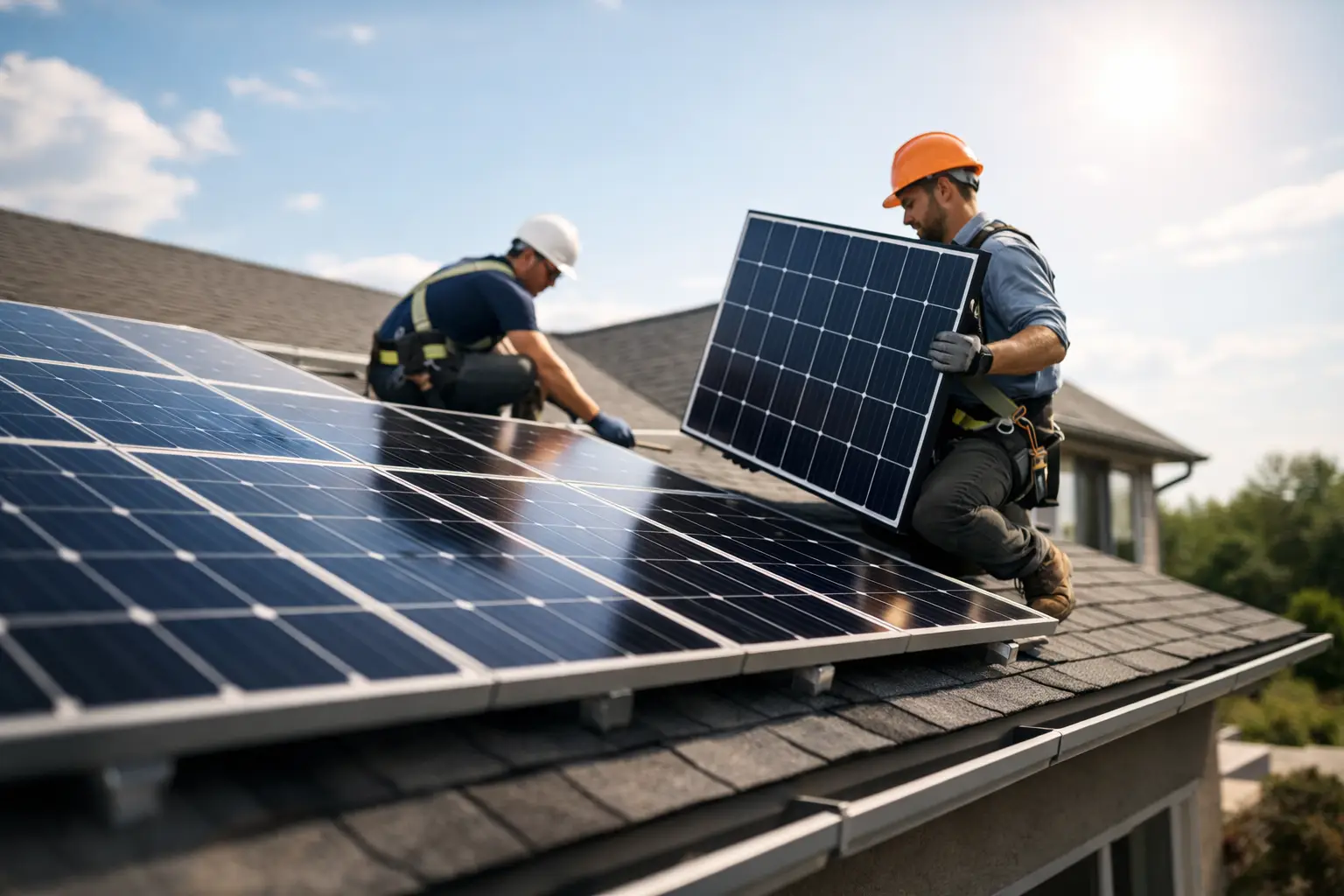
Installers are generally working in two areas at once. One part of the team mounts the panels and roof fixings. Another handles the inverter, cabling, consumer unit connections and testing. That is why the visible roof work may seem to move quickly.
If your property has easy access, a sound roof and a modern electrical set-up, the job is usually very straightforward.
What can make solar take longer?
The shortest timelines happen when everything lines up neatly. The longer ones usually come down to practical issues rather than poor service.
Roof condition is a common factor. If tiles are fragile, the structure needs checking, or repairs are recommended before panels go on, the work may need to pause. It is far better to deal with that before installation than to fit a system onto a roof that may need attention a year later.
Your electrics can also affect the schedule. Some older properties need upgrades to the consumer unit or adjustments to bring the installation in line with current standards. That is not unusual, but it can add time.
System size matters too. A small domestic array is quicker to fit than a larger system spread across several roof sections. Battery storage, EV chargers and other add-ons can also lengthen the job because they require extra wiring, testing and commissioning.
Then there is installer availability. In busy periods, especially when energy prices rise and demand jumps, lead times can increase. That is one reason many customers prefer comparing vetted local installers rather than contacting companies one by one.
Surveys, design and paperwork all take time
When people ask how long does solar installation take, they are often thinking about the day the engineers arrive. In reality, much of the work happens before that.
The survey stage is where installers confirm whether your roof is suitable, how many panels will fit, where the inverter and battery should go, and whether there are any obvious access or electrical issues. Some providers can do part of this remotely using photos, satellite imagery and your energy usage details. Others will want a site visit before finalising the quote.
After that comes system design. This includes panel layout, estimated generation, wiring design and product selection. If you are keen to maximise self-consumption with battery storage, that may involve a bit more planning.
There is also administration in the background. MCS-accredited installers follow a set process to ensure systems meet recognised standards. Depending on the project, there may be network notification requirements and export-related paperwork. None of this is usually difficult for the customer, but it still takes time to complete properly.
Planning permission and approvals – do they slow things down?
In many residential cases, solar panels can be installed under permitted development, so formal planning permission is not needed. That helps keep projects moving.
However, there are exceptions. If your property is listed, in a conservation area, or the installation is unusual in size or placement, extra checks may be needed. Flats and some commercial buildings can also involve more layers of approval.
If planning is required, the timeline becomes less predictable because it depends on the local authority rather than the installer alone. This is one of the main reasons some projects move from a few weeks to a few months.
That said, most standard homes in areas such as Cardiff, Newport, Swansea or Bristol can often avoid major planning delays, provided the roof and property are suitable.
Weather can affect timing, but usually not by much
British weather is not always cooperative, and roof work must be carried out safely. Heavy rain, strong winds or icy conditions can mean installers need to postpone a day of external work.
Usually this causes only a short delay rather than a full reset of the project. Good installers plan around the forecast as much as possible. The bigger issue is often not the weather itself, but trying to force work through in poor conditions. A short delay is preferable to rushed or unsafe installation.
How to keep your solar project moving
You cannot control every factor, but a few simple steps can help avoid delays.
Clear photos of your roof, meter, consumer unit and any proposed battery location can speed up quoting and design. Having a recent electricity bill ready also helps installers size the system more accurately. If you already know your roof has issues or your electrics are older, it is worth mentioning that early.
It also helps to compare quotes from installers who are properly accredited and familiar with local requirements. That reduces the risk of slow follow-up, vague design work or surprises later on. A service such as Solar Planet can simplify that stage by putting you in touch with vetted MCS-accredited installers rather than leaving you to research the market alone.
Domestic vs commercial solar timelines
Homeowners usually get the fastest turnaround because residential systems are smaller and easier to standardise. A typical house can often move from accepted quote to installation within a few weeks.
Commercial projects vary much more. A small office or shop unit may still move fairly quickly, but larger premises, warehouses and multi-site operations take more coordination. There may be more detailed structural checks, more health and safety requirements, and more internal sign-off before work begins.
That does not mean commercial solar is slow. It just means the planning phase is often more involved, even if the long-term savings make that extra effort worthwhile.
So, what is a realistic expectation?
If you want the most useful rule of thumb, use this: expect the fitting itself to take one to three days, and the full process to take around three to six weeks for a typical home.
If your property is straightforward and the installer has capacity, it may be quicker. If repairs, approvals or upgrades are needed, allow longer. The best approach is not to focus only on speed, but on getting the system designed and installed properly by an accredited professional.
A good solar installation should feel organised, clearly explained and worth the wait. When the process is handled well, a few extra days upfront can mean years of better performance, lower bills and far fewer headaches later.