

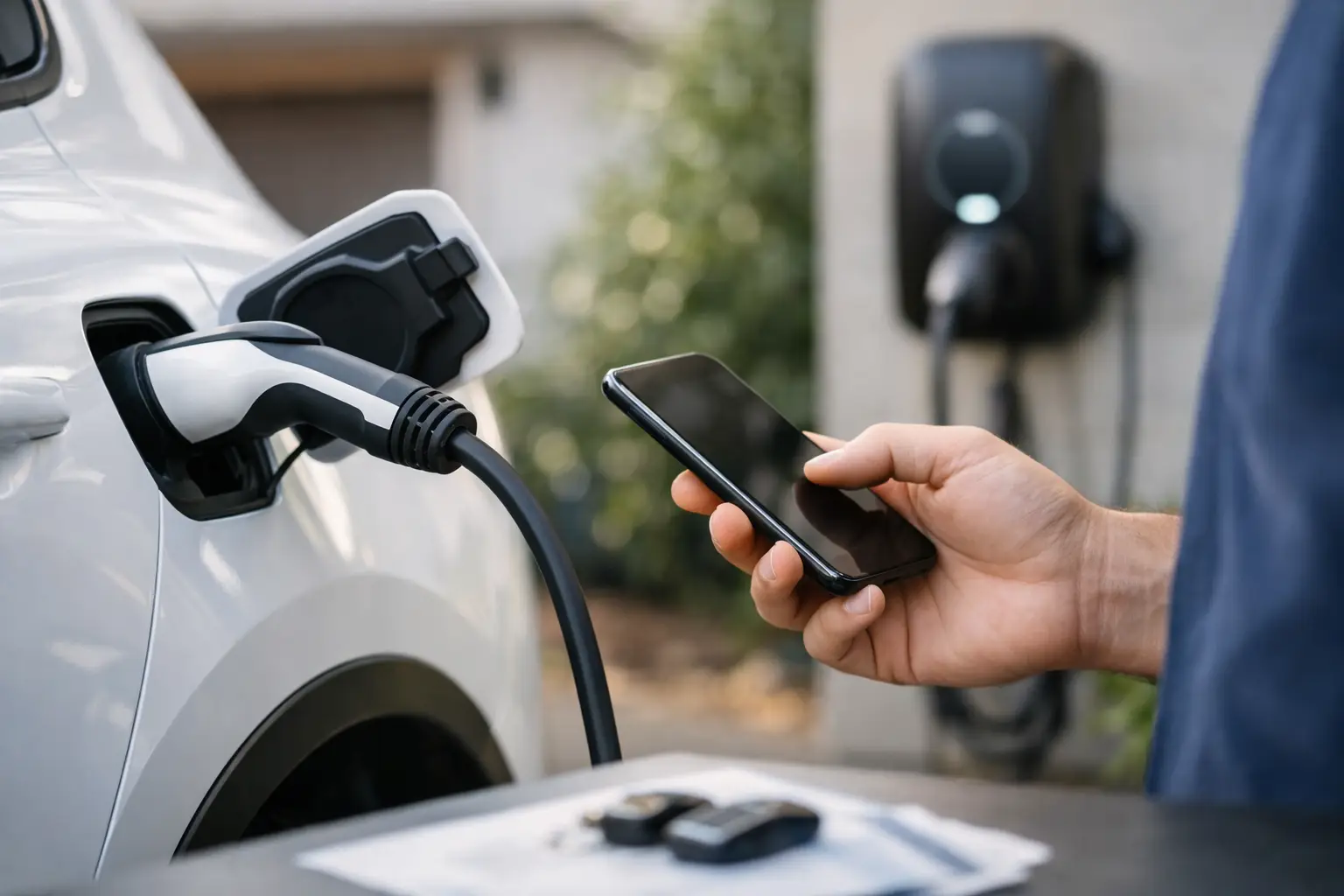
If your overnight charging costs have crept up, or your current deal no longer fits when you actually plug in, this is usually the point people start asking how to switch EV charger tariff without ending up on a worse rate elsewhere. The good news is that changing tariff is often simpler than changing charger, and in many cases you can keep the hardware you already have.
The part that catches people out is that EV tariffs are not all built the same. Some give you a cheap overnight window for the whole house. Others only apply the lower rate to smart charging through a compatible charger or vehicle. That difference matters, because the cheapest-looking tariff on paper is not always the one that gives you the lowest bill in real life.
How to switch EV charger tariff without confusion
Start with your current setup, not the marketing headline. You need to know three things: who supplies your electricity, whether you have a smart meter that sends half-hourly readings, and whether your charger or car is approved for the tariff you want.
Many EV tariffs rely on smart data to work properly. If your meter is not sending readings automatically, the supplier may refuse the tariff or bill you incorrectly. If your charger is older, it may still work perfectly well for charging the car but not meet the supplier’s smart integration rules. In that case, the issue is not the charger’s quality – it is compatibility with that tariff.
Before you switch, check your recent bills and charging pattern. If you usually charge between midnight and 5am, an off-peak tariff can make good sense. If you charge at irregular times, work from home, or run other heavy-use appliances overnight, you may need to look at the full day-and-night rate rather than the EV headline price alone.
Check whether your tariff follows the charger, the car or the meter
This is where a lot of households lose time. Some suppliers only need a smart meter and an EV registered at the property. Others require a specific charger brand, a connected vehicle app, or direct control over charging sessions.
If the tariff works through your meter, the low rate usually applies during set hours and can benefit anything running in that window, such as battery storage, washing machines or immersion heating. If it works through the charger or vehicle, only the electricity used for charging may qualify for the lower rate. For homes with solar panels or a battery, that distinction can have a noticeable effect on overall savings.
Compare the full tariff, not just the off-peak rate
A cheap overnight unit price looks attractive, but it is only half the picture. Some EV tariffs have a higher daytime rate or standing charge. If your household uses most of its electricity during the day, the savings from night charging can be partly cancelled out.
Look at your total usage over a normal month. Estimate how many kWh go into the car and how much electricity the rest of the property uses. Then compare the whole bill under each option. A family charging one EV twice a week may benefit from a different tariff than a two-EV household covering long daily mileage.
This is especially relevant if you already have solar and battery storage. A tariff with a slightly higher overnight rate may still work better if it gives you a more favourable import rate at times when your battery tops up or when solar generation is low. It depends on how your system is set up and how hands-on you want to be.
Questions worth answering before you move
Ask yourself when the car is normally at home, whether you can schedule charging reliably, and whether anyone in the property uses a lot of electricity outside the off-peak window. Also check whether you are in a fixed contract with exit fees. Switching can still be worthwhile, but only if the numbers stack up.
If you have had an EV charger installed recently, it is also worth checking whether the installer set up app controls, load balancing and smart schedules properly. Sometimes people think they need a new tariff when the real issue is that the charger is simply charging at the wrong time.
The practical steps to switch
Once you have chosen a suitable tariff, the actual process is straightforward. In most cases, you apply with the new supplier or request an internal tariff change with your current supplier. You will usually be asked for your address, MPAN, meter details, EV details and sometimes the charger model.
Take meter readings and screenshots of your current settings before the switch date. That gives you a clear record if billing needs correcting later. If the new tariff relies on scheduled charging, set the timing in one place only – either the charger app, the vehicle app or the supplier app. Using all three can create conflicts, which is a common reason people miss the cheap-rate window.
After the switch goes live, check your first few charging sessions. Make sure the start and finish times match the tariff window and that your account is logging smart readings correctly. A switch is not really finished until you have confirmed the billing is doing what you expected.
When switching tariff may not be enough
Sometimes the tariff is not the main problem. If your charger is unreliable, drops off Wi-Fi, or lacks smart controls, changing supplier will not fix the underlying issue. The same applies if your home electrical setup limits charging times or your charger is no longer supported by its manufacturer.
In those cases, it may be worth asking a qualified installer to review the system. For homeowners in Cardiff and across South Wales or Bristol, that can be particularly helpful if the charger was fitted a few years ago and you are now adding solar, battery storage or a second EV. One change often affects the best choice elsewhere.
This is also where using a trusted comparison service can save time. Rather than trying to judge installers one by one, you can get local options from vetted professionals and see whether a charger upgrade, a settings adjustment or a tariff change is the best route.
Common mistakes to avoid
The biggest mistake is choosing a tariff based only on the lowest advertised rate. After that, the most common issues are poor compatibility checks, overlapping charging schedules and forgetting about contract terms.
Another frequent problem is assuming every smart charger qualifies for every smart tariff. It does not. Even good chargers can be excluded if the supplier’s platform only supports certain brands or software integrations. Always confirm this directly before switching.
Finally, do not ignore your wider energy picture. If you have solar panels, a home battery or time-of-use habits already built into the household, the best EV tariff might be the one that supports the whole property most efficiently, not just the car.
Is it worth switching EV charger tariff now?
If your current deal no longer reflects how you charge, then yes, it often is. Electricity pricing has changed quickly over the last few years, and tariffs that once looked competitive may now be average at best. A switch can reduce charging costs without any major work at home, provided your meter and charger are suitable.
That said, the right answer depends on how you use the car, when you are home, and whether your charger is smart enough to take advantage of the tariff. For some homes, a tariff change is the easiest win. For others, a charger upgrade or a better-integrated setup with solar and battery storage will deliver more value over time.
If you are unsure, keep it simple. Check compatibility first, run the numbers on your full household usage, and only then make the move. A good EV tariff should fit the way you live, not force you into a charging routine that never quite works.
A cheaper unit rate is useful, but confidence in the setup matters just as much – because the best savings are the ones that work month after month without constant tweaking.

