

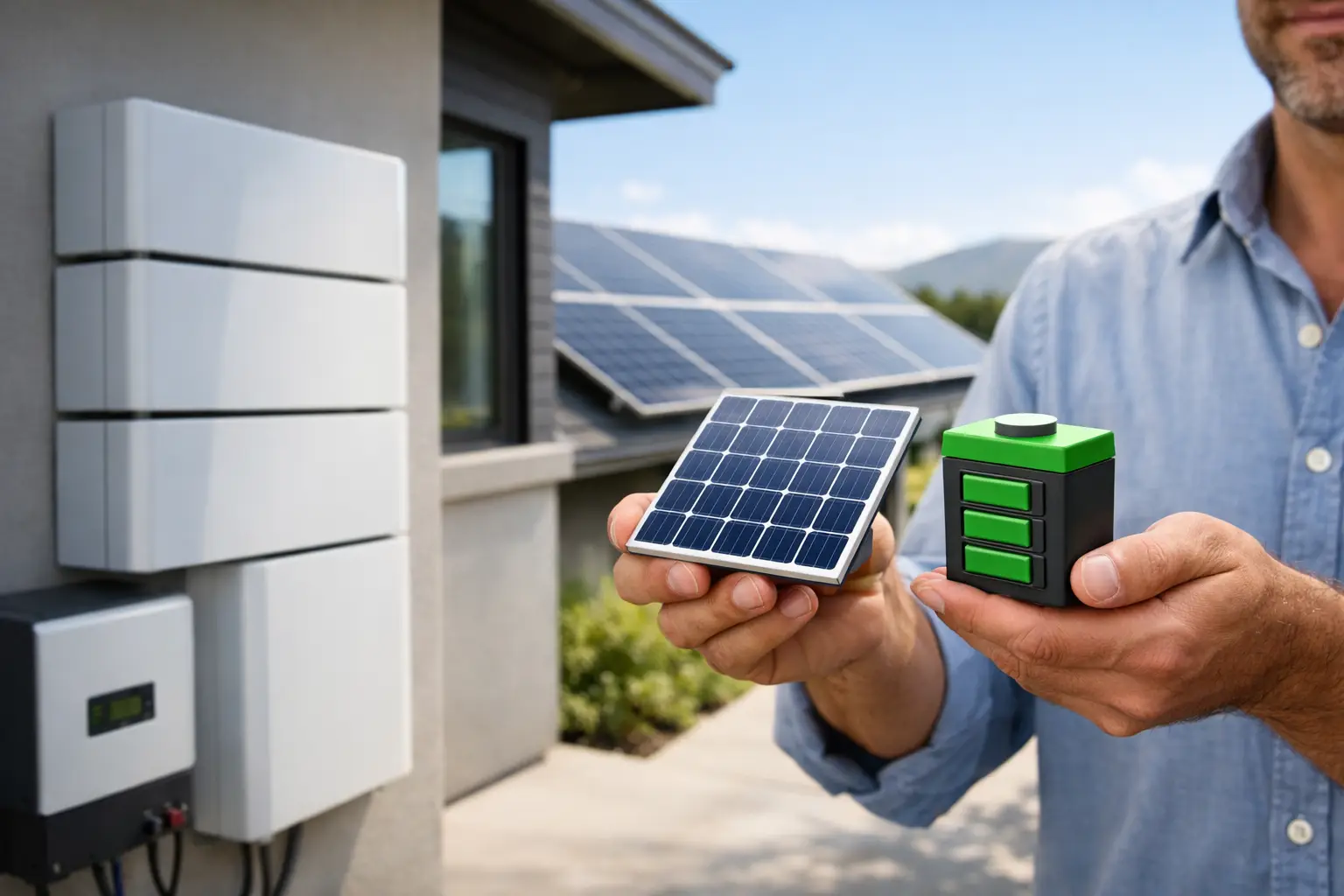
A battery that is too small runs out when you need it most. A battery that is too large can leave you paying for capacity you rarely use. If you are working out how to choose battery backup, that balance matters far more than picking the brand with the biggest headline figures.
For most homes and small businesses, the right battery is the one that matches your energy habits, your budget and your reason for buying it. Some people want lower electricity bills. Others care more about keeping essentials running during a power cut. Many want both, but there is usually one main priority, and that should guide every decision that follows.
How to choose battery backup by starting with your goal
The quickest way to narrow your options is to decide what success looks like. If your main aim is bill savings, you are looking for a battery that stores surplus solar generation and helps you use less electricity from the grid in the evening. If your main aim is resilience, you need to ask a different question: what exactly must stay on when the grid goes down?
That distinction changes the kind of system you need. Some batteries are designed mainly for energy shifting, which means charging when power is cheap or plentiful and discharging later. Others are better suited to backup use, with features that let them power selected circuits in a blackout. Not every battery does both equally well.
For example, a household in Cardiff with regular daytime solar generation but high evening usage may benefit most from a battery sized around evening demand. A small business in Newport that cannot afford downtime may place more value on backup functionality and fast switchover than on squeezing every possible penny out of time-of-use tariffs.
Start with your electricity use, not the battery brochure
The most reliable place to begin is your electricity bill and, if you have them, half-hourly smart meter readings. Look at how much energy you use in a day, when you use it, and how much of that use happens after sunset. That evening and overnight demand is often the best indicator of useful battery size for solar homes.
Battery capacity is measured in kilowatt-hours, or kWh. A 5 kWh battery does not mean unlimited backup for five hours. It means it can store roughly 5 kWh of usable energy, depending on the model and settings. If your home uses 10 kWh between late afternoon and bedtime, a 5 kWh battery will help, but it will not cover everything.
This is where people often oversimplify. A battery should not be chosen on daily usage alone. If you use a lot of electricity because of an electric shower, EV charging or electric heating at specific times, your power demand can spike well above what some batteries can deliver at once.
Capacity matters, but power output matters too
A common mistake is focusing only on storage size and missing power output. Capacity tells you how much energy the battery can hold. Power output, usually measured in kW, tells you how much electricity it can supply at any one moment.
That matters if you want to run several appliances at the same time. A battery might have enough stored energy to keep your fridge, lighting and broadband going for hours, but if its output is too low, it may struggle with a kettle, oven or heat pump starting up.
For backup purposes, think in terms of essentials first. Many households do not need the whole property powered during an outage. They need lighting, refrigeration, Wi-Fi, device charging and perhaps a few sockets. That is usually more affordable and practical than trying to back up everything.
If whole-home backup is your goal, tell the installer early. It affects the battery, inverter and consumer unit setup, and not every property is suitable without extra electrical work.
Think carefully about usable capacity and battery chemistry
Manufacturers often advertise total capacity, but usable capacity is the figure that matters in real life. Batteries are usually not designed to be emptied completely every day, so part of the stated capacity may be held back to protect battery health.
You should also ask about battery chemistry. Most domestic systems now use lithium iron phosphate or similar lithium-based technologies. These are generally preferred because they offer good lifespan, stable performance and lower maintenance than older battery types. You do not need to become an engineer, but you do need clear answers on safety certifications, expected lifespan and warranty terms.
A longer warranty does not automatically mean a better battery, either. Some warranties are based on years, others on energy throughput, and some on both. A battery with a ten-year warranty may still have conditions on how much energy you can cycle through it.
Match the battery to your solar system and future plans
If you already have solar panels, the battery needs to be compatible with your existing inverter or have a clear route for retrofit installation. Some systems are easier and more cost-effective to add after the fact than others.
If you are installing solar and battery storage together, you have more flexibility. This is often the best time to think ahead. You may not need a larger battery right now, but if you are planning an EV charger, heat pump or business expansion, that future demand should be part of the conversation.
Scalability can be valuable. Some battery systems allow extra modules to be added later. That can be a sensible middle ground if you want to avoid overspending now but do not want to replace the system entirely in a few years.
Cost is not just the battery price
When comparing quotes, look beyond the battery unit itself. Total cost usually includes the inverter, installation labour, electrical upgrades, backup hardware if required and VAT where applicable. A cheaper quote may leave out important elements, while a higher quote may include a more capable setup.
The right question is not simply, what is the lowest price? It is, what am I getting for the money, and does it fit the way I use energy?
For some properties, a smaller battery offers the best return because it is used consistently. A large battery can look attractive on paper, but if your solar generation rarely fills it or your usage pattern does not justify it, payback may be slower. This is especially relevant in winter, when solar output drops and battery charging opportunities are lower.
That does not mean a larger battery is a bad choice. It may still make sense if backup power is your main aim or if you are planning to shift more electricity use over time.
How to choose battery backup without missing installer quality
The installer matters almost as much as the equipment. Good battery storage design is not just product selection. It is load assessment, system compatibility, safe wiring, correct commissioning and honest advice about what the battery will and will not do.
Ask whether the installer is MCS-accredited where relevant, experienced with battery storage, and clear about aftercare. You want a straightforward explanation of battery size recommendations, expected performance and any limitations on backup during a grid outage.
This is where getting more than one quote helps. If three installers suggest a similar battery size and one recommends something dramatically different, ask why. Sometimes there is a good reason. Sometimes it is a sign that one quote has not been properly tailored.
For homeowners and businesses in South Wales and nearby areas such as Bristol, local installer knowledge can also help with practical details like property layouts, access, consumer unit setups and grid connection considerations.
Questions worth asking before you say yes
You do not need a long technical checklist, but a few questions can save a lot of frustration later. Ask how much usable storage the battery provides, what its continuous and peak power output is, whether it supports backup during outages, and which circuits can be backed up.
Also ask how the system will perform in winter, whether it can be expanded later, and what monitoring app or portal is included. A clear app is more useful than many people realise. It helps you see whether the battery is being used as expected and whether your savings assumptions are realistic.
Finally, ask for plain-English payback expectations. A trustworthy installer will avoid making absolute promises because battery savings depend on tariff changes, weather, usage patterns and how you run the system.
The best choice is usually the one that fits your life
There is no single best battery backup for every property. A family home with daytime occupancy has different needs from a house empty until evening. A café, office or workshop will think differently again. The right system is the one that covers your priorities without pushing you into unnecessary cost or complexity.
If you feel stuck between two sizes or two system types, it often helps to come back to one question: what problem am I trying to solve? Lower bills, better use of solar, protection during outages, or room for future electrification all point in slightly different directions.
A good installer should make that choice feel clearer, not more confusing. When the advice is tailored, the figures are explained properly and the trade-offs are set out honestly, choosing battery backup becomes much simpler. And that is usually when you end up with a system you are happy with long after the installation is finished.

