

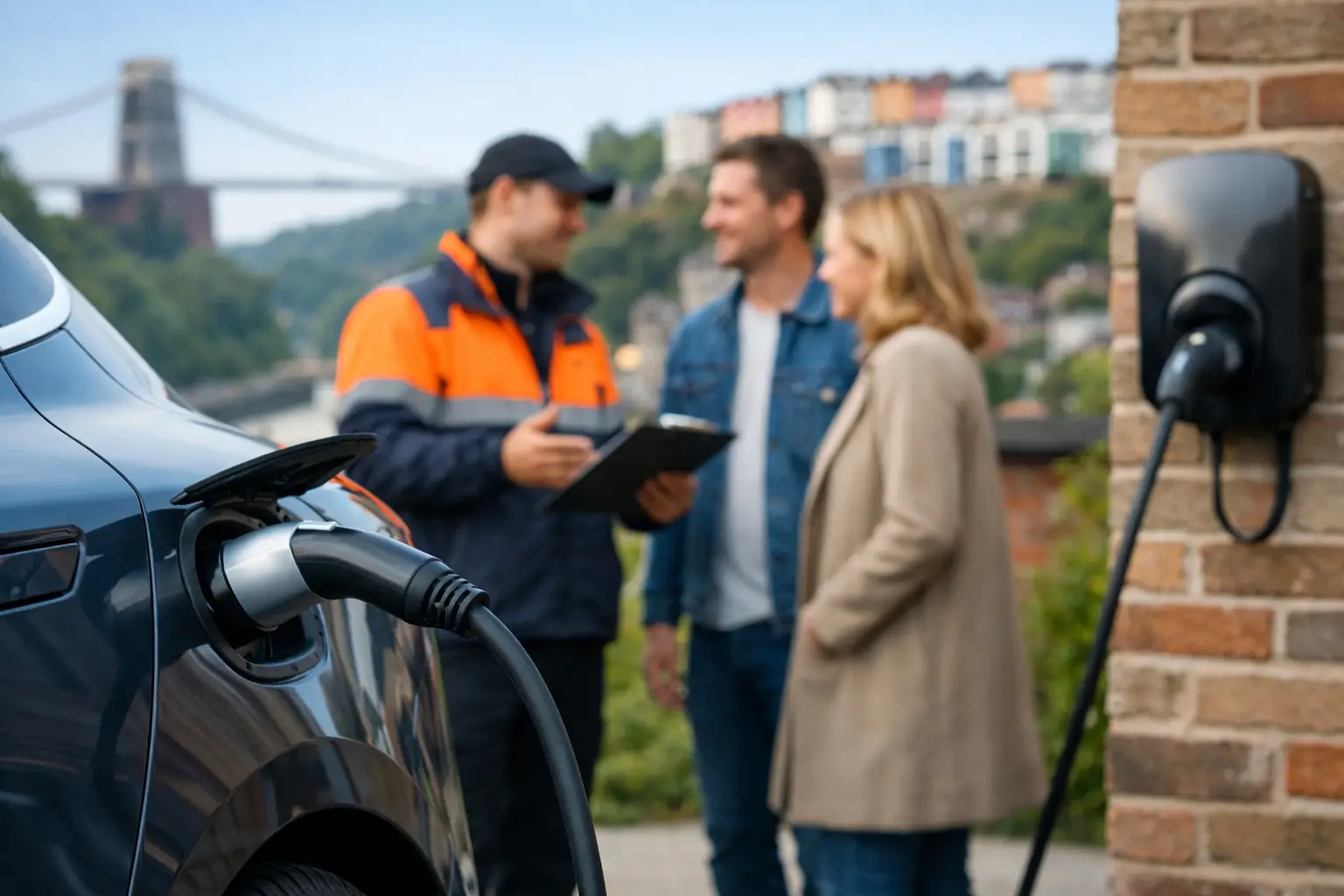
A home charger can make owning an electric vehicle far cheaper and more convenient than relying on public charging. But choosing between EV charger installers Bristol residents can call is not simply about finding the lowest quote. The right installer will assess your property properly, explain the options clearly and leave you with a safe system that suits how you actually drive.
For many Bristol households, a charger is part of a wider move towards lower energy bills – perhaps alongside solar panels or battery storage. For businesses, it may be a practical way to support staff, visitors or a growing electric fleet. In both cases, a little care at the quotation stage can prevent expensive alterations later.
Start with your parking and electricity supply
The best charger on paper may not be the best charger for your home. An installer should begin by looking at where the vehicle parks, how the cable will be routed and where your consumer unit is located. A driveway or attached garage is usually straightforward. A parking space some distance from the house, a detached garage or a shared access area can require more cable, groundworks or a different approach.
Bristol’s mix of Victorian terraces, newer estates and flats means every installation has its own practical constraints. If you park on the street, avoid assuming that a cable can run across the pavement. It can create a trip hazard and may not be acceptable. Ask an installer to discuss realistic alternatives, including nearby public charging, workplace charging or any relevant local options, before paying for equipment that cannot be used safely.
Your electrical supply matters just as much. Most domestic installations use a single-phase supply and a 7kW charger, which is suitable for overnight charging for many drivers. A 3.6kW unit can be a sensible choice where capacity is limited or daily mileage is modest. Three-phase supplies can support faster charging, but they are not standard in most homes and upgrades can be costly.
A proper survey should identify whether your consumer unit has sufficient capacity, whether earthing arrangements are suitable and whether extra protection or an upgrade is required. Be cautious of a firm that offers a fixed price without asking for photographs, supply details or arranging a survey.
What qualified EV charger installers in Bristol should provide
Electrical work should be carried out by a competent, appropriately qualified electrician and notified where required under Building Regulations. A professional installation includes more than mounting a charger on the wall. It should include suitable cabling, circuit protection, testing, certification and a clear handover.
If you may be eligible for an EV chargepoint grant, such as support available to some renters, flat owners and landlords, check the current scheme rules before booking. The installer generally needs the relevant OZEV authorisation for grant-funded work. Eligibility and funding levels can change, so an honest installer will confirm the position rather than promising a discount that does not apply.
Ask each company what documents you will receive when the work is complete. You should expect electrical installation certification, test results and instructions for using the charger and its app, where applicable. You should also understand the warranty: who covers the hardware, who covers the installation work, and what happens if a fault develops.
For a combined solar, battery and charger project, accreditation is another useful trust marker. MCS-accredited installers are particularly relevant to eligible solar and battery work, while EV charging needs its own electrical competence and, where relevant, grant authorisation. A good provider will be clear about which credentials apply to each part of your project.
Choose the charger around your routine
It is easy to get distracted by charging speeds and app features. Start with the basics: your car, your daily mileage and when electricity is cheapest. If your vehicle is normally at home overnight, a smart 7kW charger on an off-peak electricity tariff may deliver more value than chasing the fastest possible home setup.
Smart charging is worth considering because it can schedule charging for lower-cost periods and reduce demand when your household is using more electricity. Some units can also work with solar generation, prioritising surplus power when conditions allow. This can be attractive if you already have panels, but it depends on your daytime generation, vehicle availability and electricity tariff. Solar alone will not always provide enough energy for a full charge, especially through winter.
Tethered chargers have a cable attached, which is convenient for regular use. Untethered chargers have a socket, so you use your own cable and the unit can look tidier when not in use. Neither is automatically better. A tethered unit is often easier in wet weather, while an untethered option can suit households with different vehicles or those who prefer a more discreet finish.
For commercial sites, the conversation should go beyond one charging point. Businesses should consider who will use the chargers, whether charging needs to be paid for, how access will be managed and whether the building has enough electrical capacity for future expansion. Load balancing can allow several chargers to share available capacity without unnecessary supply upgrades, making phased installation more practical.
Compare quotations on more than the headline price
A straightforward domestic charger installation may cost several hundred pounds, while longer cable runs, consumer-unit upgrades, trenching, pedestal mounting or complex parking arrangements can increase the total significantly. This is why two quotes for apparently similar chargers can look very different.
When comparing EV charger installers Bristol property owners should check what is included, not just the final figure. Look for the charger model, charging power, cable length, mounting position, electrical works, making-good, testing, certification and any app or ongoing connectivity costs. If an allowance has been made for unknown work, ask what could trigger an extra charge and how approval will be handled.
It is also sensible to ask whether the quote accounts for dynamic load balancing, particularly in homes with electric showers, heat pumps or other high-demand appliances. It may add to the initial cost, but it can reduce the chance of nuisance tripping or a more disruptive upgrade later.
A trusted comparison process is useful here. Rather than contacting providers one by one and trying to judge credentials alone, homeowners and businesses can compare several vetted local quotes with the same brief. Solar Planet helps customers connect with up to four trusted installers, making it easier to weigh price, availability and the quality of the proposed solution without obligation.
Do not overlook the future of your property
A charger should work well now, but it should not close off sensible options later. Tell the installer if you are planning solar panels, a battery, a heat pump, an extension or a second electric vehicle. They may recommend cable sizing, charger placement or load-management settings that make a later upgrade easier.
This is especially valuable for households considering solar. A compatible smart charger can help you make better use of surplus generation, while a battery may change when it is most economical to charge the car. There is no single arrangement that suits every home: someone who drives long distances during the day will use energy differently from someone who works from home and charges overnight.
For landlords and business owners, plan for maintenance and access too. Chargers installed in exposed or shared areas need durable positioning, clear user arrangements and a route for dealing with faults. The cheapest installation can become poor value if it is difficult to manage or expand.
Questions worth asking before you book
Before accepting a quotation, ask who will carry out the work, whether a site survey is included, what certification you will receive and how long the warranty lasts. Confirm the expected installation date, what preparation you need to do and whether the installer will explain the charger’s settings after commissioning.
You should also ask what happens if the survey reveals a problem with the consumer unit or supply. A reliable installer will set out the options and costs clearly, rather than pressing ahead with unclear extras on the day.
A well-installed EV charger is a practical improvement to your property, not a purchase to rush. Choose an installer who takes the time to understand your parking, energy use and future plans, and you will be in a stronger position to charge with confidence for years to come.

