

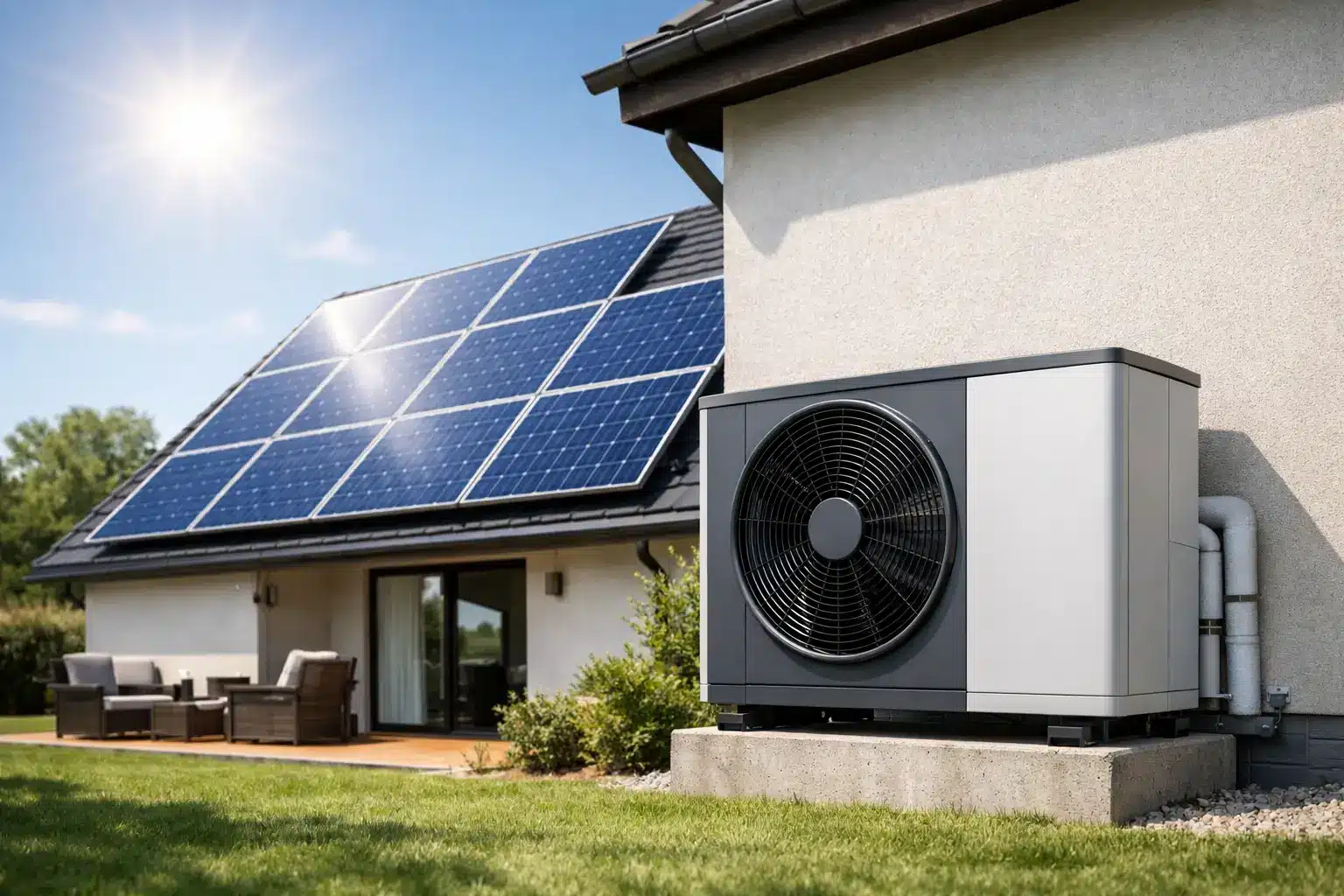
If you are looking at a heat pump because gas bills feel harder to justify each winter, the next question usually follows quickly: can solar panels power heat pump systems well enough to make a real difference? The short answer is yes, but not all the time and not on their own in every home. It depends on how much electricity your heat pump uses, how much solar your roof can generate, and when you need the heating most.
That is the part many guides skip. A heat pump and solar panels can work very well together, but the match is about timing as much as total energy.
Can solar panels power heat pump use in a typical home?
In many UK homes, solar panels can cover a meaningful share of a heat pump’s electricity demand across the year. In some cases, they can cover most of it during sunnier months. In winter, when heating demand is highest, solar output is lower. That means your heat pump will often still draw electricity from the grid, especially on cold, dark days.
So the real answer is not a simple yes or no. Solar can absolutely help power a heat pump, cut running costs, and reduce reliance on imported electricity. But if you are expecting rooftop solar to carry your heating system through December on its own, that is rarely realistic in Britain.
For most households, the goal is not total off-grid heating. It is lower bills, better energy independence, and a smarter overall system.
How the pairing works
A heat pump runs on electricity. Instead of generating heat by burning fuel, it moves heat from outside air or the ground into your property. Because of that, it can deliver more heat energy than the electricity it consumes. That efficiency is what makes the pairing with solar attractive.
Your solar panels generate electricity during daylight hours. When the heat pump is running at the same time, some of that solar power can be used directly in the home. Any shortfall comes from the grid. If your panels produce more than the property is using at that moment, the extra power can be exported or stored in a battery if you have one.
This is why homes with daytime heating demand, good roof space and decent solar exposure often see the strongest benefit. The more of your own solar electricity you can use as it is generated, the more value you usually get.
What size solar system might you need?
This varies quite a lot. A smaller, well-insulated property with an efficient air source heat pump will need far less electricity than a larger, draughtier home with high heat demand. The same applies to commercial premises. A well-run office or retail unit may have a very different usage pattern from a warehouse or older building.
As a rough guide, a typical domestic solar array might be somewhere around 3.5 kW to 6 kW. That could offset part of a heat pump’s annual electricity use, but not necessarily all of it. If your heat pump is also providing hot water, demand will be higher. If your property has poor insulation or older radiators that force the system to work harder, demand may rise again.
That is why good installers start with the building rather than the panels. They look at your heat loss, roof orientation, available space, current electricity use and likely heat pump consumption. Without that, any estimate is just guesswork.
Winter is the sticking point
The biggest challenge is seasonal mismatch. Heat pumps work hardest in winter, but solar panels generate less power then because days are shorter and sunlight is weaker. A solar system that performs strongly from April to September will not produce the same output in January.
This does not mean the combination is poor value. It just means you should judge it over a full year, not by the hardest month alone. Many households benefit because solar helps with spring, summer and autumn electricity use, and still contributes something in winter even if it cannot meet all heating demand.
What affects whether it is worth it?
Insulation matters as much as generation. If your property loses heat quickly, your heat pump has to run longer and use more electricity. Loft insulation, cavity wall insulation, draught-proofing and suitable glazing can all improve the economics.
Your roof also plays a major part. South-facing roofs usually offer the strongest solar yield, but east and west can still work well. Shade from trees, neighbouring buildings or chimneys can reduce output. If roof space is limited, the available solar generation may only cover part of your overall demand.
Then there is your heating pattern. If the property is occupied in the daytime and the heat pump runs steadily through daylight hours, solar can be used more directly. If most heating demand is early morning and evening, battery storage may become more attractive.
Can a battery make solar and a heat pump work better?
Often, yes. A battery cannot create extra solar electricity, but it can shift some of it to a more useful time. For example, surplus midday generation could be stored and used later in the evening when the heat pump or hot water cylinder needs power.
That said, batteries add cost. They improve flexibility and self-consumption, but they do not automatically make every system financially compelling. The value depends on your tariff, your usage pattern and the size of your solar array. In some homes, the better investment is slightly more solar capacity. In others, a battery helps tie the whole setup together.
A well-designed system looks at the full picture rather than treating solar, battery storage and heating as separate decisions.
Common misconceptions about solar-powered heat pumps
One misconception is that if you install enough panels, your heat pump will run free all year. In practice, the grid is still part of the picture for most UK properties. Another is that a heat pump only makes sense with solar. That is not true either. Heat pumps can still perform well without panels if the property is suitable and the system is properly specified.
There is also a tendency to focus only on panel output. The better question is how efficiently the whole property uses energy. A modest solar array on a well-insulated home can outperform a larger array attached to a wasteful one.
Is this different for businesses?
The same principle applies, but commercial sites can have an advantage if their energy use lines up with daylight hours. Offices, workshops and some retail premises often use more power during the day, which makes on-site solar easier to use directly. If the building also uses a heat pump for space heating or hot water, the business may benefit from reduced purchased electricity during working hours.
Commercial properties do vary widely, though. Roof structure, available three-phase supply, operating hours and annual demand all affect the outcome. The case for combining solar and heat pumps is often strongest where the building has predictable daytime usage and enough roof area to support a meaningful system size.
Getting the sizing right matters most
Oversizing a heat pump or undersizing a solar array can leave you disappointed. So can the reverse. If a system is sold on headline savings without proper assessment, you may end up with a setup that looks good on paper but underdelivers in use.
This is where working with MCS-accredited installers matters. Proper design should account for your building fabric, your heating demand, the likely seasonal performance of the heat pump, and realistic solar generation from your roof. For homeowners in places like Cardiff, Newport or Bristol, local experience can be useful too because installers who know the area often have a better feel for housing stock, roof types and common retrofit challenges.
If you are comparing quotes, ask each installer the same practical questions. How much of the heat pump’s annual electricity use do they expect solar to offset? What assumptions are they making about insulation and occupancy? Are they including battery storage because it genuinely helps, or because it raises the project value?
Clear answers usually tell you more than a glossy savings figure.
So, should you pair solar panels with a heat pump?
For many properties, yes. It is one of the more sensible ways to bring down the running cost of low-carbon heating. But it works best when expectations are realistic. Solar panels can support a heat pump, reduce electricity bought from the grid and improve the economics of cleaner heating. They are unlikely to meet all winter demand on their own, and the result depends heavily on your home or premises.
If you are weighing up both technologies at the same time, it often makes sense to assess them together rather than as separate purchases. That gives you a clearer view of system size, likely savings and whether a battery adds value. Solar Planet helps homeowners and businesses compare trusted, MCS-accredited local installers, which can make that process much quicker and less stressful.
The best starting point is not asking whether solar can power a heat pump in theory. It is asking what a well-designed system would look like for your property, your bills and the way you actually use energy.

