

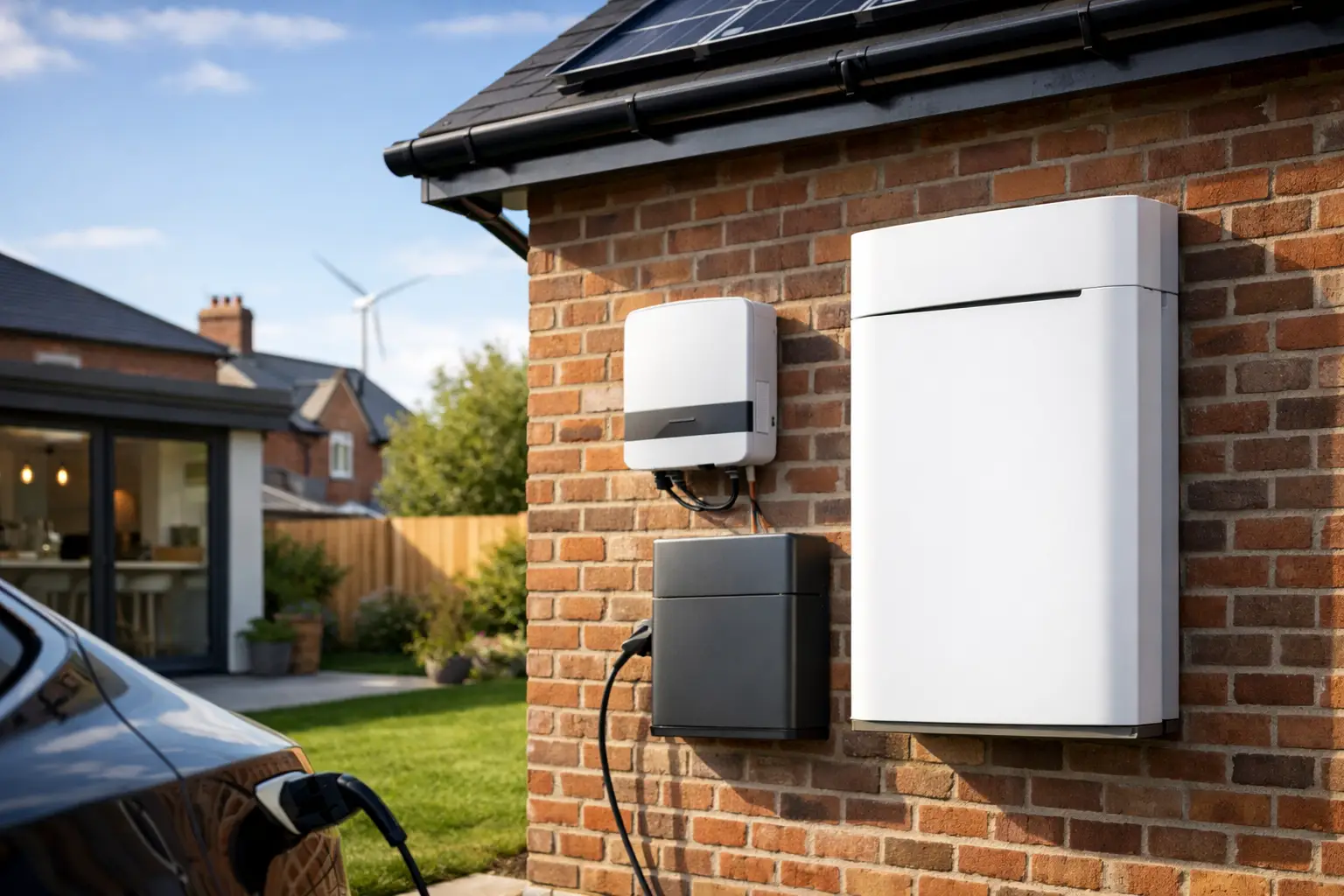
If you have started looking at solar storage, you have probably noticed that the best home battery brands are not all trying to solve the same problem. Some focus on backup power, some on value for money, and some on smart tariff savings. That matters, because the right battery for your home in Cardiff, Bristol or anywhere else in the UK depends just as much on your usage and installer as it does on the badge on the front.
Which best home battery brands stand out in the UK?
A few names come up again and again in the UK market for good reason. Tesla, GivEnergy, SolarEdge, Enphase, BYD, Fox ESS and Sunsynk are among the brands most homeowners are likely to encounter when comparing quotes. They have strong visibility, established installer networks and product ranges that suit typical British homes.
That said, brand recognition is only part of the picture. A battery can be excellent on paper and still be a poor fit if it does not work well with your inverter, your tariff or the way your household uses electricity. The best choice is usually the one that balances reliability, warranty support, usable capacity and sensible installation design.
Tesla Powerwall
Tesla is often the first brand people ask about. The Powerwall has a strong reputation, a sleek all-in-one design and a user experience that feels polished. For households that want a premium product with substantial storage capacity and a well-known name, it is easy to see the appeal.
Its strengths are simplicity and performance. It is particularly attractive for homes with higher electricity use, and for buyers who like the reassurance of a brand they already know. The trade-off is price. Tesla is rarely the cheapest route into battery storage, and availability can vary depending on installer access and demand.
Backup capability is another selling point, but this depends on how the system is specified and installed. Not every home will need that feature, and not every installation will be set up to make full use of it.
GivEnergy
GivEnergy has become one of the most talked-about UK battery brands, especially among homeowners focused on value and tariff optimisation. It is a British brand with products that are commonly paired with solar systems and time-of-use tariffs, making it a familiar option in many installer proposals.
One of its biggest advantages is flexibility. GivEnergy offers different battery sizes and inverter options, so it can suit both new solar installations and retrofit projects. It also tends to appeal to buyers who want good app visibility and a system designed with UK energy habits in mind.
No brand is perfect, and some buyers will prefer a more premium-looking product or a different software experience. Still, for practical households that want to cut grid import and make the most of off-peak electricity, GivEnergy is often a serious contender.
SolarEdge
SolarEdge is best known for its wider solar ecosystem rather than battery storage alone. If you already have, or plan to install, a SolarEdge solar system, its battery offering can make a lot of sense because the components are designed to work together.
That integrated approach can help with performance monitoring and overall system management. It can also simplify support when fewer brands are involved. The limitation is that SolarEdge tends to make the most sense within a SolarEdge-led setup, rather than as a standalone battery choice for every property.
For homeowners who value a joined-up system, it is a strong option. For those shopping more broadly, it may be one of several good routes rather than the obvious winner.
Enphase
Enphase is another brand with a strong reputation in solar, particularly where microinverters are involved. Its battery systems are often considered by homeowners who want high-quality components and a modular setup that can grow over time.
The modular approach is useful if you do not want to commit to a large battery from day one. You can start smaller and expand later, depending on budget and energy use. That flexibility is appealing, especially for homes still working out how much storage they really need.
The downside is cost. Enphase can sit towards the premium end of the market, and it may not be the most cost-effective route for every household. Still, for reliability and system design, it deserves its place in the conversation.
BYD
BYD has a strong international presence and is widely respected for battery manufacturing. In the home energy market, it is often chosen as part of a broader inverter-and-battery package rather than for branding alone.
A key advantage is scalability. BYD batteries can work well for households that want to build a larger storage system, and they are often used in projects where flexibility matters. Installers also tend to rate them well when properly matched with compatible equipment.
For the average homeowner, though, BYD may feel less familiar than Tesla or GivEnergy. That does not mean it is a weaker choice – only that it may depend more on the quality of the installer explanation and the overall system design.
Fox ESS and Sunsynk
Fox ESS and Sunsynk are both increasingly visible in UK quotes, especially where buyers want a more affordable path into battery storage. These brands are often considered when value matters and when homeowners want a system that works hard without carrying a premium price tag.
They can be a sensible fit for many homes, particularly if the priority is reducing bills rather than owning the most recognisable product. In the right setup, they can deliver strong results. The main thing to watch is consistency in design, support and installer familiarity, because product quality is only one part of long-term satisfaction.
How to compare the best home battery brands properly
The easiest mistake is to compare batteries by headline capacity alone. A 10 kWh battery is not automatically better than a 5 kWh one if your evening usage is modest, your export tariff is strong, or your solar generation is limited in winter.
Start with usable capacity, not just total capacity. Then look at warranty terms, expected lifespan, round-trip efficiency and whether the system is AC-coupled or DC-coupled. These details affect how much electricity you can actually store and reuse, and how future-proof the installation will be.
Software matters too. A battery is not just a box on the wall anymore. Good monitoring, tariff scheduling and easy-to-understand controls make a real difference to savings over time. If one brand gives you sharper control over off-peak charging and another does not, that can outweigh a small difference in capacity.
The installer matters as much as the brand
A well-installed battery from a lesser-known manufacturer will usually serve you better than a badly designed system from a famous brand. That is why accredited installation matters so much. The battery, inverter, consumer unit, solar array and tariff all need to work together.
This is especially relevant for retrofit projects. If you already have solar panels, the best brand may be the one that integrates neatly with your current setup rather than the one with the loudest marketing. An experienced MCS-accredited installer should explain the trade-offs clearly and show how the battery will perform in your specific property.
Support after installation matters as well. If there is a software issue, a firmware update or a warranty question, you want a clear route to help. Strong local installer support can sometimes be more valuable than choosing the most fashionable battery brand.
What is the best battery brand for your home?
If you want a premium, well-known all-in-one system, Tesla is likely to be on your shortlist. If you want strong value and a battery that suits UK tariffs well, GivEnergy is often attractive. If you are building around a specific solar ecosystem, SolarEdge or Enphase may be the smarter fit. If flexibility and scalability matter, BYD is worth serious consideration. If budget is a bigger concern, Fox ESS and Sunsynk may offer a better balance.
There is no single winner for every home. A family with high evening consumption, an EV on the drive and a time-of-use tariff will judge brands differently from a retired couple using modest electricity during daylight hours. The best decision usually comes from comparing a few properly designed quotes, not chasing one brand name.
For households that want less hassle, this is where a service that compares vetted installers can save time. Rather than trying to assess every battery manufacturer and contractor yourself, it helps to see a few credible options side by side and ask how each system would perform in real life.
A good battery should make your home cheaper to run and easier to manage, not harder to understand. If a quote leaves you confused, keep asking questions until it does not.

