

If you have looked up at a grey January sky and wondered, do solar panels work in winter, you are asking exactly the right question. For most households and businesses, the concern is not whether solar stops altogether, but whether winter generation is still worthwhile when daylight hours are shorter and the weather is less predictable.
The short answer is yes. Solar panels do work in winter, and in some conditions they perform surprisingly well. What changes is not the basic ability to generate electricity, but the number of daylight hours, the sun’s angle, local shading and the frequency of dull weather. That means winter output is usually lower than in summer, but it is rarely zero.
Do solar panels work in winter in the UK?
Yes, they do. Solar panels generate electricity from daylight, not heat. That distinction matters because many people assume cold weather prevents panels from working properly. In reality, panels can generate power on bright winter days even when the temperature is close to freezing.
In the UK, winter solar production is lower mainly because days are shorter and the sun sits lower in the sky. Cloud cover can also reduce generation, although it does not stop it entirely. Panels still produce electricity under overcast skies – just at a lower level than they would in direct sunshine.
This is why a well-designed solar system is judged over the full year, not just one season. Installers look at annual generation, roof position and your property’s energy use pattern rather than focusing only on December and January.
Why cold weather is not the problem
Solar panels are electronic equipment, and like many forms of equipment, they often operate more efficiently in cooler conditions than in excessive heat. Very high temperatures can slightly reduce panel efficiency. A crisp, sunny winter day can actually be excellent for solar generation.
The real winter challenge is reduced sunlight exposure. In places such as Cardiff, Newport, Swansea and Bristol, winter conditions can vary from bright, clear mornings to long stretches of cloud and rain. That variation affects output far more than the temperature itself.
So if your concern is frost, low temperatures or cold air, those are usually not the deciding factors. The bigger questions are how much usable daylight your roof gets and whether trees, nearby buildings or roof features create shade when the sun is lower.
What to expect from winter solar output
Winter generation is typically a smaller share of your annual total. That is completely normal. A solar system in June may produce several times more electricity than the same system in December simply because there are more daylight hours and stronger solar intensity.
That does not mean winter generation has no value. Even lower output can still offset daytime electricity use, especially if someone is at home during the day or if a business operates through daylight hours. Any electricity you generate and use directly is electricity you do not need to buy from the grid.
For homes with battery storage, winter solar can still be useful, although batteries tend to deliver the biggest impact during the brighter months when there is more surplus energy to store. In winter, the battery may not fill as often, but it can still help you make better use of what your panels produce.
The key is realistic expectations. Solar in the UK is not about achieving summer performance all year round. It is about reducing your grid reliance across the year, with stronger returns in spring and summer balancing quieter winter months.
Snow, frost and rain – do they stop solar panels working?
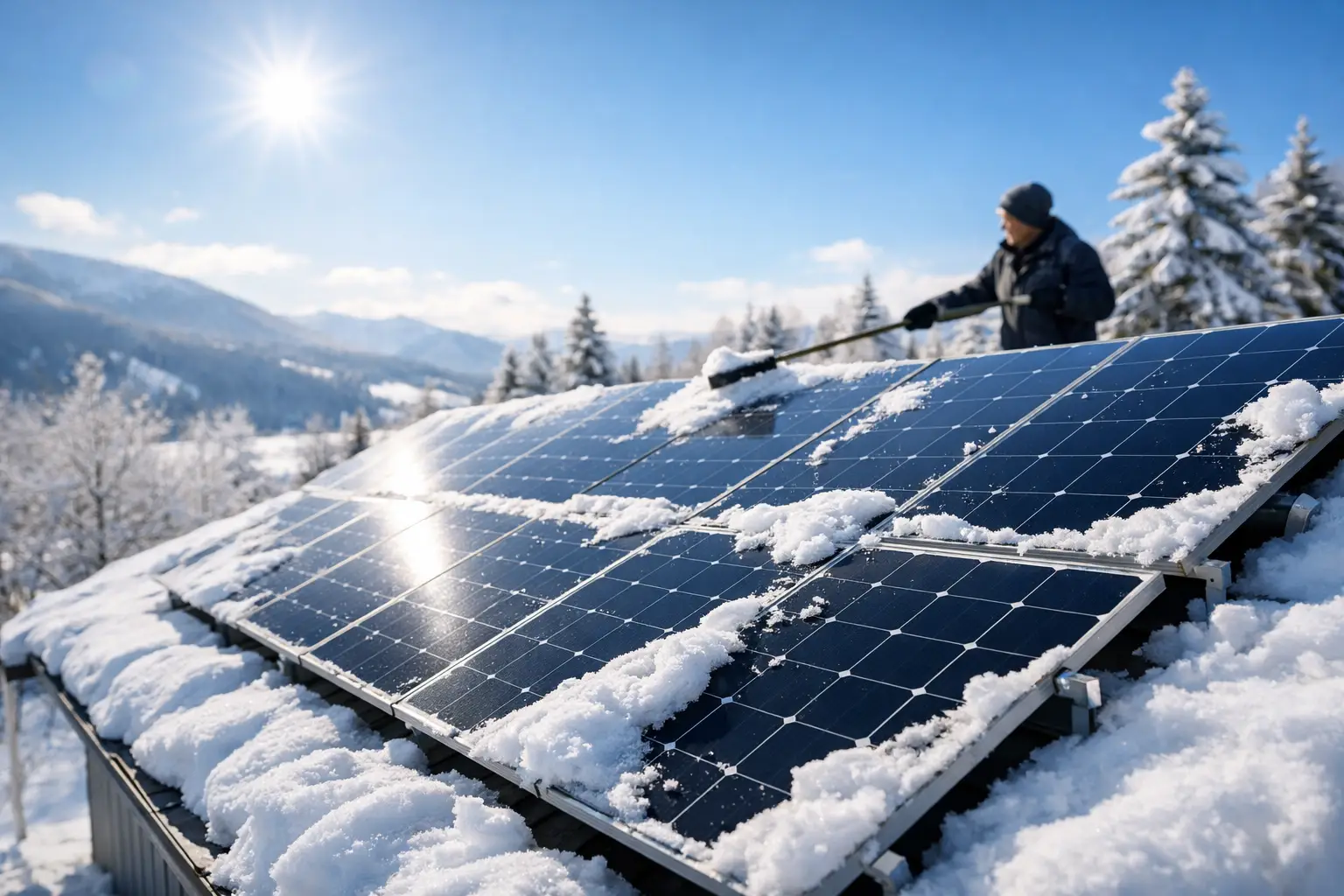
In most parts of South Wales and the South West, snow cover is occasional rather than persistent. If snow settles on panels and fully covers them, generation will temporarily drop because daylight cannot reach the cells properly. But this is usually a short-term issue in the UK climate.
Panels are fitted at an angle, so light snow often slides off more quickly than people expect once temperatures rise or the sun comes out. Frost is less of a problem than many assume. A frosty panel can still generate once light reaches it, and frost usually clears naturally.
Rain is not a problem for solar panels. Systems are designed for outdoor use and typical British weather. In fact, rain can help wash away some dust and debris, although it is not a substitute for proper maintenance if panels become heavily soiled.
The practical point is this: winter weather can affect output on specific days, but it does not make solar ineffective overall.
Roof angle and shading matter more in winter
When the sun is lower in the sky, shading becomes more significant. A chimney, nearby tree or neighbouring building that barely affects summer output may cast a longer shadow in winter. That is one reason a proper site assessment matters.
Roof angle also plays a part. Many UK roofs are already suitable for solar, but some perform better than others through the darker months. South-facing roofs generally produce the strongest overall results, while east and west-facing roofs can still be worthwhile depending on your energy use and the system design.
This is where working with MCS-accredited installers is important. They can assess likely year-round performance rather than giving you a rough estimate based on best-case conditions. For property owners who want clarity on savings and payback, that accuracy matters.
Is solar still worth it if winter output is lower?
For many households and businesses, yes. Solar is a long-term investment, and its value comes from year-round generation, lower electricity bills and greater control over energy costs. Winter is only one part of the picture.
If your property uses a lot of electricity across the daytime, solar can still make sense even with lower winter generation. If your highest usage is in the evenings, adding a battery may improve how much of your own electricity you can use. If your roof has significant shading or poor orientation, the numbers may be less attractive. This is one of those areas where it depends on the property.
The best approach is not to ask whether winter output is perfect. It is to ask whether the system makes financial and practical sense across the full year. In many cases, it does.
How to get the best winter performance from solar panels
A good installation starts with good design. Panel placement, system size and inverter quality all affect how well your system performs when conditions are less than ideal.
Beyond that, a few practical factors can help. Keep panels free from heavy debris such as leaves if they build up. Make sure overhanging branches are managed where appropriate. Check that your monitoring system is working so you can spot unexpected drops in performance. If you are considering a new installation, ask for realistic monthly generation estimates rather than just annual headline figures.
For some properties, battery storage is worth discussing at the same time as solar. It will not create extra winter sunlight, but it can help you use more of the electricity you generate, especially in shoulder seasons when output is steadier.
A common misconception about winter solar
One of the biggest misunderstandings is that solar only works in hot, sunny countries. That is simply not true. The UK has a mature solar market for a reason. Panels do not need Mediterranean weather to be worthwhile. They need daylight, sensible system design and honest expectations.
That is also why comparing installer recommendations carefully is so useful. A trustworthy quote should explain expected performance in British conditions, not just present an optimistic annual figure without context. At Solar Planet, this is exactly why customers are matched with vetted, MCS-accredited local installers who can assess what is realistic for the property in front of them.
If you are weighing up solar for your home or business, winter should be part of the conversation – just not the whole conversation. A system that still contributes on short, cold days and performs strongly through the rest of the year can make a meaningful difference to your energy bills. The right question is not whether solar disappears in winter, but whether your property is well suited to benefit from it.

