

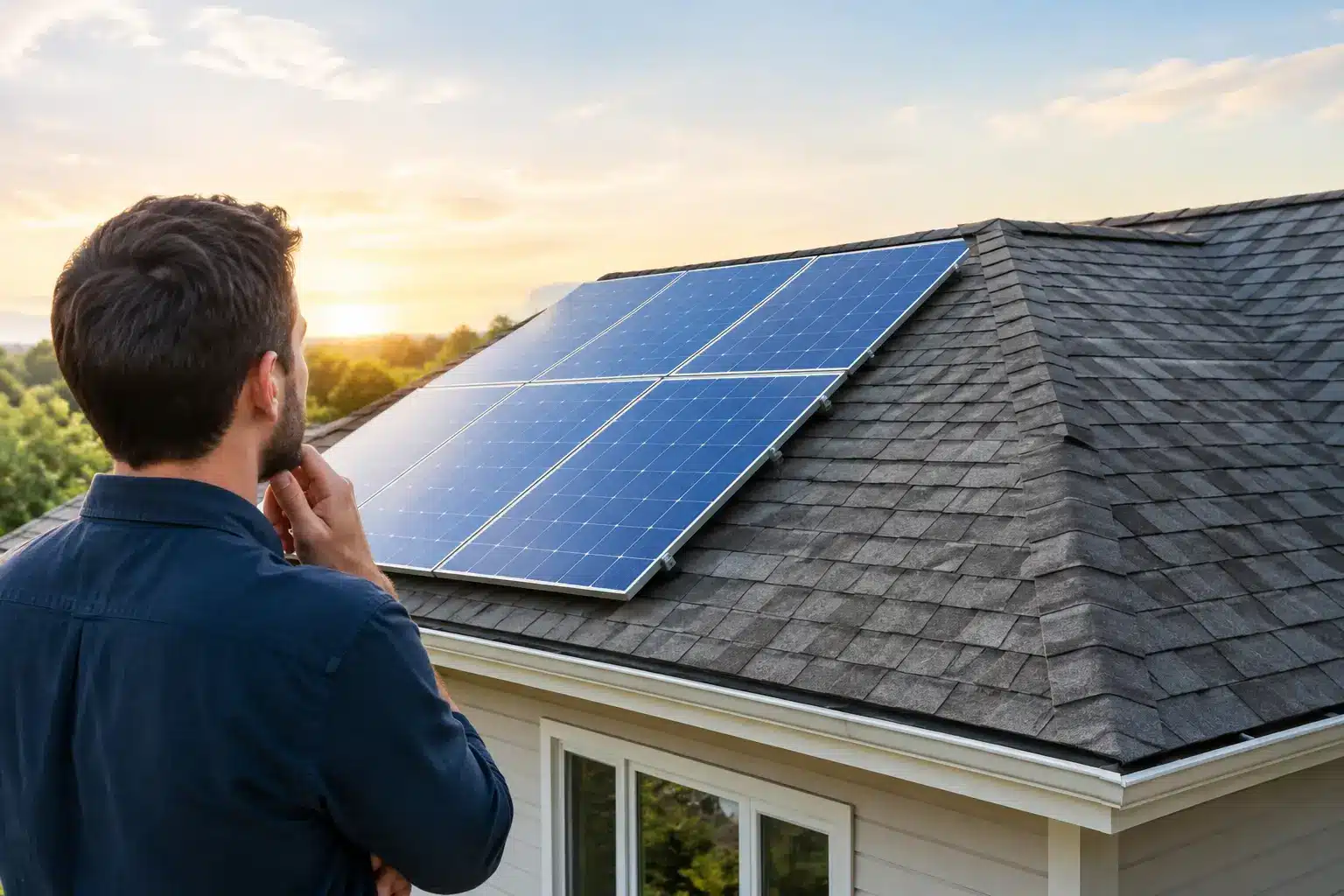
A roof that is nearing the end of its life can turn an otherwise straightforward solar project into an expensive decision. When weighing solar panels versus roof replacement, the right order is usually determined by one practical question: will the roof be ready to support the system for its full working life?
Solar panels can generate electricity for 25 years or more. If major roof work is likely within that period, fitting panels first may mean paying for scaffolding, removal and reinstallation later. That does not mean every older roof must be replaced before going solar. It means the condition of the roof deserves an honest assessment before you commit.
Solar panels versus roof replacement: the sensible order
For most homes and commercial properties, replacing a roof first is the safer choice when it is already showing clear signs of deterioration or has limited years remaining. A new roof gives installers a sound, dependable surface to work with and helps you avoid disturbing a recently installed solar array.
If the roof is in good condition, has been well maintained and has plenty of life left, solar can go ahead without waiting. Many properties across Cardiff, Newport, Swansea and Bristol have roofs that are perfectly suitable for solar despite not being new. Age alone is not the deciding factor. Condition, construction and expected lifespan matter more.
A useful rule of thumb is this: if substantial roof work is likely in the next 10 to 15 years, explore replacement before installation. If a qualified roofer expects the roof to last comfortably beyond that, solar is often the more immediate opportunity to reduce electricity bills.
Why removing panels later costs more than people expect
Solar panels are designed to be securely fixed to your roof. When roof repairs or replacement become necessary, the system must be safely isolated, removed, stored, then reinstalled and tested once the roofing work is complete. This is not a simple case of lifting a few panels aside.
You may need scaffolding twice, along with labour from both roofing and solar specialists. There can also be costs for replacing damaged mounting components, updating electrical checks and arranging access around the property. The final bill varies with system size, roof height and complexity, but it can reduce the financial advantage of installing solar before an overdue roof replacement.
Planning both jobs together can also minimise disruption. Rather than having separate periods of scaffolding, site visits and tradespeople at your home, the work can be coordinated in one project window.
When you should replace the roof before solar
Some roof issues should be addressed before any solar design is finalised. Loose, cracked or missing tiles, recurring leaks, sagging areas, decayed timbers and damaged flashing all need attention. Solar mounting does not cause these problems, but fitting a system to an already compromised roof can make future repairs more complicated.
The same applies if you are considering a loft conversion, major insulation work or structural alterations. It is generally better to complete those projects first, as they may affect the roof covering, rafters or access routes used by installers.
Flat roofs need particular thought. A flat-roof solar system may use a ballasted frame or another mounting approach, so the roof membrane, drainage and load-bearing capacity must be assessed. If the covering is nearing the end of its serviceable life, replacing it first is usually the sensible long-term decision.
Older properties can need additional checks too. A survey should consider the roof structure, rafter condition, tile type and any signs of previous movement. This is not about finding reasons to delay solar. It is about ensuring the installation is safe, durable and properly matched to the building.
When solar panels can come first
A roof does not need to be brand new to be solar-ready. If recent repairs have been completed, the covering is watertight and a roofer confirms the structure is sound, there may be no reason to postpone your solar plans.
This can be particularly relevant if high electricity use is already affecting your household or business budget. A well-designed system can begin reducing the electricity you buy from the grid as soon as it is commissioned. Delaying for a replacement that may not be required for many years could mean missing out on useful savings now.
There are also situations where only localised roofing repairs are needed. Replacing a small section of damaged tiles, renewing flashing or fixing a minor issue before installation can be enough. The key is not to confuse routine maintenance with a full roof replacement.
A reputable installer should be comfortable discussing these distinctions. They should not pressure you to install panels on a roof that clearly needs major work, nor automatically insist on a new roof simply because the property is older.
Get the roof and solar surveys in the right order
Start with a roof inspection if you have any doubts about its condition. A trusted roofer can identify whether repairs are sufficient, estimate the remaining lifespan of the roof and flag structural concerns. Ask for clear evidence and an explanation in plain language, rather than accepting vague advice that a roof is “old”.
Once you understand the roof position, obtain solar proposals based on the actual property. An MCS-accredited installer should assess the roof orientation, shading, available space, electrical setup and the proposed fixing method. They can then explain expected generation, system size and whether battery storage would improve the value of the project.
If you need both services, share the roof report with prospective solar installers and the solar layout with your roofer. Coordination matters. For example, roofers may need to ensure suitable areas are retained for brackets and cable routes, while solar installers need to know what materials and warranties will be used on the new roof.
Solar Planet can simplify this stage by helping property owners compare up to four quotes from trusted local, MCS-accredited installers. Comparing proposals makes it easier to ask the same practical questions of each provider and judge value beyond the headline price.
Questions worth asking before you commit
Before accepting either quote, make sure you understand the proposed sequence of work. Ask the roofer how long the roof is expected to last after repair or replacement, and what warranty applies to their work. Ask the solar installer whether the roof survey has identified any limitations, how penetrations and flashing will be handled, and what happens if tiles are damaged during installation.
It is also worth asking who is responsible for each stage if the projects are carried out together. A clear schedule avoids the common problem of one contractor waiting for another before they can finish. For businesses, this is especially useful where access, trading hours and health and safety arrangements need careful planning.
Price should be compared carefully, but the cheapest quote is not always the best outcome. A lower-cost solar installation can become poor value if it is fitted to a roof that needs replacing soon after. Equally, paying for a full roof replacement when targeted repairs would safely extend its life may be unnecessary.
A better decision than “roof or solar”
The choice is rarely a strict either-or. The best plan may be roof repairs followed by solar, a complete reroof coordinated with the installation, or solar straight away after a professional inspection confirms the roof is ready.
Treat the roof as part of the solar investment, not as a separate afterthought. A sound roof, an accurately designed system and experienced accredited installers give you the best chance of enjoying lower energy costs without avoidable disruption later.

