

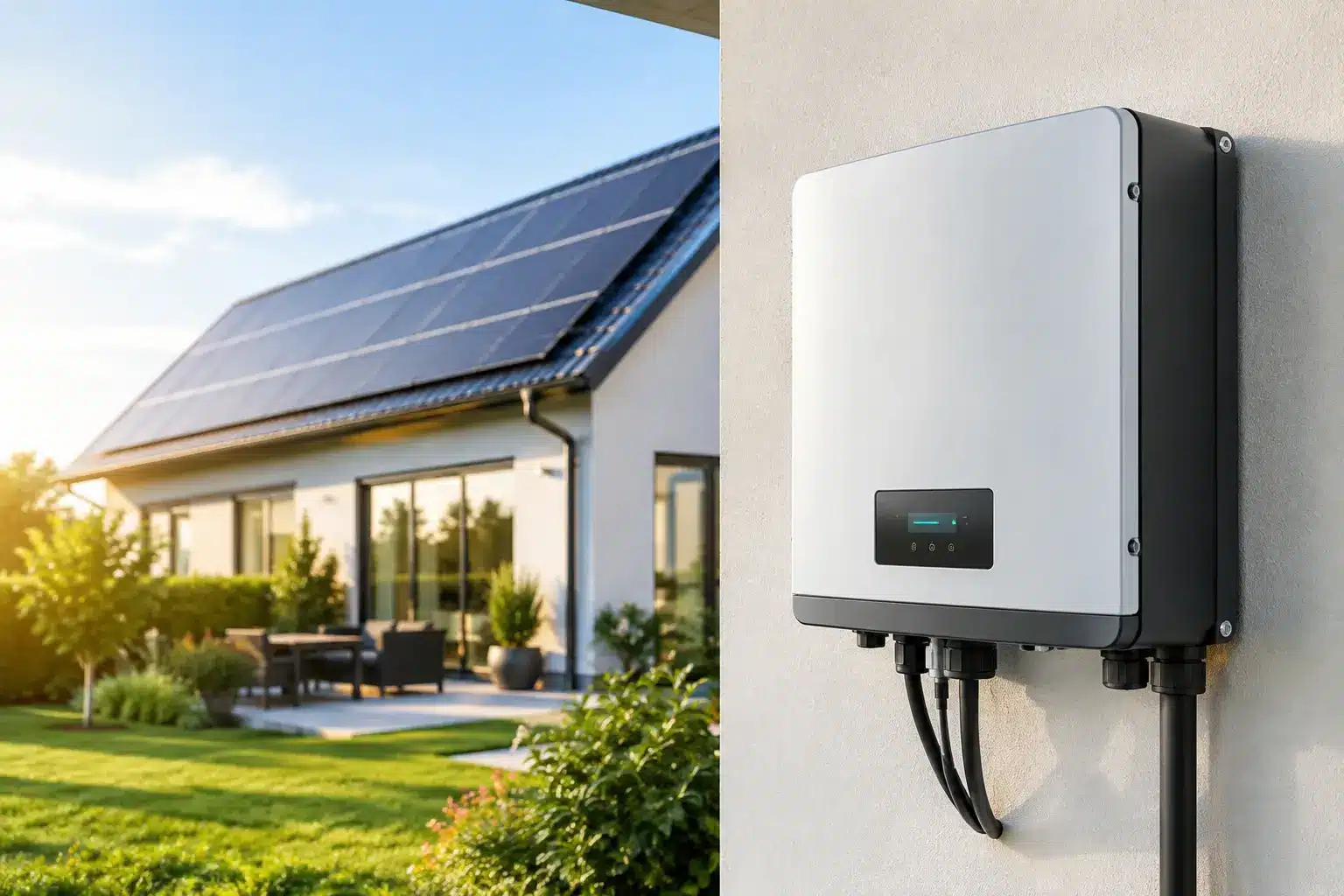
A solar inverter may be a relatively small box on the wall, but it has a major influence on how much useful electricity your panels produce, how easily you can add a battery, and how straightforward the system is to monitor. When comparing the best solar inverter brands UK homeowners can buy, the right answer is rarely just the most recognisable name. It is the model that suits your roof, electricity use, budget and future plans.
For homes and businesses across South Wales and the Bristol area, the best starting point is a properly designed system from an MCS-accredited installer. They can assess shading, roof layouts, cable routes and your local grid connection requirements before recommending equipment that works together well.
What makes a solar inverter a good choice?
Solar panels generate direct current electricity, while your property uses alternating current. The inverter converts one into the other, supplying your home first and exporting any spare power to the grid. It also manages vital safety functions and records generation data.
A good inverter should be efficient, dependable and correctly sized for the solar array. It should also offer monitoring you will actually use, with a clear app or portal that makes it easy to see generation, household consumption and, where fitted, battery performance.
Compatibility matters just as much. If you expect to install battery storage or an EV charger later, choosing an inverter with a sensible upgrade path can avoid unnecessary replacement costs. A lower upfront price is not always better value if it limits your options a few years from now.
Warranty terms deserve a close look too. Manufacturers offer different standard periods, and extensions may be available, but the wording matters. Check what is covered, who handles a fault, whether labour is included, and whether the installer will still be available to support the system.
Best solar inverter brands UK buyers should compare
The brands below are widely specified by reputable UK installers. None is automatically right for every property, but each has a clear place in the market.
SolarEdge
SolarEdge is particularly well known for systems using power optimisers. These small devices sit behind individual panels, allowing each panel to operate more independently than it would in a conventional string arrangement. That can be valuable on roofs affected by chimneys, dormers, nearby trees or several roof orientations.
Its monitoring is detailed, making it easier to spot how individual panels are performing. The trade-off is that a SolarEdge design includes more components than a standard string inverter setup, which can increase the initial cost. On a simple, unshaded south-facing roof, the extra investment may not produce enough additional benefit to justify it. On a more complicated roof, it can be a very sensible choice.
Enphase
Enphase takes a different approach with microinverters. Rather than one central inverter serving a group of panels, each panel has its own compact inverter. This helps systems continue producing well where panels face different directions or receive uneven shade.
Microinverters are also attractive for homeowners planning to add panels gradually, provided the roof and electrical design allow it. They tend to cost more than traditional string inverter systems, so they are often best suited to challenging roofs or customers who place high value on panel-level performance and flexible expansion. Access for any future roof work should be considered because the equipment sits beneath the panels.
SMA
SMA has a long-standing reputation in the solar sector and is often chosen for dependable, well-engineered string inverter systems. Its products suit many straightforward domestic and commercial installations, particularly where a roof has consistent sunlight and a clean layout.
For a standard solar-only installation, SMA can represent a strong balance of quality and value. The available features vary by model, so ask specifically about battery compatibility and monitoring rather than assuming every unit has the same capabilities. This is a brand worth considering when reliability and proven performance are higher priorities than an extensive app-led ecosystem.
Fronius
Fronius is another established manufacturer that is popular with installers who value build quality, practical servicing and strong system control. Its inverters are frequently considered for properties with more demanding energy needs, including homes planning battery storage, heat pumps or electric vehicle charging.
A Fronius system can cost more than entry-level alternatives, but it may appeal to households that want greater control over how solar generation is used. As with all brands, the exact model is crucial. A capable inverter will only deliver its best results when it has been designed around your panels, consumption patterns and battery plans.
Huawei
Huawei inverters are common in the UK market and are often selected for their competitive pricing, tidy design and broad range of hybrid options. A hybrid inverter can work with solar panels and battery storage, helping you store surplus daytime generation for use after dark.
This can make Huawei an appealing option for households focused on a cost-effective solar-and-battery package. However, it is worth confirming which battery products are compatible with the proposed model and what functionality remains available during a power cut. Most standard solar systems switch off in an outage for safety, even when a battery is installed, unless suitable backup equipment has been specified.
GivEnergy
GivEnergy is a British battery storage brand with a strong presence in domestic energy systems. While it is best known for batteries, its hybrid inverters are often considered by homeowners who want to make the most of time-of-use electricity tariffs alongside solar generation.
The appeal is straightforward: charge a battery from low-cost grid electricity when appropriate, store surplus solar, then use that energy when household demand and electricity prices are higher. It is a compelling setup for the right property, but it needs careful programming and realistic expectations. Battery storage reduces imported electricity; it does not make a home entirely independent of the grid throughout a British winter.
String, optimiser or microinverter: which system suits your roof?
Brand is only one part of the decision. The inverter type can have an even bigger effect on the design.
A conventional string inverter is usually the simplest and most cost-effective option. Panels are grouped together in strings, making this approach well suited to a clear roof with little shade and panels facing the same direction. It is often an excellent choice for straightforward installations.
Optimiser systems, including many SolarEdge designs, offer more control at panel level and can help manage partial shading or mixed roof aspects. Microinverters provide a similar panel-by-panel benefit, with conversion taking place at each panel rather than at a central unit. Both approaches may be worthwhile for difficult roofs, but they are not an automatic upgrade for every home.
Your installer should explain the expected generation difference in plain terms. If an additional £1,000 of equipment is predicted to improve annual output only marginally, it may take a long time to repay itself. If a shaded section of roof would otherwise hold back the entire array, the calculation can look very different.
Questions to ask before accepting an inverter quote
A clear quote should name the inverter manufacturer and exact model, not simply say “premium inverter”. Ask why that model has been selected for your roof and whether it is sized appropriately for the proposed panel capacity. Slightly undersizing an inverter can sometimes be a deliberate, sensible design choice, but it should be explained rather than hidden.
You should also ask how the system will perform if you add a battery, EV charger or more panels later. Confirm the monitoring arrangements, product warranty, installer workmanship warranty and process for handling faults. For battery systems, ask whether backup power is included or whether the battery is solely for reducing energy bills.
Finally, make sure the installer will complete the relevant grid notification or application. Smaller domestic systems commonly fall under G98 requirements, while larger or more complex systems may need G99 approval. This is not glamorous paperwork, but it is essential for a compliant installation.
Make the choice with the full system in mind
The best inverter is not necessarily the one your neighbour has, or the one with the lowest line item on a quote. It is the one that fits a well-designed solar system, has dependable support behind it and leaves room for the way you may use energy in the future.
Comparing several proposals from MCS-accredited local installers makes that decision much easier. Solar Planet can connect you with up to four vetted installers, so you can compare recommended brands, system designs and prices with the confidence that the advice is based on your property rather than a one-size-fits-all package.

