

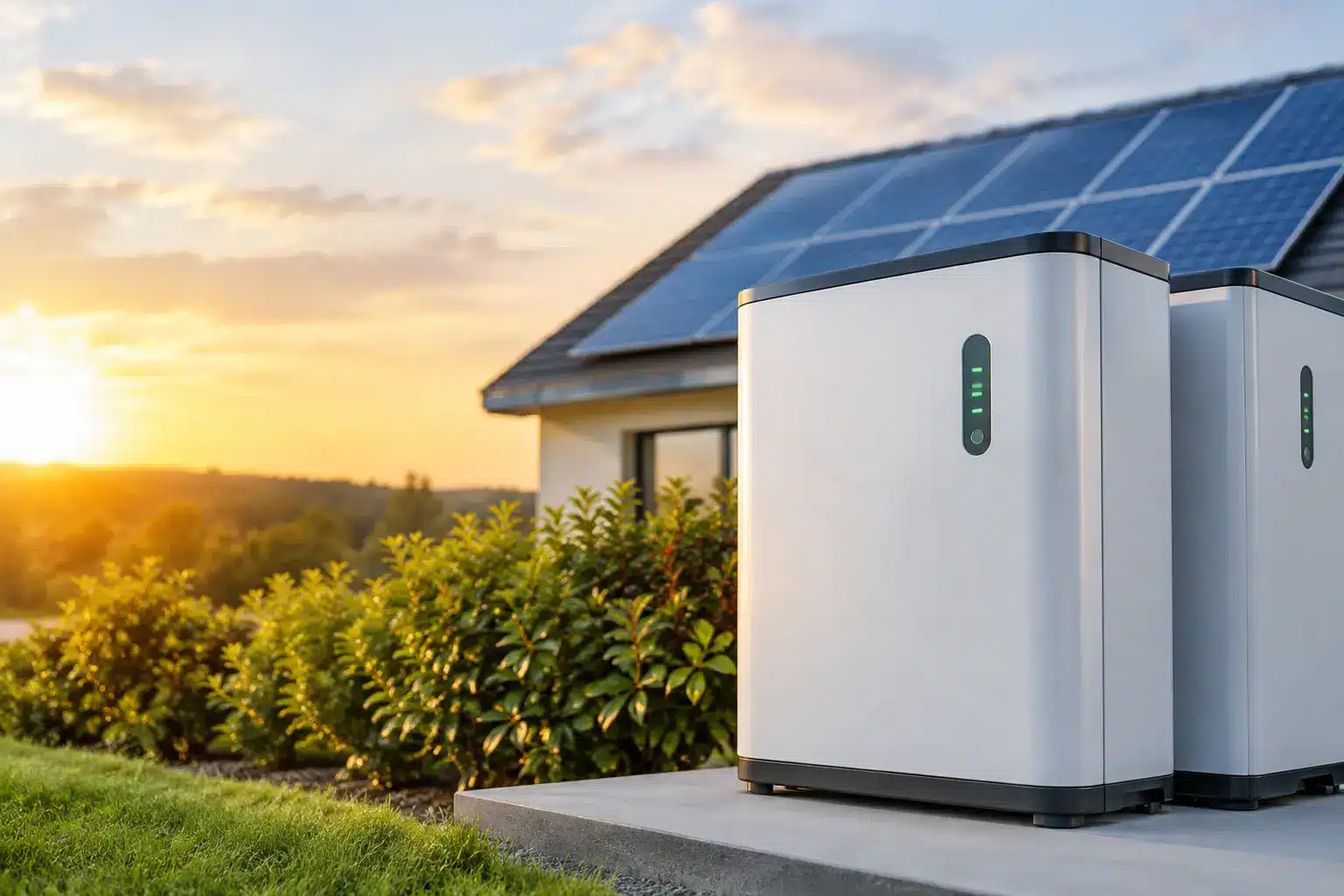
A home battery is often the part of a solar installation that prompts the most questions about long-term value. Solar battery lifespan is not a fixed number, because usage, temperature, battery type and installation quality all make a difference. Still, for most households, a well-chosen modern battery should provide reliable storage for many years and help reduce the amount of electricity bought from the grid.
The useful question is not simply, “How long will it last?” It is whether the battery will continue to meet your household’s needs as it gradually loses capacity, and whether the expected savings justify the upfront cost. Here is what to look for when comparing battery storage quotes.
How long is a solar battery lifespan?
Most domestic solar batteries are designed to last around 10 to 15 years. Many manufacturers provide a warranty of 10 years, although the exact cover varies. Some warranties are based on a minimum retained capacity, while others set a maximum number of charging cycles or a limit on the total energy the battery can deliver during its life.
A battery does not usually stop working the day its warranty ends. Like the battery in a phone or electric car, it slowly holds less energy over time. A unit that began with a 10 kWh usable capacity may still work well after a decade, but it may store somewhat less than it did when new.
For a typical household, that gradual change is often manageable. If your daytime solar generation regularly exceeds what you use, even a battery with reduced capacity can still store enough power for the evening. However, a household that relies heavily on battery power overnight, or plans to add an EV charger or heat pump, should think carefully about future demand from the start.
What affects solar battery lifespan?
The chemistry inside the battery matters, but the way it is specified and used matters just as much. Lithium iron phosphate, often shortened to LFP or LiFePO4, is widely used in home storage because it is durable, stable and well suited to frequent charging. Other lithium-ion chemistries can also perform well, but they may have different cycle-life and operating characteristics.
Charging cycles and depth of discharge
A charging cycle is broadly the equivalent of using and replacing the battery’s stored energy once. It does not have to happen in one go. For example, using half the battery in the morning and half in the evening can add up to one full cycle.
The deeper a battery is discharged, the more strain each cycle can place on it. Manufacturers account for this by building in controls that prevent the battery from being fully emptied or fully charged in normal operation. The capacity shown on a quote may therefore differ from usable capacity. This is not necessarily a drawback – it is often part of protecting the battery and extending its working life.
A system that cycles once most days will naturally accumulate more use than one that is used only occasionally. That does not mean daily cycling is a bad idea. Batteries are bought to be used. It simply means a household should select a product with a warranty and cycle rating that suits its expected pattern of consumption.
Heat, cold and where the battery is installed
Batteries generally perform best in a moderate, stable temperature range. High heat can speed up degradation, while very cold weather can temporarily reduce charging performance and available capacity. This is why a suitable installation location is more than a cosmetic decision.
A garage, utility room or protected outdoor position can all work, depending on the equipment and the property. The installer should consider ventilation, safe access, manufacturer requirements, exposure to weather and the route for cabling. In South Wales and the Bristol area, a sheltered location can also help protect outdoor equipment from persistent damp conditions.
System design and installer quality
A battery cannot deliver its best performance if the rest of the system is poorly designed. The inverter, solar array size, household demand, export settings and electrical installation all need to work together.
For example, fitting a very large battery to a small solar array may mean it rarely charges fully from solar energy. A battery that is too small may fill early in the day and leave valuable solar generation unused. Neither choice is automatically wrong, particularly where off-peak electricity tariffs are part of the plan, but both should be explained clearly before you commit.
Working with an MCS-accredited installer gives you greater confidence that the proposed system has been assessed properly and installed to recognised standards. It also makes it easier to compare like-for-like recommendations rather than choosing purely on the headline battery size.
Understanding battery warranties
A 10-year warranty is a useful benchmark, but it is worth reading beyond the headline. Manufacturers commonly state a capacity retention figure, such as 60% or 70%, at the end of the warranty period. This means the battery is expected to retain at least that proportion of its original usable capacity, provided it has been operated within the stated conditions.
Many warranties also include a throughput limit. Throughput is the total amount of electricity that can pass through the battery over its warranted life. This protects the manufacturer where a battery is used far more intensely than a typical home-storage system.
When reviewing quotes, ask the installer to explain the warranty in plain English. You should understand the length of cover, minimum retained capacity, throughput allowance, labour cover and who to contact if there is a fault. Also ask whether monitoring is included. Being able to see generation, battery charge and household use can help you spot unexpected changes early.
How to make a solar battery last longer
You do not need to manage a home battery constantly. A correctly configured system should do most of the work automatically. Good habits can still protect its value over time.
Avoid changing settings without understanding the impact, particularly charge limits and backup modes. If you use an intelligent tariff, make sure the charging schedule is designed around your solar generation, electricity rates and normal household routine. Charging from cheaper overnight electricity can be sensible in winter, but it should complement rather than waste the opportunity to store your own solar power.
Keep the installation area clear, dry and accessible for inspection. If the manufacturer or installer recommends software updates, servicing or periodic checks, follow that advice. Most systems need very little maintenance, but damaged cables, error messages or unexplained drops in performance should be checked promptly by a qualified professional.
It is also sensible to revisit your energy use after major changes at home. An electric vehicle, heat pump, extension or growing family can alter the way a battery performs in practice. In some cases, adding another compatible battery module later is more cost-effective than replacing the original system, provided the product range supports expansion.
Is battery replacement inevitable?
Eventually, every battery will reach a point where replacement becomes the sensible choice. That may be because its usable capacity no longer fits your needs, a fault is uneconomical to repair, or newer technology offers a meaningful improvement. Yet replacement should not be viewed as failure. Solar panels can continue generating for decades, while storage technology has a shorter but still substantial service life.
The financial case depends on your electricity use, tariff, solar generation and the battery’s eventual performance. Households that use a large share of their stored electricity in the evening can often gain more value than those who are out all day and use little power after sunset. Commercial sites may benefit differently, particularly if they can reduce expensive peak-time imports.
Choosing storage that suits your property
The longest-lasting battery is not automatically the best battery for your home or business. The right option is one that is appropriately sized, carries clear warranty protection and is installed where it can operate safely and efficiently.
Before accepting a quote, share your annual electricity usage, typical daytime occupancy, future plans for an EV or heat pump, and any preference for backup power. A good installer will use that information to explain the likely benefits and limitations rather than promising identical savings for every property.
Solar Planet can help homeowners and businesses compare quotes from trusted, MCS-accredited local installers without the pressure of contacting providers one by one. The most helpful next step is a clear conversation about how you use energy now, because a battery chosen around your real routine is more likely to keep delivering value for years to come.

