

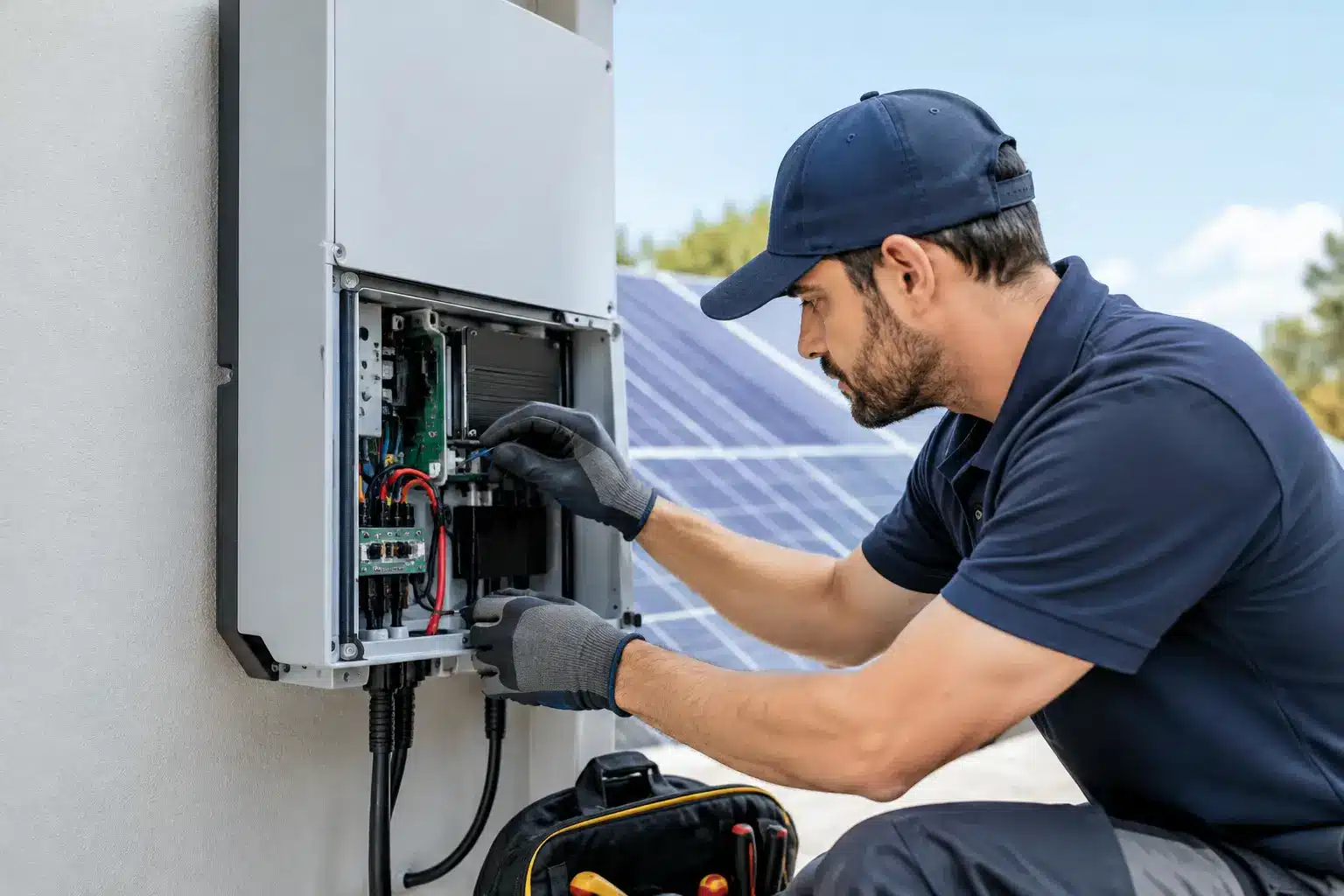
A solar inverter can go from quietly doing its job to displaying a fault code at exactly the wrong moment. If you need emergency solar inverter repair, the priority is not to guess at the cause or remove any covers. Make the system safe, establish whether there is a genuine fault, and arrange help from a qualified professional who understands both solar PV and your inverter model.
For homes and businesses, a stopped inverter can mean lost generation, missed battery charging and uncertainty over electrical safety. Acting promptly is sensible, but most faults are repairable without replacing the whole solar system.
When is a solar inverter fault an emergency?
Not every red light or drop in generation requires an urgent call-out. Solar output naturally falls in poor weather, and most grid-tied systems stop exporting during a local power cut to protect engineers working on the network. This is normal behaviour unless your system has a correctly configured battery backup or EPS supply.
Treat the situation as urgent if you notice a burning smell, smoke, scorch marks, unusual buzzing or crackling, water entering the inverter, visible damage to cables, or a repeatedly tripping consumer unit. Keep people away from the equipment and call emergency services if there is smoke or fire. Do not attempt to open the inverter, touch damaged cables or reset a system that appears unsafe.
A fault also needs prompt professional attention where an inverter has shut down completely in good daylight, repeatedly reports insulation or earth faults, or shows signs of overheating. Commercial sites may have added urgency because prolonged downtime can affect operating costs and planned energy use.
What to do before arranging emergency solar inverter repair
Start by looking at the inverter display or monitoring app from a safe distance. Take a clear photograph of any fault code, warning message and status lights. Record the make and model if you can. These details allow an engineer to arrive better prepared and can avoid an unnecessary second visit.
Check for obvious external causes without handling electrical components. Has there been a power cut, a storm, flooding, recent building work or a blown fuse elsewhere in the property? Is the inverter unusually hot, blocked by stored items or located in a poorly ventilated space? Do not cover it or try to cool it with water.
If there are no danger signs, consult the system handover pack or the manufacturer guidance for the meaning of the displayed message. Some alerts relate to the grid voltage and clear once the local network returns to normal. Others may be linked to a temporary communications issue, meaning the app is offline while the panels are still generating.
Avoid repeated restart attempts. A single reset carried out exactly as the manufacturer instructs may be appropriate for a minor communications fault, but repeated resets can conceal a recurring problem and make diagnosis harder. If you are unsure, leave the system alone and arrange an inspection.
Common inverter problems and what they may mean
An inverter is the part of a solar PV system that turns the panels’ direct current into usable alternating current for your property and the grid. It also monitors the system continuously, so a fault message does not automatically mean the inverter itself has failed.
Grid-related warnings are common. The inverter may disconnect if voltage or frequency moves outside permitted limits. In this case, the issue may sit with the local electricity network rather than your panels. An experienced installer can test the system and identify whether a Distribution Network Operator needs to investigate.
Insulation resistance and earth fault alerts can be more serious. Moisture, damaged wiring, a faulty panel connector or ageing components can allow current to travel where it should not. These faults require proper testing, not visual guesswork, because solar cables can remain live when panels are exposed to daylight.
Over-temperature warnings can result from restricted airflow, direct sun on poorly positioned equipment, dust build-up or an internal component problem. A brief warning during exceptional heat may be manageable, but recurring overheating deserves attention before it shortens the inverter’s working life.
Communication errors are usually less urgent. Your generation may continue even though the app has stopped updating. The cause could be Wi-Fi, broadband changes, a monitoring dongle or an account setting. It is still worth resolving, as monitoring helps you spot genuine performance issues early.
Why a qualified solar engineer matters
Solar inverter work is not a general DIY electrical job. The system has AC and DC sides, isolation procedures, protective devices and manufacturer-specific diagnostic requirements. A competent engineer will test rather than assume, checking the inverter, DC strings, isolators, cabling, earthing, generation data and grid connection as relevant.
For a repair, look for an installer with solar PV experience, appropriate electrical competence and familiarity with your equipment brand. MCS-accredited installers provide an additional reassurance for solar work, particularly when you need a trusted professional to assess an existing system. Ask whether the engineer can support warranty claims and whether replacement parts are genuine and compatible.
This matters even more if your original installer has ceased trading or you have moved into a property with solar already installed. The right professional can review the installation safely, explain what has failed in plain English and provide evidence if a manufacturer or insurer requires it.
Repair or replacement: how the decision is made
The best answer depends on the fault, inverter age, warranty position and the condition of the wider system. A damaged connector, failed fan, communications component or external isolator may be repaired at a sensible cost. A unit with a failed internal power board may need replacement instead.
Most inverters are designed to last for many years, but they do not necessarily last as long as solar panels. If an older inverter needs a costly repair, a replacement can offer better monitoring, longer warranty cover and improved compatibility with battery storage. That does not automatically make replacement the right choice. A clear diagnosis and itemised quote should show the likely value of each option.
Before approving work, ask what caused the failure, whether the proposed fix addresses that cause, what parts and labour are covered, and whether your generation monitoring will be recommissioned afterwards. If your system includes a battery, EV charger or export tariff arrangement, confirm that these will be checked too.
Getting help quickly without compromising on quality
When generation has stopped, speed matters, but the fastest advert is not always the safest choice. Give prospective engineers the fault code, system age, inverter model, photographs of the display and a brief description of when the issue began. Mention any water ingress, power cuts or recent electrical work straight away.
For households and businesses across South Wales and the Bristol area, comparing suitably qualified local installers can remove much of the pressure from an urgent repair. Solar Planet can connect customers with vetted, MCS-accredited installer options, helping you obtain clear advice and compare quotations without chasing providers one by one.
Keep copies of invoices, commissioning documents, warranty certificates and repair reports. They can support future warranty claims, make a property sale smoother and give the next engineer a useful service history.
Reduce the chance of another inverter failure
You cannot prevent every fault, particularly those caused by grid events or component age. You can, however, make issues easier to catch. Check your monitoring app regularly, keep the inverter area clear and ventilated, and arrange investigation if generation changes sharply without an obvious seasonal reason.
A periodic solar health check is especially worthwhile after storms, roof works, electrical alterations or a long period without monitoring. It gives a professional the opportunity to identify worn isolators, loose connections, water ingress or performance problems before they become urgent.
A quiet inverter is usually a good sign. If it suddenly goes silent, shows repeated warnings or behaves differently, treat the message as useful information rather than an inconvenience. Safe, prompt diagnosis protects your system, your savings and the confidence that your solar investment is working as it should.

