

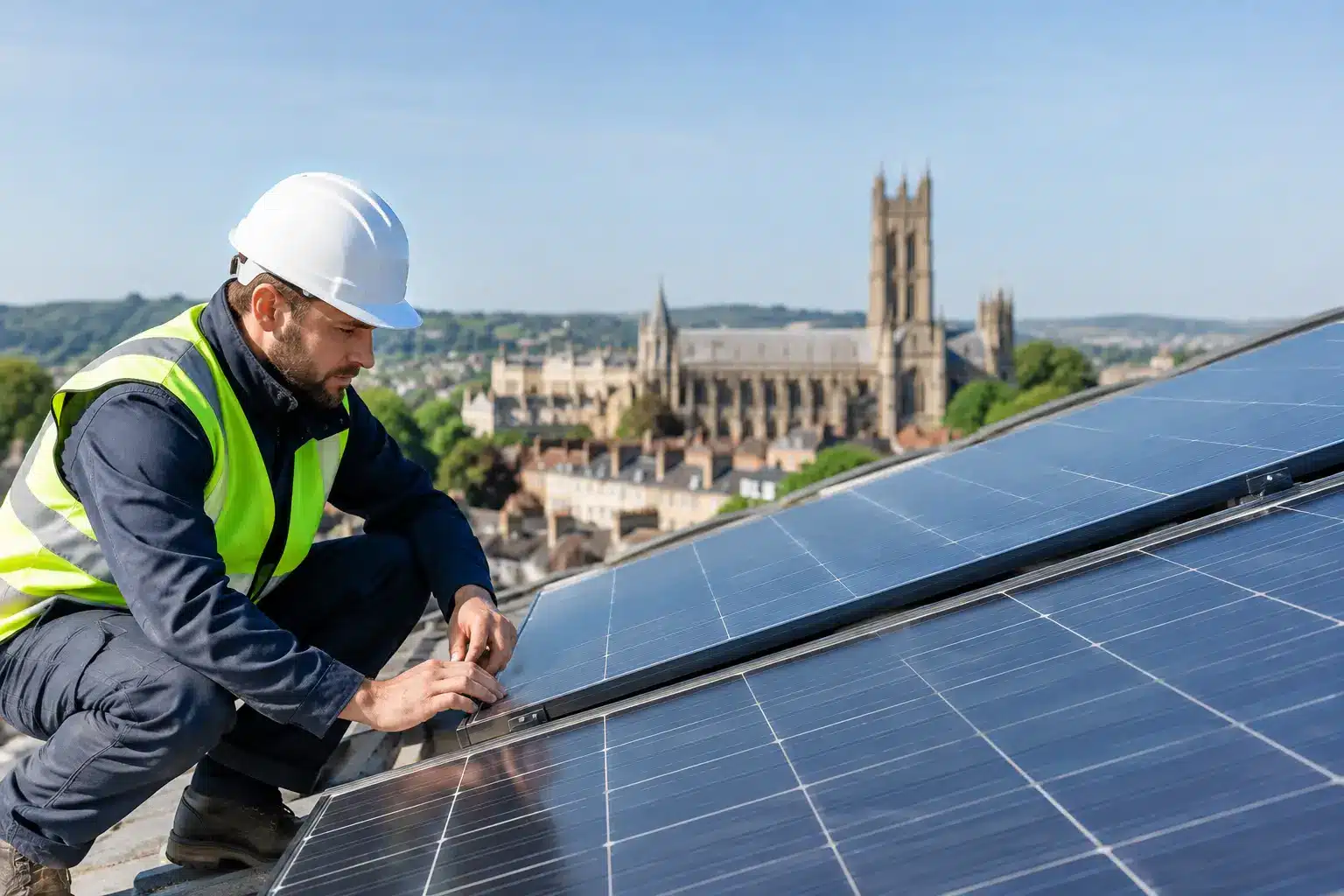
The search for commercial solar installers Bath businesses can rely on should begin with the building, not a headline price. A warehouse with daytime machinery use, a city-centre office and a hospitality venue will each need a different system design. The right installer will assess how your business uses electricity, the condition of the roof and the practical route from panels to your supply before recommending a system.
Solar can reduce the amount of electricity you buy from the grid, but it is a long-term asset. Choosing an experienced, properly accredited local installer gives you a clearer route to savings and helps avoid the costly compromises that come from an undersized system, unsuitable equipment or an incomplete survey.
What Bath businesses should expect from a solar installer
A commercial installation is more than fitting panels on an available section of roof. A capable installer starts by understanding your half-hourly electricity data or recent bills. This shows when demand is highest and how much of the electricity generated on site your business is likely to use.
High self-consumption is usually where the strongest financial case sits. If your premises operate through the day – for example, a workshop, school, office, retailer or food business – solar generation may closely match your demand. A business that uses most of its power overnight may still benefit, but may need battery storage, load shifting or a different system size to make the numbers work.
The survey should also cover roof orientation, shading from neighbouring buildings or trees, structural capacity, access, cable runs and the location of inverters. On older or more complex buildings, these details can make a meaningful difference to cost and timescale. A good installer explains what they have found in plain English, including any constraints, rather than presenting an optimistic estimate with surprises held back until later.
Bath has a distinctive mix of commercial properties, from modern business units to buildings in conservation areas and locations with heritage considerations. Planning requirements depend on the site and the proposal. Your installer should identify early whether planning advice, listed building consent or additional design work may be needed. Never assume that a standard rooftop installation is automatically straightforward because a similar system has been installed elsewhere.
How to compare commercial solar installers in Bath
The lowest quotation is not always the best value. Compare each proposal on what it will deliver, how its figures have been calculated and what support is included after commissioning. Two systems with the same number of panels can produce very different results if their panel specification, inverter design, shading analysis or assumed energy use is different.
Ask prospective installers to set out the proposed system capacity, expected annual generation, estimated on-site use, export assumptions and projected savings. They should be clear about whether figures account for degradation over time and whether they are based on your actual consumption profile rather than a generic model. Forecasts are not guarantees – weather, business opening hours and future energy prices will vary – but transparent assumptions make quotes easier to judge fairly.
MCS accreditation is a valuable trust marker when assessing installer quality. It shows that an installer works to recognised standards and follows a defined process. Also ask about electrical certification, insurance, workmanship warranties and the manufacturers behind the panels, inverters and mounting system. A warranty only has real value if the terms are understandable and the installer remains available to support the system.
It is sensible to ask who will carry out the work. Some firms manage every part of the project with their own team, while others use specialist subcontractors for roofing, electrical work or scaffolding. Neither approach is automatically a problem, but responsibility should be clear. You need one accountable point of contact for programme management, health and safety, documentation and any issues after installation.
Look beyond panel price
A commercial solar quote should include the full scope of work, not just a panel count and a headline figure. This normally means the mounting system, inverters, electrical protection, monitoring, roof access, scaffolding where required, design, testing and commissioning. If an item is excluded, it should be stated plainly.
Connection to the electricity network can be one of the most important factors. Larger systems, or sites with limited network capacity, may require approval from the Distribution Network Operator before work starts. In some cases, export can be restricted or upgrade work may be needed. An experienced installer will manage the application process and explain the potential impact on your programme and budget.
Battery storage can be worthwhile, but it should not be added by default. It can help a business use more of its solar generation later in the day, reduce peak demand in some cases and provide useful operational flexibility. However, the extra capital cost must be weighed against your actual load profile, export rate and future plans. If your site already uses most of its solar output during daylight hours, a battery may offer a slower return.
Similarly, EV charging, heat pumps and new electrical equipment can change the case for solar. Let installers know about planned expansion, vehicle fleets, refrigeration, air conditioning or changes to working hours. Designing with these in mind can prevent you from having to revisit the electrical infrastructure sooner than expected.
A clear survey leads to a stronger proposal
Before accepting a quote, make sure the installer has visited the site or completed a survey detailed enough to validate the design. Satellite imagery can be useful for an early estimate, but it cannot confirm roof condition, access limitations, cable routes or hidden shading.
The final proposal should give your decision-makers enough information to approve the project with confidence. That includes a system layout, equipment schedule, generation estimate, financial assumptions, installation timetable, payment stages and warranty information. For larger projects, ask how work will be phased to minimise disruption to staff, customers and daily operations.
Health and safety should be treated as a practical part of project planning, not an afterthought. The installer should discuss site access, working-at-height arrangements, delivery space, safeguarding requirements where relevant and how the work area will be managed. If your premises remain open during installation, these details matter as much as the panels themselves.
Questions worth asking before you appoint an installer
You do not need to become a solar engineer to compare proposals, but direct questions reveal a great deal about an installer’s approach. Ask how they calculated the generation and savings figures, whether they have allowed for shading, what happens if the roof needs remedial work, and who is responsible for network approvals.
It is also worth asking how you will monitor performance once the system is live. A clear monitoring platform allows you to see generation, consumption and, where applicable, battery activity. More importantly, establish what happens if output appears lower than expected. Find out whether the installer offers maintenance, fault finding and support, and whether these services are included or charged separately.
References from comparable commercial projects can provide reassurance, particularly where your site has unusual access, a flat roof, heritage constraints or substantial daytime demand. Look for evidence that the installer understands businesses like yours, not simply domestic solar at a larger scale.
Make your solar decision with confidence
The best commercial solar installers in Bath will not rush you into a standard package. They will take time to understand the site, explain the trade-offs and provide a proposal that stands up to scrutiny. Comparing several vetted, MCS-accredited installers can make that process faster while giving you a clearer view of price, system quality and service.
A well-planned solar project starts with an honest conversation about your building and energy use. Gather your recent electricity data, share any future plans for the premises and request no-obligation quotes from qualified professionals. That gives your business a practical basis for deciding whether solar is the right next investment.

