

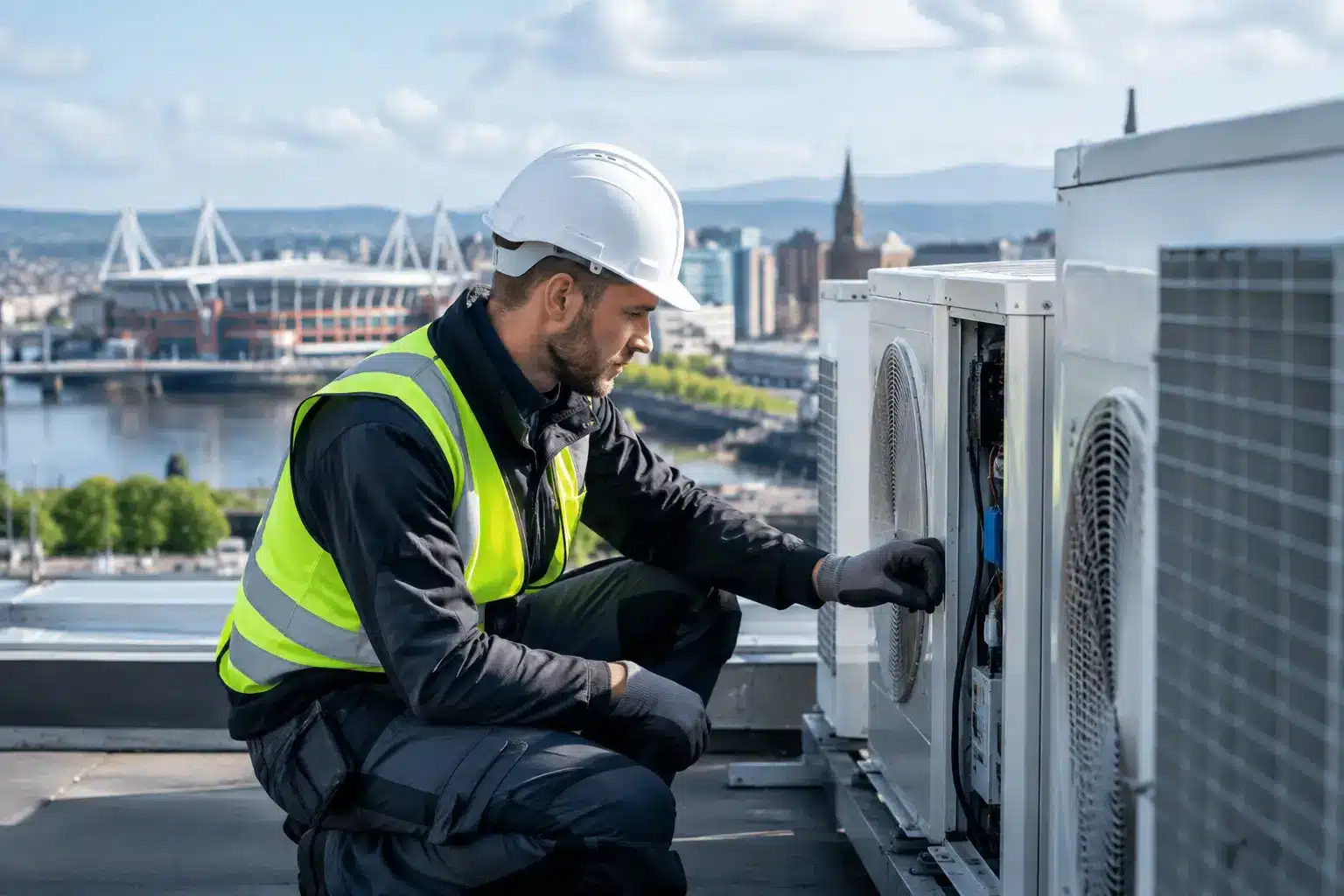
A solar quote can look attractive on paper and still leave out the details that protect your home, budget and long-term savings. That is why choosing among leading MCS installers Cardiff homeowners are considering should involve more than comparing the final price. The right installer will explain the system clearly, survey the property properly and provide the paperwork needed to use your renewable technology with confidence.
MCS accreditation is one of the clearest starting points. It shows that an installer and their installation process meet recognised standards for small-scale renewable energy work. For many households and businesses, it is also relevant when accessing schemes such as the Smart Export Guarantee for solar electricity exports, subject to supplier terms, or support available for eligible heat pump installations.
Why MCS accreditation matters in Cardiff
MCS stands for the Microgeneration Certification Scheme. An MCS-accredited installer is assessed against technical and quality standards for the technologies they install, whether that is solar panels, battery storage, heat pumps or other renewable systems.
This does not mean every MCS installer will offer the identical service, system design or aftercare. It does mean there is a recognised framework behind the work. That matters when you are investing several thousand pounds in equipment expected to perform for decades.
For a Cardiff property, the installer should consider far more than the available roof space. They need to assess roof direction, shading from nearby homes or mature trees, roof condition, electrical capacity and your household’s electricity use. A good design accounts for the way you actually live – for example, whether the home is empty during the day, whether you work from home, or whether an electric vehicle is likely to be part of the picture soon.
For commercial sites, the questions are broader. A business may need to consider daytime demand, three-phase electrical supplies, landlord permissions, roof warranties and the practicalities of installing around normal trading hours. Experience with projects similar to yours is therefore just as valuable as accreditation.
What separates leading MCS installers in Cardiff
The strongest installers make the process easier to understand without oversimplifying it. They should be prepared to explain why a particular panel, inverter or battery has been recommended, how much generation is realistic and what assumptions sit behind the savings estimate.
Be cautious of a quote that promises a fixed level of savings without asking about your energy use. Electricity prices, export rates, occupancy and future energy needs all affect the result. Solar can significantly reduce the amount of electricity you buy from the grid, but a responsible installer will avoid presenting it as a guaranteed, one-size-fits-all return.
A quality proposal normally sets out the panel capacity in kilowatts peak, estimated annual generation, the main components, proposed panel layout, warranty terms and expected installation work. It should also make clear whether scaffolding, bird protection, electrical upgrades, monitoring equipment and any necessary consumer unit work are included. An unusually low headline figure sometimes becomes less appealing when essential items are added later.
Local knowledge helps too. Cardiff includes Victorian terraces, newer estates, bay-fronted homes, flats and commercial premises, all with different access and roof considerations. An installer familiar with the area is more likely to plan sensibly for parking, scaffolding, cable routes and the constraints of your building. However, local should never be used as a substitute for proper credentials, references and a detailed written scope of work.
Compare the system, not just the price
It is sensible to obtain more than one quote, but comparison only works if you are looking at like-for-like proposals. A 4 kWp system with premium panels, a high-quality inverter and comprehensive workmanship cover is not directly comparable with a lower-cost package that uses different equipment or excludes important work.
Ask each installer to show the expected system size and annual output, then look at what is included around it. Check the panel and inverter brands, product warranties, workmanship warranty, monitoring app, scaffold provision and any assumptions about shading. If a battery is included, ask what usable capacity it provides, whether it can supply power during a power cut, and whether backup capability needs extra equipment. Not every battery offers backup as standard.
The cheapest quote may be the right choice if it meets your needs and comes from a capable, well-supported installer. Equally, paying more can be worthwhile where it buys a better design, a longer workmanship guarantee or a solution that will be easier to expand later. The key is understanding the reason for the difference rather than accepting a vague claim that one option is simply better.
Questions worth asking before you accept
Before committing, ask who will carry out the survey and installation, whether the work is subcontracted, and who is responsible if an issue arises after commissioning. Confirm the expected timescale, payment schedule and what happens if the survey reveals a problem with the roof or electrical installation.
You should also ask how the installer will manage grid approval where required. For many solar installations, the local electricity network operator must be notified or approval obtained, depending on the system and connection. A competent installer will handle the process and explain what it means for your timeline.
Finally, check what documents you will receive at handover. For solar, this commonly includes MCS certification, electrical certification, commissioning information, equipment warranties and instructions for monitoring the system. Keep these records safely. They can be useful for export applications, future maintenance and, potentially, when selling the property.
A proper survey protects your investment
A remote estimate can be useful for an early indication of cost, but it should not be treated as the final word. The best installers verify key details through a thorough survey before confirming the design.
They will inspect the roof where appropriate, assess its condition, identify shading and establish a safe route for cables and equipment. They should also check the consumer unit and discuss where an inverter and battery could be positioned. A battery may work well in a garage, utility room or other suitable location, but space, ventilation, access and fire-safety requirements all need consideration.
This is the stage where a good installer may tell you that the original idea needs adjusting. Perhaps a smaller array makes more sense because of shading, or a battery is not the first priority for your current usage. That is not necessarily bad news. Honest recommendations can prevent you from paying for capacity that is unlikely to deliver value.
Think beyond installation day
A renewable energy system should not become a mystery once the installers have left. Ask how monitoring will work, who provides aftercare and what support is available if the system flags a fault. Solar panels themselves generally need little day-to-day attention, but inverters, batteries and electrical connections still benefit from knowing who to contact when something is not right.
Maintenance requirements depend on the system and site. Panels do not automatically need routine cleaning, particularly where rainfall and a reasonable tilt do much of the work. However, heavy soiling, bird activity or an unexpected fall in generation may justify an inspection. Businesses should also consider planned maintenance where continuity and performance reporting matter.
For households considering solar alongside an EV charger, battery or heat pump, it helps to plan the whole energy picture early. You do not need to install everything at once. But selecting equipment that can work together, and leaving room for future upgrades, can reduce disruption and avoid unnecessary replacement costs later.
A simpler route to trusted local quotes
Finding suitable installers individually can take time, especially when you are trying to assess accreditation, availability and quote quality at the same time. Solar Planet helps homeowners and businesses compare up to four trusted, MCS-accredited local installer options, without an obligation to proceed.
The aim is not to push one standard package. It is to give you a clearer view of the available choices so you can weigh price, design, equipment and service on terms that make sense for your property. Whether you are in Cardiff, Penarth, Barry or nearby, a well-matched installer should make the next step feel straightforward rather than pressured.
Take the time to compare clear proposals, ask direct questions and choose the team that can explain the work as well as carry it out. The right MCS-accredited installer will leave you with more than new equipment on the roof – they will leave you confident in the decision you have made.

