When a customer arrives with 10 per cent battery left, or a staff member asks whether they can charge at work, the question stops being theoretical. Commercial EV charger installation quickly moves from a nice idea to a practical business decision – one tied to convenience, energy costs and how your site will operate over the next few years.
For many businesses, the challenge is not whether EV charging matters. It is working out what to install, how much capacity is needed, and how to avoid paying for the wrong setup. A small office with a few employee vehicles has very different needs from a retail park, hotel or depot with fleet vans coming and going all day. That is why the best projects start with the site, not the charger brochure.
What commercial EV charger installation actually covers
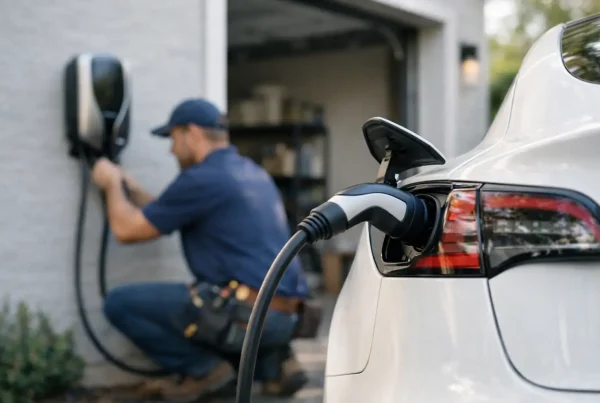
Commercial EV charger installation is more than fixing a charging unit to a wall and connecting a cable. A proper installation usually begins with a survey of the building’s electrical supply, parking layout and daily usage patterns. Installers need to understand how many vehicles are likely to charge, when they will charge, and whether the existing infrastructure can support that demand.
That early assessment matters because charger speed is only one part of the picture. A 22kW charger may sound more attractive than a 7kW unit, but if your power supply cannot support it without costly upgrades, the maths can change quickly. In some cases, a larger number of slower chargers gives better value and better availability than a smaller number of rapid units.
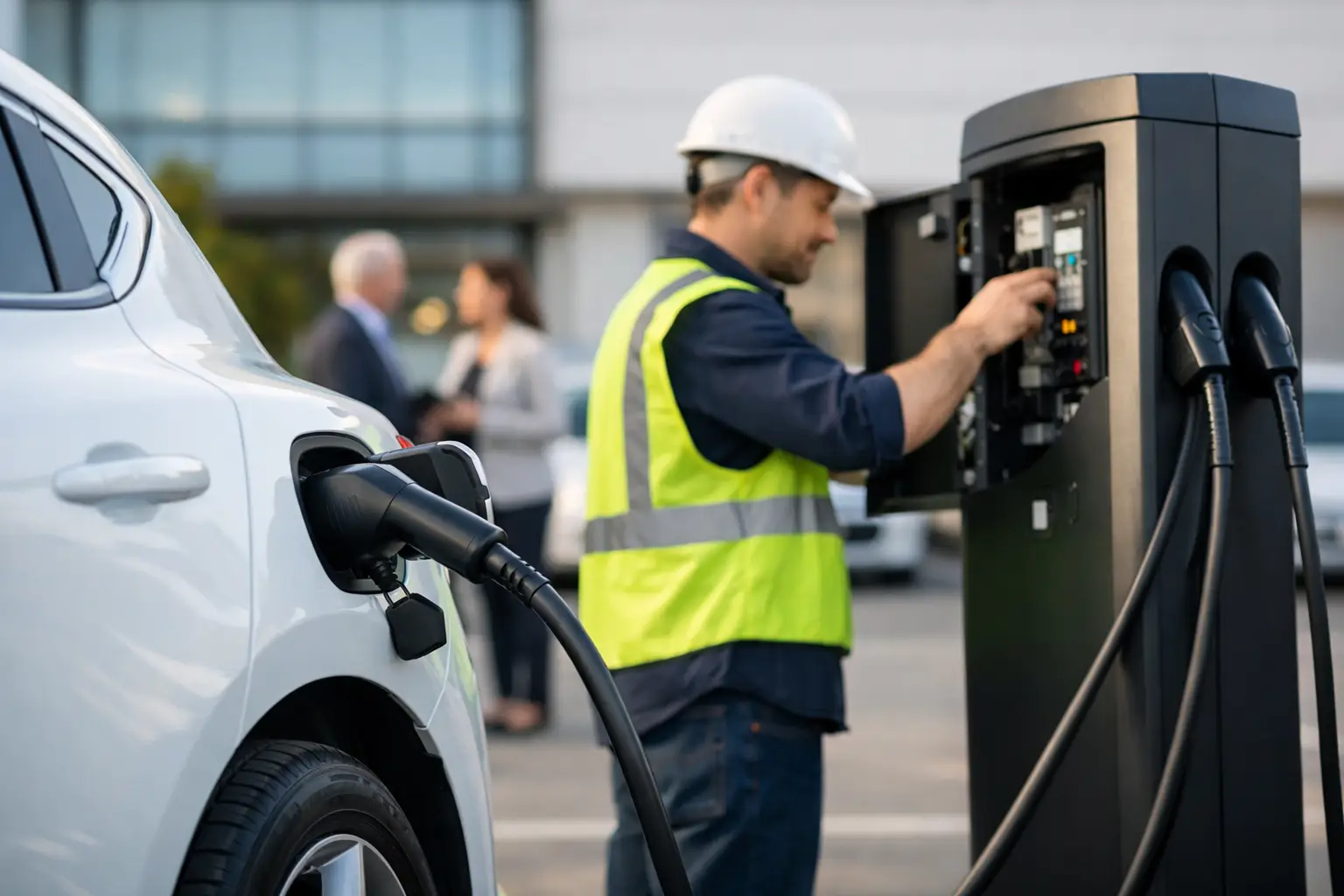
The installation itself can include groundworks, cable runs, protective equipment, charger mounting, electrical testing and software setup. If the chargers are to be used by the public, there may also be payment systems, user access controls and signage to consider. For workplaces and mixed-use sites, load management software is often just as important as the hardware.
Choosing the right chargers for your site
The right system depends on who will use it and how long they are likely to stay parked. Offices, flat developments and hospitality venues often suit slower AC chargers, because vehicles stay in one place for longer. Retail sites, roadside locations and some commercial fleets may benefit from faster charging, especially where turnaround times matter.
There is also a difference between planning for current demand and planning for growth. Installing one or two chargers may solve today’s problem, but if ducting, cabling routes and switchgear are not planned properly, expansion can become more expensive later. A good installer will help you think in phases so you do not have to start from scratch when uptake increases.
This is where advice from vetted commercial installers is useful. They should be able to explain the trade-offs clearly, including where a more expensive setup is justified and where it is not. If every recommendation sounds oversized, it is worth asking whether you are being sold for a future that may never arrive.
What affects commercial EV charger installation costs?
Cost is usually the first question, and fairly so. But with commercial EV charger installation, the charger itself is only part of the bill. The final cost can vary significantly depending on the condition of the site and the amount of electrical work involved.
The biggest pricing factors tend to be charger type, number of units, distance from the power source, civils work and whether the incoming supply needs upgrading. A straightforward installation near an existing distribution board will usually be far more affordable than a car park that needs trenching, new feeder pillars or a DNO upgrade.
Software can also affect cost. Some businesses need basic access control so only staff can use the chargers. Others need payment processing, usage reporting, fleet integration or dynamic load balancing across multiple units. Those features can add value, but only if they solve a real operational problem.
There is a temptation to focus only on the cheapest quote. That can backfire if it excludes key works, aftercare or commissioning support. A lower headline figure is not always a lower total cost once extras and remedial work appear later.
Why the electrical supply matters so much
One of the most common sticking points in commercial EV charger installation is available electrical capacity. Many sites were not originally designed for multiple vehicle chargers, particularly older commercial buildings. Before any hardware is specified, an installer should assess what spare capacity exists and whether the site can handle peak charging demand.
If capacity is limited, that does not always mean the project stops. Load management can help distribute available power intelligently across several chargers, reducing the need for expensive upgrades. That approach works well for many workplaces where vehicles are parked for hours and do not all need full-speed charging at the same time.
In other cases, an upgrade to the supply may still be needed. That can extend timescales, involve the network operator and increase project cost. It is better to discover that early than after equipment has been ordered.
The role of solar and battery storage
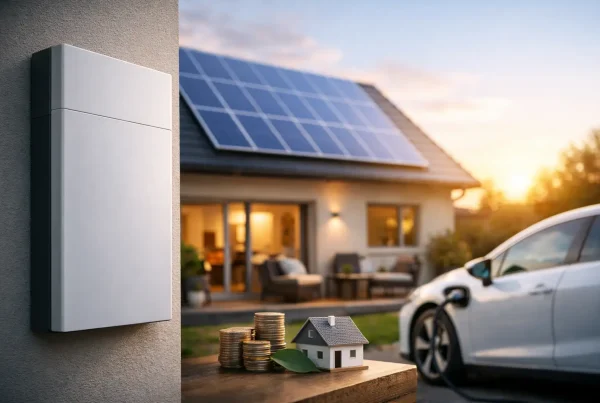
For businesses already looking at lower energy costs, EV charging rarely sits in isolation. It often makes sense to consider whether chargers should work alongside solar panels or battery storage. If your site generates electricity during the day and staff or fleet vehicles are parked on site, there is a clear opportunity to use more of that power directly.
That does not mean every charging project needs solar. If your usage is mainly overnight, or your roof is unsuitable, the business case may be weaker. But where charging demand aligns with daytime generation, the combination can improve self-consumption and reduce reliance on grid electricity.
This joined-up approach is especially relevant for businesses in places such as Cardiff, Newport and Bristol, where many organisations are already reviewing their wider energy strategy rather than treating each upgrade separately. The right installer should be able to spot those opportunities and explain whether they make financial sense for your site.
Compliance, safety and installer quality
Commercial charging is not an area where you want shortcuts. The installation needs to meet current electrical standards, suit the environment it is being used in, and be commissioned properly. If chargers are open to staff, residents or the public, reliability matters just as much as compliance.
That is why installer quality deserves close attention. Accreditation, commercial experience and a clear survey process are all good signs. So is a quote that explains the scope of work in plain English. If a contractor cannot tell you what is included, what assumptions they have made and what could change the price, that creates risk.
For many businesses, comparing quotes from vetted installers is the simplest way to reduce that risk. It gives you a clearer view of market pricing and highlights whether one proposal is unusually light on detail. Solar Planet follows that approach by helping customers compare trusted local installers rather than leaving them to research everything alone.
Questions worth asking before you go ahead
Before approving any commercial EV charger installation, it helps to ask a few practical questions. How many vehicles are likely to use the chargers within the next 12 to 24 months? Will charging be free, paid or restricted to certain users? Is there enough parking space to avoid charger bays becoming a source of frustration?
You should also ask what happens after the installation. If a charger goes offline, who supports it? If your needs change, can more units be added without major disruption? And if software is involved, what ongoing fees apply?
These are not minor details. They often determine whether the system remains useful once day-to-day pressures take over.
Commercial EV charger installation as a long-term asset
The strongest business case for EV charging is rarely based on one benefit alone. It may support staff retention, improve the customer experience, strengthen sustainability commitments or prepare a site for fleet electrification. For some businesses, it also creates a direct revenue opportunity. For others, the value is more indirect but still meaningful.
The key is to treat commercial EV charger installation as an operational investment, not a tick-box exercise. A well-planned setup can serve your business for years and adapt as demand grows. A rushed one can leave you with underused chargers, avoidable upgrade costs and a system that never quite fits the way your site works.
If you are considering EV charging for your premises, the most useful first step is usually a proper site assessment and a few comparable quotes. That gives you real numbers, realistic options and the confidence to move forward without guesswork.