

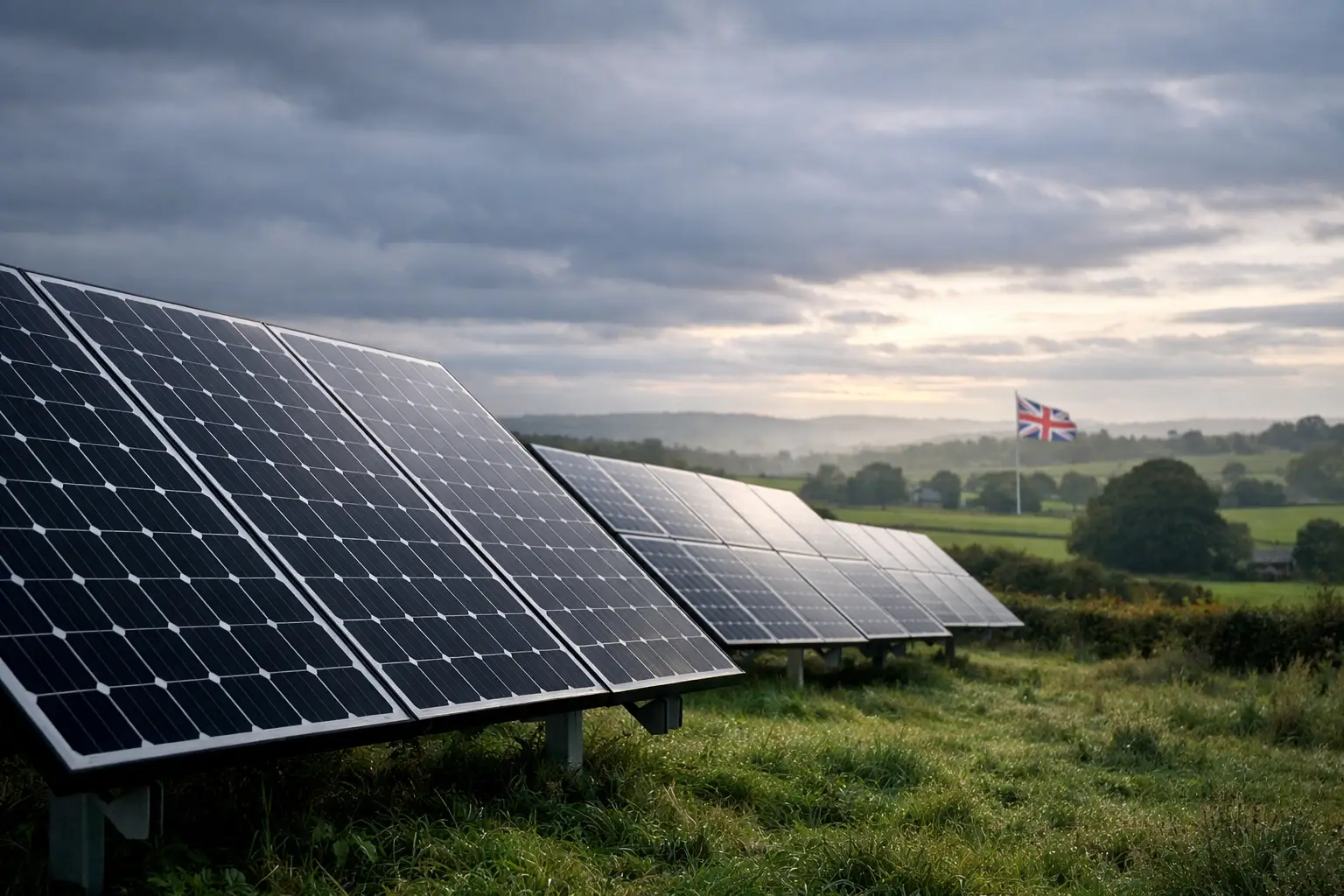
A cloudy Cardiff morning does not stop solar panels from generating electricity. Modern systems use daylight, not just bright sunshine, which is why the best solar panels for low light can still make a worthwhile contribution through the UK’s autumn, winter and overcast days. The right choice, however, is about far more than buying the panel with the highest advertised wattage.
For homes and businesses with limited roof space, nearby trees or regular cloud cover, panel technology and system design can make a noticeable difference to annual savings. A well-designed installation will consider your roof, electricity use and shading before recommending a panel – not simply offer a one-size-fits-all package.
What low light means for solar panels
Solar panels produce electricity whenever daylight reaches their cells. On a clear summer day, direct sunlight is strongest, so generation is highest. On an overcast day, panels use diffuse light scattered through the clouds. Output falls, but it does not disappear.
Low-light performance matters most from October to March, when daylight hours are shorter and the sun sits lower in the sky. It also matters on east- or west-facing roofs, where panels receive less direct midday sun than a south-facing roof. In South Wales and the South West, cloud cover is a normal part of the climate, so a system should be selected for annual production rather than judged on perfect summer conditions.
It is also worth separating low light from shade. Low light affects the whole area at once, such as a grey day. Shade is localised, caused by a chimney, dormer, tree, neighbouring property or even a satellite dish. The solutions overlap slightly, but shading usually calls for careful electrical design as well as capable panels.
What makes the best solar panels for low light?
There is no single panel that wins on every roof. The best option depends on available space, budget, the direction and angle of the roof, and whether shading is present. Still, a few features are particularly useful when daylight is weaker.
High-efficiency cell technology
High-efficiency panels generate more electricity from the same roof area. This does not mean they somehow create power without light, but it can help homeowners make better use of a compact roof. If two panels receive the same available light, the more efficient model can often convert more of it into usable electricity.
N-type panels, including TOPCon and heterojunction designs, are widely regarded as strong choices for modern domestic installations. They tend to have high efficiency ratings and lower degradation over time than many older panel designs. They can cost more upfront, so they are especially attractive where roof space is tight or where maximising generation is the priority.
Traditional P-type monocrystalline panels can still represent excellent value. On a large, unshaded roof, a good-quality P-type system may deliver a better financial return than paying a premium for the highest-specification technology. The right comparison is the expected annual output and total installed cost, rather than the panel label alone.
A favourable temperature coefficient
Solar panels become less efficient as they heat up. Although this is more relevant in warmer weather than on a dim winter day, a favourable temperature coefficient supports stronger performance across the year, particularly on roofs that receive prolonged sun in spring and summer.
Look for this figure on the panel data sheet. It is usually expressed as a percentage loss per degree above 25°C. A lower figure is generally better. Your installer should be able to explain whether the difference is meaningful for your roof rather than using technical figures to justify an unnecessarily expensive upgrade.
Reliable build quality and long-term warranties
Low-light performance on day one is only part of the picture. A panel should continue producing reliably for decades. Choose established manufacturers with clear product and performance warranties, and make sure the installer can explain who will support you if a fault develops.
A long warranty is reassuring, but it should not replace good workmanship. Roof fixings, cabling, inverter selection and commissioning all affect the safety and performance of the finished system. For UK installations, MCS-accredited professionals provide an important layer of confidence around standards and eligibility for export payments.
Sensible use of bifacial panels
Bifacial panels can generate electricity from both sides, using reflected light from the surface beneath them. They can perform very well on ground-mounted arrays, flat commercial roofs and some canopies where there is a light-coloured, reflective surface and plenty of space around the panel.
For a typical pitched domestic roof, the rear side is close to the tiles and gains little extra light. In that setting, bifacial panels are not automatically the best buy for low light. Their value depends on how and where they are installed.
Panel choice is only half the answer
A high-quality panel can still underperform if the system is poorly designed. This is particularly true where chimneys or trees cast shadows at different times of day.
Inverters, optimisers and microinverters
A standard string inverter is often efficient and cost-effective on a simple, unshaded roof. Panels are connected in groups, or strings, so the system works best when the panels receive similar levels of light.
Where partial shade is unavoidable, power optimisers or microinverters may help reduce the impact. Optimisers manage performance at panel level while still using a central inverter. Microinverters are fitted behind individual panels, allowing each one to operate more independently.
Neither option removes the effect of shade completely. A shaded panel cannot generate the same amount of energy as one in full sun. But they can prevent one weaker panel from holding back others in the same string, which can make them a worthwhile investment on more complex roofs.
The most suitable option depends on the shading pattern, roof layout and cost. A trustworthy installer will assess this with a survey and generation modelling, rather than assume that optimisers are required on every installation.
Roof direction, pitch and obstructions
South-facing panels usually produce the most electricity over a year, but east- and west-facing arrays can still be highly effective. They often generate more power in the morning and late afternoon, which may suit households that use electricity before and after work.
A roof pitch of around 30 to 40 degrees is often favourable in the UK, though there is no need to reject solar simply because a roof is not perfect. A slightly lower annual yield can still make financial sense when electricity is used on site or stored in a battery.
Before choosing panels, consider whether a tree can be pruned lawfully, whether satellite equipment can be moved, and whether a panel layout can avoid the worst shadows from a chimney. These practical changes can sometimes improve output more than upgrading to a premium panel.
How to compare quotes for a low-light solar system
When comparing proposals, ask each installer for the estimated annual generation in kilowatt-hours, not just the system size in kilowatts. A 4 kW system on one roof may produce considerably more than a 4 kW system on another.
Check which panel model, inverter and mounting system are included, along with the warranty terms. If shading is mentioned, ask how it was assessed and whether optimisers or microinverters have been included for a specific reason. You should also ask for an illustration of expected generation by month. This gives a more realistic view of winter output and helps you decide whether battery storage would suit your usage.
Battery storage does not make panels generate more in low light, but it can help you use more of the electricity they produce. It is often most useful for storing surplus daytime generation for the evening. During darker winter periods, its value depends heavily on your tariff, energy habits and whether the battery can be charged cheaply from the grid.
Price matters, but the cheapest quote can become expensive if it uses unsuitable equipment or overlooks shading. Comparing several like-for-like proposals gives you a clearer picture of value, expected savings and installer quality.
Get a system designed for your roof
For most UK properties, modern monocrystalline panels from a reputable manufacturer will perform well in cloudy weather. N-type high-efficiency panels are often a strong choice for smaller roofs or households aiming to maximise generation, while a properly designed inverter setup is essential where shade is present.
Solar Planet can help homeowners and businesses compare up to four no-obligation quotes from trusted, MCS-accredited local installers. A detailed survey and an honest conversation about your roof will give you a far better result than chasing a headline panel rating – and a system built around your real electricity use can keep delivering value long after the weather changes.

