

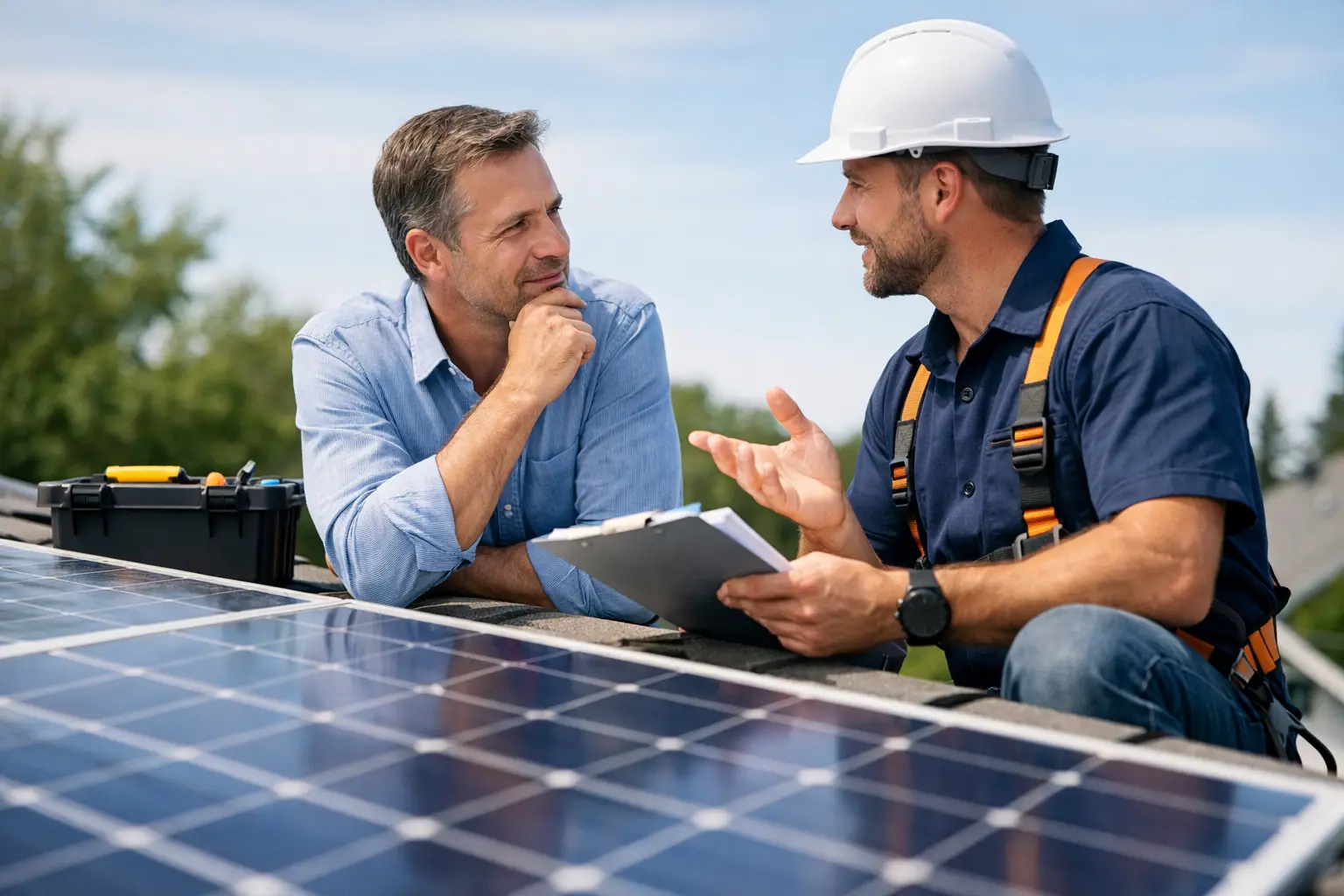
A solar quote can look straightforward until you realise how much is hidden behind one number. Panel brand, inverter type, battery sizing, scaffolding, warranties, aftercare – small differences on paper can mean big differences in value. That is why knowing the top questions for solar installers matters before you agree to anything.
The right conversation does two jobs at once. It helps you spot whether an installer is experienced, transparent and properly accredited, and it helps you understand whether the proposed system actually fits your property or business. If you are comparing firms in places such as Cardiff, Newport or Bristol, asking the same core questions to each one makes those quotes far easier to judge fairly.
Why the top questions for solar installers matter
Most people do not buy solar often, so it is easy to assume every quote covers the same things. In reality, one installer may design for maximum generation, while another may focus on lower upfront cost. Neither is automatically wrong, but they are solving different problems.
That is where good questions help. They bring out the details behind the sales pitch. You can see how each installer approaches shading, roof condition, battery storage, payback and ongoing support. You also get a clearer sense of whether they explain things in plain English or gloss over important points.
Start with trust and accreditation
Before discussing panels or savings, ask whether the installer is MCS-accredited and who exactly will carry out the work. MCS accreditation is one of the most important trust markers in the UK market, and it helps show the installer meets recognised standards.
It is also worth asking whether they use their own fitting teams or subcontract the work. Subcontracting is not always a problem, but it should be clear from the start. If others are involved, ask who is responsible for quality control, sign-off and any issues after installation.
You should also ask about insurance, workmanship guarantees and how long the company has been installing solar systems. A newer company can still do an excellent job, but experience counts when dealing with awkward roofs, older wiring, planning considerations or mixed systems that include batteries and EV chargers.
Questions about your roof and property
A strong installer should be able to explain why your roof is or is not suitable. Ask how they assess roof condition, orientation, pitch and shading. If a chimney, dormer or nearby trees affect output, they should mention that clearly rather than offering generic generation estimates.
Ask whether your roof needs any repairs before installation. This can be an uncomfortable topic because nobody wants added cost, but it is far better to know upfront than after panels are on the roof. If your roof has limited space, ask how they decide the best panel layout and whether fewer higher-efficiency panels would make more sense.
For commercial properties, the questions may shift slightly. Flat roofs, larger daytime demand and future expansion can all affect design. A good installer should be able to discuss ballast systems, weight loading and whether the array can be scaled later.
What system size do you recommend and why?
This is one of the most useful questions you can ask because it reveals whether the installer is designing around your usage or simply trying to sell the biggest system possible. Ask how they have calculated the recommended size and what assumptions they have made about your electricity consumption.
If you work from home, charge an electric vehicle or plan to add a heat pump later, say so early. Those details matter. A system that looks perfect for your current usage may feel undersized in two years.
At the same time, bigger is not always better. Export rates, roof space, budget and payback all come into play. The right answer depends on your goals. Some customers want the shortest payback period. Others want maximum energy independence. A reliable installer should explain the trade-offs rather than pushing a one-size-fits-all answer.
Ask about panel, inverter and battery choices
Not all equipment is equal, and not all properties need premium products. Ask which panel and inverter brands are included in the quote, why they were chosen and what alternatives are available.
This is also the point to ask about battery storage. Some homes benefit greatly from a battery, especially if much of the electricity is used in the evening. Others may find the extra upfront cost slows the payback too much. The installer should be able to model both options and explain the difference in plain terms.
If you are interested in adding an EV charger or heat pump later, ask whether the proposed system is future-ready. It is often cheaper and simpler to plan ahead than retrofit around avoidable limitations.
How much will I really save?
Savings estimates should be treated carefully. Ask the installer how they calculate projected savings and what electricity price assumptions they are using. If they present a very attractive figure, ask how much of your solar generation they expect you to use on site versus export to the grid.
This matters because self-consumed electricity usually delivers better value than exported electricity. A household that is empty most of the day may use solar very differently from one with someone at home, a battery installed or flexible appliances running during daylight hours.
Rather than focusing only on yearly savings, ask about likely payback range under realistic conditions. Good installers will give you sensible estimates, not promises. Weather, usage habits and future tariffs all affect the final result.
What exactly is included in the quote?
Quotes can differ in ways that are easy to miss. Ask whether the price includes scaffolding, bird protection, monitoring apps, DNO application support, VAT, electrical upgrades and all commissioning paperwork.
It is also sensible to ask what could increase the price after survey. For example, if cabling runs are longer than expected or the consumer unit needs work, will that be treated as a variation? You do not need every possible scenario, but you do need clarity on what is fixed and what is subject to change.
This is where a quote comparison service can save time. Instead of chasing multiple firms individually, having several vetted installers priced on a like-for-like basis makes it easier to see genuine differences in value.
Questions on timing, disruption and aftercare
A solar installation is not just about the day the panels go up. Ask how long the full process usually takes from survey to installation, and whether there are likely to be delays with permissions, equipment supply or grid approvals.
Then ask what happens after the system is live. Who helps if the monitoring app stops updating? What if you suspect a fault? How do warranty claims work in practice? A long product warranty sounds good, but you also need to know who will actually help you use it.
Aftercare matters more than many buyers expect. Solar is generally low maintenance, but if something does need attention, responsive support can make all the difference.
Red flags to listen for
You do not need technical expertise to spot warning signs. Be cautious if an installer avoids discussing accreditation, brushes off shading issues, promises unrealistically fast payback or pressures you to sign immediately.
Another red flag is vague language around equipment. If they cannot clearly state which products are included, what warranties apply and who stands behind the workmanship, pause there. Good installers do not need to create urgency by hiding details.
It is also worth watching how they handle your questions. If they become dismissive when asked to explain assumptions or justify system sizing, that tells you something useful. A trustworthy installer should welcome careful buyers.
The questions that lead to better decisions
The best solar conversations are usually the clearest ones. Ask who is installing the system, why the design suits your property, what savings are realistic, what the quote includes and what support looks like afterwards. Those are the top questions for solar installers because they get beyond headline price and show you what you are really buying.
If the answers are clear, consistent and backed by proper accreditation, you are already a long way towards a confident decision. Solar should feel like a smart long-term upgrade, not a gamble – and the right questions make that much easier.

