

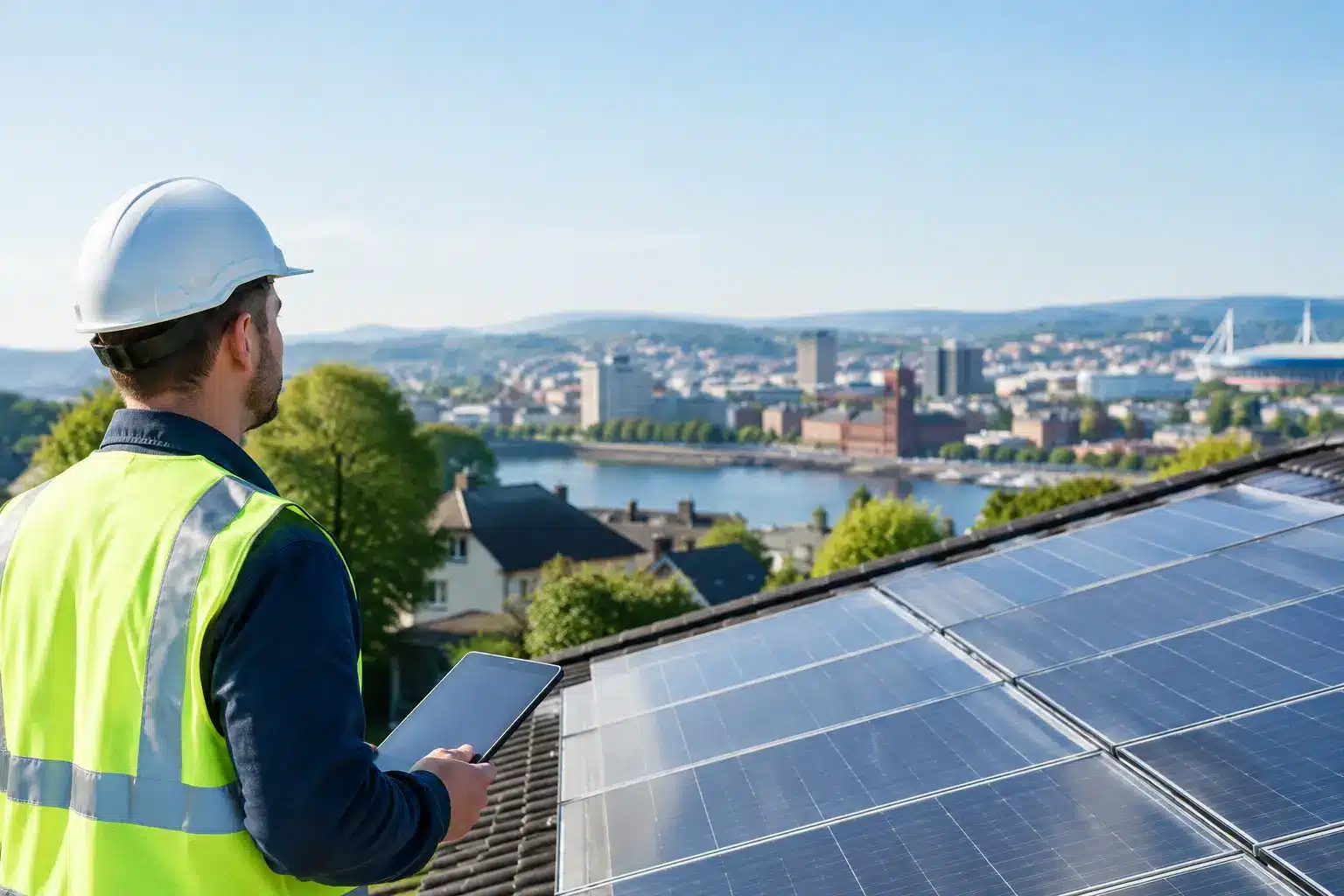
A solar quote can look straightforward until the question of permission comes up. The good news is that Cardiff solar permission rules are often less restrictive than homeowners expect. Many rooftop solar installations can be fitted without a full planning application, but the property, panel position and local designation all matter.
Getting this right before work begins protects you from delays, unexpected costs and the risk of having to alter a completed installation. It also helps an installer design a system that suits your roof, your electricity use and the rules that apply to your address.
When solar panels usually do not need planning permission
In many cases, solar panels on a house in Cardiff are classed as permitted development. This means planning permission is not normally required, provided the work meets the relevant conditions and limitations.
A typical domestic installation is more likely to qualify where panels sit close to the existing roof, do not protrude excessively, and are positioned to minimise their visual impact. Installers should also consider the property’s appearance from the road, particularly where panels would be fitted to a wall facing a highway.
Permitted development is helpful, but it is not a blanket approval for every system. The rules can differ for flats, commercial buildings, converted properties and homes with unusual roof layouts. A large array, a ground-mounted system or panels fixed to a prominent elevation may need a closer planning check.
The practical point is simple: do not assume your neighbour’s installation sets the rule for yours. Roof orientation, building type and planning status can change the answer.
Cardiff solar permission rules for protected properties
Cardiff has conservation areas, historic neighbourhoods and listed buildings. These are the cases where permission needs the most care.
If your property is listed, you will usually need listed building consent before installing solar panels, even when a similar installation elsewhere would be permitted development. The council will assess whether the work preserves the building’s special character. Panel placement, cable routes, inverter location and how visible the array is can all form part of that assessment.
Living in a conservation area does not automatically prevent you from having solar. It does mean the usual permitted development rights may be more limited, especially for panels that are visible from a road or affect the character of the area. An experienced local installer can suggest lower-profile layouts, rear-roof installations or alternative positions that reduce the planning impact without sacrificing the value of the system.
Properties in areas subject to an Article 4 direction may face further restrictions. These directions remove certain permitted development rights in specific locations, so it is worth checking the status of the exact property rather than relying on a general postcode search.
Ground-mounted panels and larger systems
Ground-mounted solar is a good option for homes with shaded, small or awkward roofs, but it is more likely to raise planning questions than a standard rooftop array. Size, height, distance from boundaries, visual impact and whether the structure sits within the property’s curtilage all matter.
For a small domestic array in a garden, permitted development may still apply if the installation meets the applicable limits. However, a visible array near a boundary, a system on land separate from the main home, or equipment serving a larger property can require planning permission.
Commercial solar requires an early site assessment. Solar on a warehouse, office, school, farm building or retail premises can often be viable, but roof loading, the size of the proposed array, the building’s location and nearby properties must be considered. Planning rules may be different where the site is in a sensitive area or the equipment will materially affect the external appearance of the building.
A good installer will not treat planning as an afterthought. They will identify potential issues during the survey, explain what needs checking and avoid promising an installation date before the permissions are clear.
Planning permission is not the only approval
People often use the word “permission” to cover several separate checks. Planning is one of them, but it is not the only requirement for a safe, compliant solar installation.
Building regulations and structural safety
Your roof must be capable of supporting the panel mounting system and handling the additional wind load. Most modern domestic roofs are suitable, but a competent installer should inspect the roof condition, rafters and fixing points. This is especially relevant for older homes, roofs with existing defects and large commercial arrays.
Electrical work must also comply with the relevant building and wiring standards. Using an MCS-accredited installer gives you added reassurance that the system is designed and installed to recognised quality standards. It can also be important for product warranties, finance requirements and access to any applicable export arrangements.
DNO approval for the grid connection
The Distribution Network Operator, or DNO, manages the local electricity network. Your installer must notify the DNO about the solar system and, in some cases, obtain approval before installation.
Smaller domestic systems can often be installed and notified afterwards under the relevant connection process. Larger systems, three-phase supplies, battery storage arrangements and properties in areas with network constraints may need prior approval. If the network cannot accept the proposed export level, the installer may recommend export limiting, a smaller inverter or a revised system design.
This is not a planning issue, but it can affect what system you can install and when it can go live. It is one reason a proper site survey is far more reliable than an online estimate alone.
Leasehold homes and shared buildings
If you lease your home, check your lease before committing to solar. You may need freeholder consent, even where planning permission is not required. For flats and shared buildings, the roof is often a communal or managed part of the property, so formal approval is usually essential.
The same principle applies to businesses renting their premises. A landlord’s licence to alter may be needed, and the agreement should address access, roof repairs, insurance and what happens to the panels at the end of the lease.
A sensible way to check your project
Start by confirming whether your home is listed, inside a conservation area or affected by an Article 4 direction. Then consider where the panels will sit: on the main roof, an outbuilding, a wall or the ground. The more visible or unusual the proposal, the more valuable an early planning check becomes.
Next, arrange a survey with a qualified installer. They can assess shading, roof condition, system size, electrical capacity and likely DNO requirements at the same time. This avoids the common mistake of designing a system around a target number of panels before confirming the site can support it.
If planning permission or listed building consent is needed, do not order equipment or begin installation work until written approval is in place. Planning decisions can include conditions on panel location, finish or screening. Building the scheme exactly as approved saves trouble later, especially if you sell or refinance the property.
For homeowners who want a quicker route to reliable advice, Solar Planet can connect you with up to four vetted, MCS-accredited local installers. Comparing proposed layouts and guidance from more than one professional can make it easier to spot whether planning, grid connection or roof work needs attention before you proceed.
Common questions about solar permission in Cardiff
Do I need permission for solar panels on a detached house?
Not always. A standard roof-mounted domestic system may be permitted development, but this depends on the panel position, the property’s planning status and the conditions attached to permitted development rights. Listed homes and some protected areas need additional checks.
Can I install solar panels in a Cardiff conservation area?
Possibly. Conservation area status does not rule solar out, but it can restrict where panels are placed and whether a planning application is needed. A design that keeps panels less visible may have a stronger chance of being acceptable.
Does adding a battery need planning permission?
An internal battery normally does not create a planning issue. External battery equipment, major alterations to a building, or a battery combined with a larger solar proposal can require a wider assessment. Your installer should also check electrical safety and DNO requirements.
Permission should never be the reason a worthwhile solar project stalls. Most questions have a clear answer once the property and proposed system have been reviewed properly. A careful survey and accredited installation partner give you the confidence to move from rising energy bills to a practical, well-planned solar system.

