

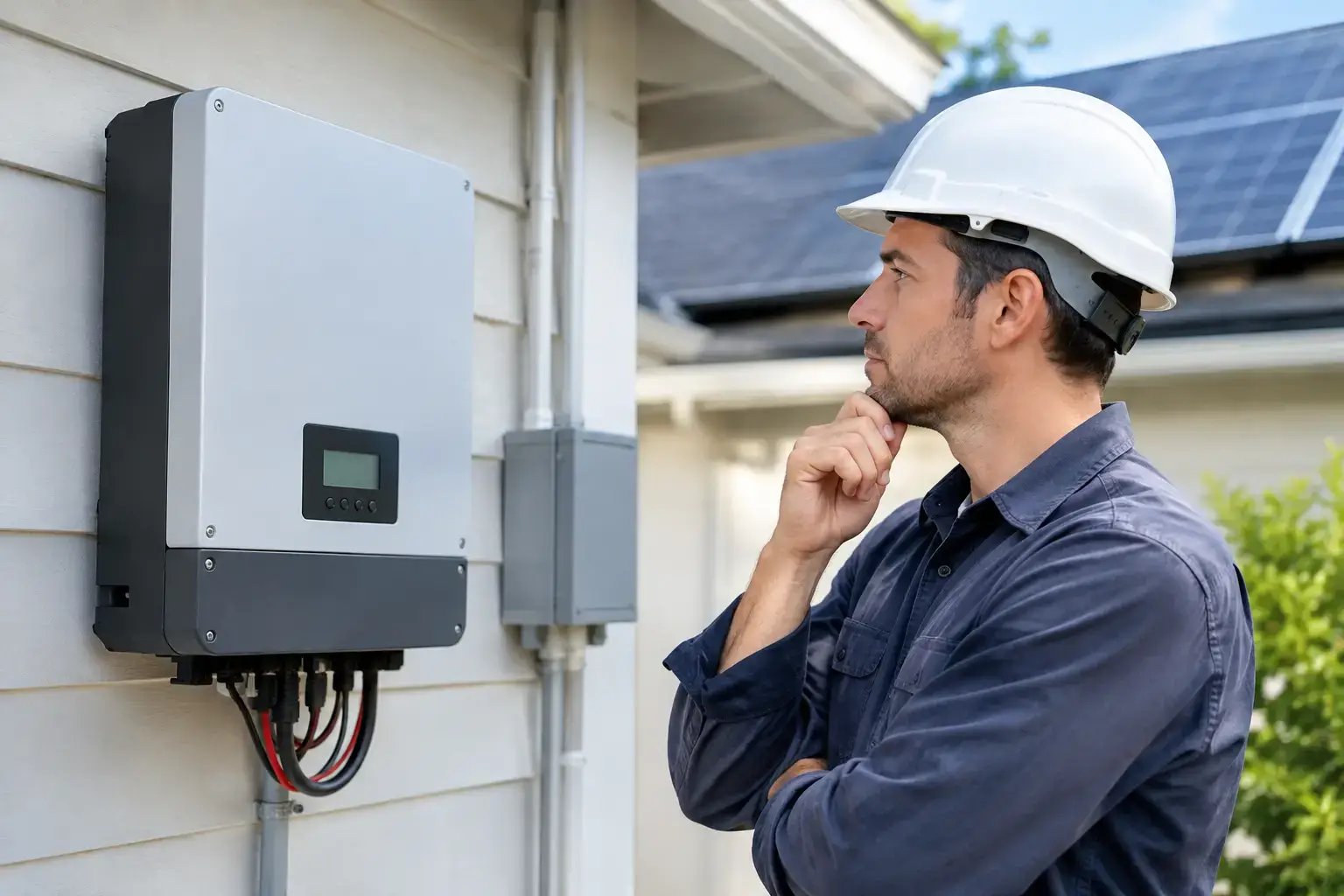
A solar system can look perfectly normal from the ground while producing little or no electricity. Often, the inverter is the reason. If you need to replace a faulty solar inverter, acting promptly protects your savings, helps avoid longer periods of lost generation and gives you a chance to choose equipment that suits how you use energy now.
The inverter is the working heart of a solar PV system. It converts the direct current generated by your panels into usable alternating current for your property. When it stops working reliably, your panels may still be generating power, but your home or business cannot make proper use of it.
Signs your solar inverter may need replacing
A red warning light, a blank display or an error code are obvious warning signs, but inverter problems are not always so clear. You may first notice a sharp fall in generation on your monitoring app, even on bright days when output would normally be strong. Repeated tripping, unusual fan noise or an inverter that regularly shuts down and restarts also deserve investigation.
Before assuming the unit has failed, check the simple causes. A tripped consumer unit, a planned grid outage, poor mobile or Wi-Fi connection, or a monitoring fault can all make a healthy system appear inactive. Your installer can test the inverter, cabling, isolators and panel strings to identify the actual cause rather than replacing parts unnecessarily.
If you smell burning, see signs of heat damage, or notice cracked casing or water ingress, do not touch the equipment. Follow the shutdown instructions supplied with your system if it is safe to do so, and arrange a qualified solar engineer without delay.
Age matters, but it is not the only factor
Many solar inverters last around 10 to 15 years, although lifespan varies with the brand, installation location, ventilation and how hard the system works. An inverter installed in a hot loft, for example, may experience more strain than one fitted in a cool, accessible utility area.
A unit near the end of its expected life is not automatically beyond repair. Equally, a relatively new inverter can fail because of a manufacturing defect, storm damage or an installation issue. The right decision comes from a proper diagnosis, the remaining warranty and the cost of a reliable repair compared with replacement.
Repair or replace a faulty solar inverter?
A repair may make sense when the fault is minor, the unit is still under warranty and replacement parts are available. Some issues relate to a fan, communications board, settings error or external isolator rather than the inverter itself. A competent engineer should explain what has failed, what repair involves and whether the work is guaranteed.
Replacement is often the better long-term choice when the inverter has failed repeatedly, has suffered internal damage, is out of warranty or uses parts that are no longer supported. It can also be sensible where an older model does not work well with a planned battery installation, modern monitoring or your changing electricity needs.
There is a trade-off. Repair can have a lower upfront cost, but it may only postpone another fault on ageing equipment. A new inverter costs more initially, yet usually brings a fresh warranty, improved efficiency and better visibility of your generation. For many households, avoiding several uncertain call-outs is worth considering alongside the quoted price.
Choosing the right replacement inverter
A replacement is not simply a case of fitting the same model again. Your installer should assess the existing panel array, its total capacity, the number of roof aspects and strings, your electricity consumption, and any battery or EV charger you have or expect to add.
The inverter must be compatible with the panels and appropriately sized for the array. A slightly smaller inverter can be appropriate in some designs, because panels rarely produce their stated maximum output for long. However, undersizing too far can restrict output on the best generating days. Oversizing may add cost without delivering a worthwhile benefit. Your installer should show why their recommendation suits your system rather than relying on a one-size-fits-all approach.
If battery storage is part of your plans, ask whether a hybrid inverter would be worthwhile. This combines solar and battery management in one unit and can simplify a future installation. It is not always the cheapest route: if you already have a suitable solar inverter, an AC-coupled battery may be a better fit. The best option depends on your current equipment, budget and whether you want backup power during a grid cut.
Monitoring is another practical consideration. A clear app that shows solar generation, household use, battery charging and grid import can make it easier to spot problems early and shift usage towards cheaper or self-generated electricity.
What affects the cost of an inverter replacement?
The inverter itself is only one part of the price. Labour, access, testing, system recommissioning and any required electrical work all affect the final quote. Costs can rise where the existing installation is difficult to access, cabling needs attention, the consumer unit requires upgrades or the system has more than one panel string.
The type of replacement matters too. A straightforward string inverter will usually cost less than a hybrid inverter designed to work with battery storage. A larger commercial array, three-phase supply or equipment with advanced monitoring requirements will need a more detailed specification.
A clear quotation should set out the proposed inverter model, warranty length, labour included, electrical checks, commissioning and what happens to the old unit. It should also state whether any additional work might be needed after inspection. Be wary of a price that seems unusually low if it does not explain the scope of work or the credentials of the installer carrying it out.
Why accredited installation is worth it
An inverter replacement involves mains electricity and DC solar circuits. It is not a DIY job, and it should not be treated as a quick electrical swap. Incorrect isolation, poor connections or incompatible settings can create safety risks, reduce generation and affect warranties.
Choose an experienced, appropriately qualified installer who can test the complete system once work is complete. For systems that are MCS-certified, it is sensible to use an MCS-accredited installer where applicable and to ask how the replacement will be documented. This helps protect the quality of the work and gives you a clear record of what has changed.
The installer should check that the new inverter meets grid connection requirements and confirm whether notification to the network operator is required. This can depend on the equipment and system capacity, so it is worth having it handled correctly rather than making assumptions.
For homeowners and businesses across Cardiff, Newport, Swansea, Bristol and nearby areas, comparing more than one qualified local quote can make a major difference. It lets you compare equipment, warranties, timescales and the detail behind the price, not just the headline figure. Solar Planet can help make that process simpler by matching you with vetted local installers, without the pressure of approaching providers one by one.
Questions to ask before approving the work
Ask the installer to confirm the diagnosed fault and whether they have ruled out simpler issues elsewhere in the system. Find out whether the existing inverter is under manufacturer warranty, how long the replacement warranty lasts and whether the quoted model supports future battery storage.
You should also ask how much generation downtime to expect, whether monitoring will be set up again, and what documents you will receive after commissioning. A good installer will answer in plain English and explain any limitations upfront. For example, a new inverter can improve conversion efficiency and monitoring, but it cannot make shaded panels generate more electricity than the roof and weather allow.
Do not let a failed inverter quietly drain your returns
A faulty inverter can mean weeks or months of missed solar generation if the problem goes unnoticed. Check your monitoring regularly, keep any error messages or photographs for the engineer, and arrange an assessment when output no longer looks right. With a clear diagnosis and a properly specified replacement, your system can get back to producing the clean, lower-cost electricity you invested in it for.

