

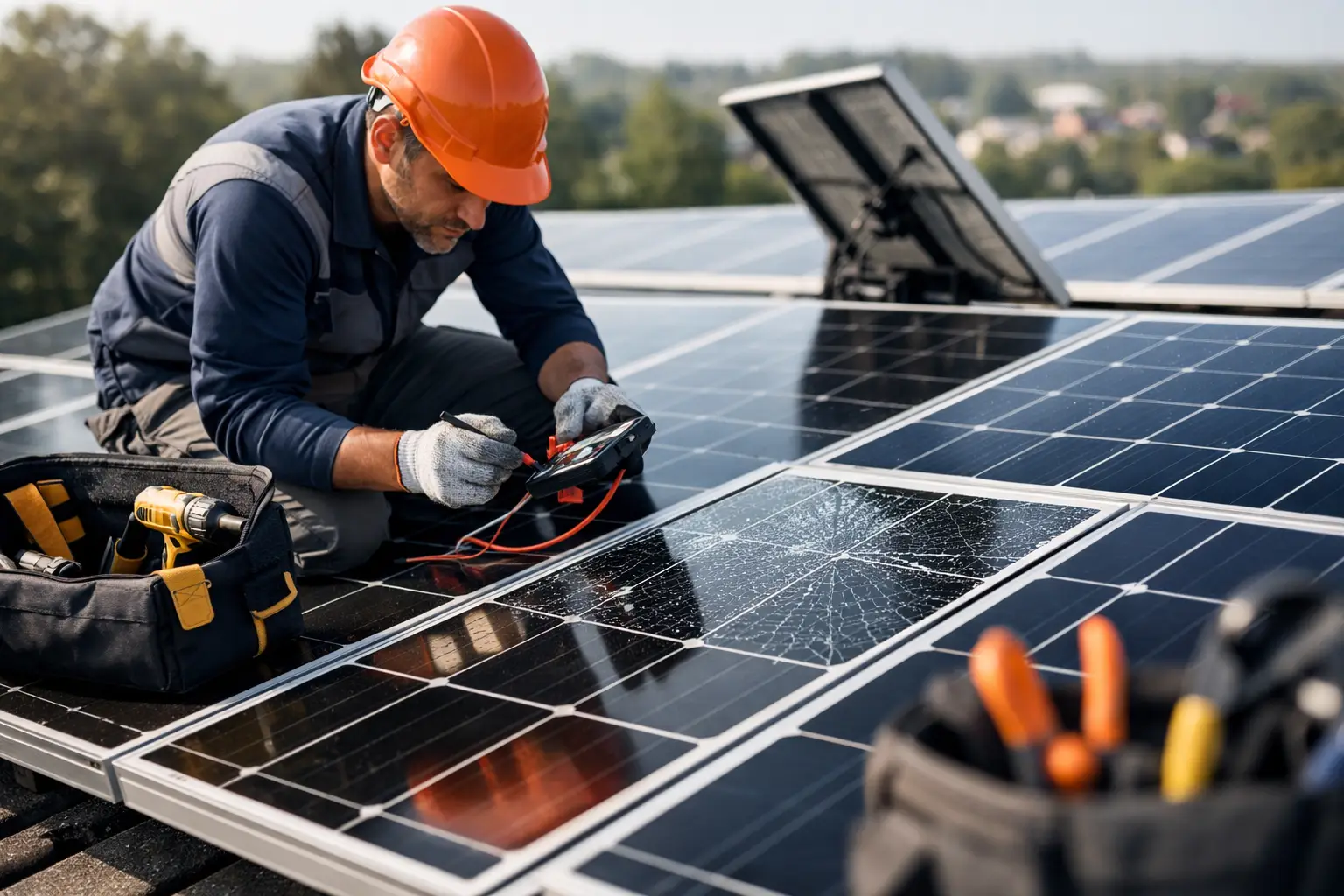
A sudden drop in solar output usually shows up before you notice any obvious damage. Your inverter may flag a fault, your generation figures may dip, or your electricity bills may start creeping back up. If you are searching for solar panel repair near me, the real goal is not just finding someone local. It is finding someone qualified, responsive and able to diagnose the problem properly the first time.
Solar faults are not always dramatic. A cracked panel is easy to spot, but many issues sit elsewhere in the system. Loose wiring, a failing inverter, damaged isolators, water ingress, pest damage and poor original installation can all reduce performance. That is why a careful inspection matters more than a quick guess.
When solar panel repair near me is the right search
Most people start looking for help after one of three things happens. They notice a clear loss in generation, they see visible wear on the roof, or the system stops working altogether. For businesses, that drop in performance can affect operating costs quickly. For homeowners, it often starts as a nagging question about whether the system is still saving as much as it should.
Repair is often the sensible route when the core system is still in decent condition. If your panels are structurally sound and the issue is isolated to one component, a targeted fix can restore performance without the cost of replacement. If the system is older, poorly installed or built with outdated components, repair may still help, but it may not be the most cost-effective answer long term.
That is where experienced local installers add real value. They can assess whether a repair will genuinely solve the issue or simply delay a bigger problem.
Common faults behind poor solar performance
A solar system has several points where things can go wrong, and the faulty part is not always the panel itself. In many cases, the panels are fine but another part of the setup is failing.
Inverters are a frequent culprit. They work hard every day, and although they are built to last, they do not usually last as long as the panels. If your inverter is showing an error code, shutting down intermittently or producing lower output than expected, that needs checking promptly.
Roof-level wiring and connectors can also cause problems. Exposure to weather, movement over time and occasional poor workmanship can all lead to faults. Rodents and birds sometimes damage cabling too, particularly where access points are not properly protected.
Then there is panel damage itself. Impact cracks, hotspots, delamination and moisture ingress can all affect performance. Not every cracked panel stops working immediately, but damage can worsen over time and create electrical safety risks.
A final issue that is often overlooked is installation quality. If your system was fitted by a contractor who cut corners, problems may stem from mounting, cable routing, isolation points or poor component matching. In that case, the repair may need to address both the fault and the original workmanship.
What a good repair visit should include
A proper repair appointment should start with diagnosis, not assumptions. Any installer worth considering should inspect the full system, review performance data if available and test the relevant components before recommending work.
That usually means checking the inverter, inspecting visible panels, testing electrical connections and looking at isolators, generation meters and battery storage if you have it. If your system includes monitoring software, that data can help pinpoint whether the issue is sudden, gradual or isolated to one part of the array.
If a company offers a quote for repair without asking basic questions about the age of the system, original installer, equipment brand or symptoms, that is a warning sign. Solar faults are rarely one-size-fits-all.
For roof-mounted systems, access also matters. Some repairs are straightforward. Others require scaffolding or specialist roof access, which can affect cost and timing. A trustworthy installer will explain that upfront rather than surprising you later.
Should you repair or replace?
This is where the answer depends on the age and condition of your system. If your panels are relatively modern and the fault sits with a replaceable component such as the inverter or isolator, repair is usually the obvious choice.
If the panels themselves are badly damaged, or if multiple parts are failing on a system installed many years ago, replacement may offer better value. The same applies if your existing system is underperforming because it was undersized, poorly designed or installed before newer efficiency improvements became standard.
For commercial properties, downtime can make replacement more attractive than repeated repairs. For homeowners, cost tends to lead the decision, but the cheapest short-term fix is not always the right one. Spending less now can mean spending more again in a year.
A good local specialist should be honest about that trade-off. You want clear advice, not pressure.
How to choose a trusted local repair specialist
When you search solar panel repair near me, you will likely see a mix of electricians, roofers and solar firms. They are not interchangeable. Solar systems combine roofing, electrical work and specialist product knowledge, so you want someone with proven experience in solar maintenance and repair.
MCS accreditation matters because it gives you more confidence that the installer meets recognised standards. It is also sensible to ask whether they work regularly on your type of system, especially if you have battery storage, an EV charger or a commercial array.
Local knowledge helps too. Weather exposure, roof types and property styles vary across places such as Cardiff, Newport, Swansea and Bristol. An installer familiar with the area is more likely to understand common site issues and respond quickly if follow-up work is needed.
It also helps to compare more than one option. Repair quotes can vary, not only in price but in what is actually included. One company may quote for a part swap only, while another includes testing, access equipment and warranty-backed workmanship. On paper those quotes can look similar when they are not.
What affects solar repair costs?
Repair costs depend on the fault, access requirements and the parts involved. A simple electrical issue may be relatively modest to fix. Replacing an inverter is a bigger job, and roof access can add cost if scaffolding is required.
Brand compatibility matters as well. Some systems use equipment that is easier to source and replace than others. If parts are discontinued, repair can become slower and more expensive. That does not always mean replacement is necessary, but it can shift the balance.
The best approach is to look at overall value rather than the lowest headline figure. A cheaper repair from someone without the right experience can lead to repeat visits, unresolved faults or safety problems.
Why speed matters more than many people realise
When a solar system is not working properly, every day of delay can mean lost generation. During brighter months, that lost output adds up quickly. If the fault is electrical, there may also be a safety concern, especially where damaged connectors, water ingress or overheating are involved.
That is why quick access to vetted local installers matters. Instead of ringing around and hoping someone can help, comparing trusted repair specialists saves time and reduces the risk of ending up with the wrong contractor. For many homeowners and business owners, that convenience is not a bonus. It is the difference between getting the issue resolved this week or still chasing answers next month.
What to do before booking a repair
Before you contact anyone, it helps to gather a few details. Note any error messages on the inverter, check whether the problem affects the whole system or only part of it, and take photos of any visible damage if it is safe to do so from ground level. If you have old installation paperwork, warranty details or monitoring data, keep that to hand.
You should not attempt electrical repairs yourself, and climbing onto the roof is rarely worth the risk. Even if the issue looks minor, solar systems involve live components and specialist isolation procedures.
If you want a simpler route, using a service that matches you with vetted local installers can save a lot of time. Solar Planet does exactly that, helping property owners compare trusted MCS-accredited specialists without the usual back-and-forth.
A solar system should quietly save you money, not become another maintenance headache. If something looks wrong, act early, ask the right questions and choose a repair specialist who treats diagnosis, safety and long-term performance seriously.

