

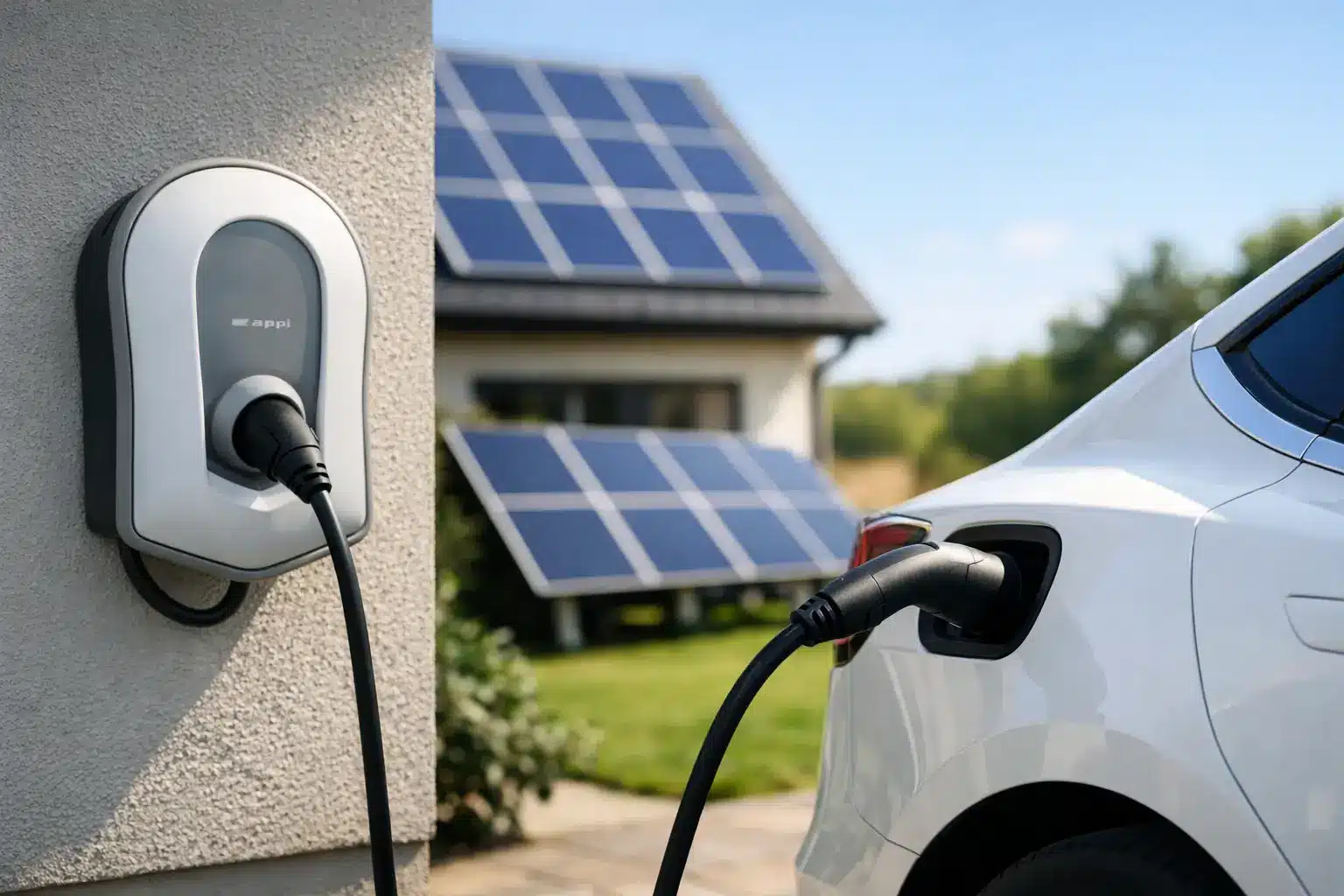
If you have solar panels, the right home charger can make a meaningful difference to the cost of running an electric car. This zappi EV charger review looks at why the charger is so popular with solar households, where it performs well, and when a simpler option may offer better value.
Zappi is made by myenergi and is designed to prioritise self-generated electricity. Rather than charging your car with imported grid power whenever it is plugged in, it can use spare solar generation that would otherwise be exported. For households in South Wales and the South West with daytime solar production and an EV at home, that is a practical advantage rather than a novelty.
Zappi EV charger review: the quick verdict
Zappi is one of the stronger choices for homeowners who already have solar panels, or expect to install them soon. Its main appeal is solar-aware charging: it can adjust the charging rate to follow the electricity your home is generating, helping you make better use of power you have produced yourself.
It is not automatically the cheapest charger to buy and fit. If your priority is simply reliable overnight charging on a cheap off-peak tariff, a less specialised smart charger could do the job for less. But for a home with solar, battery storage, or plans for both, Zappi’s energy controls can justify the higher upfront cost over time.
The best result depends on the whole system. Your inverter, battery, household demand, EV charging schedule and electricity tariff all affect how much solar energy can realistically go into the car.
What makes Zappi different?
Many smart EV chargers can be scheduled through an app. Zappi goes further by monitoring energy at the property and responding to what is available. Current transformers, usually fitted around the incoming supply and solar generation circuits, provide the charger with the information it needs to manage charging without overloading the supply or unnecessarily importing electricity.
Its key charging settings are straightforward. Fast mode charges at the maximum available rate, much like a conventional home charger. Eco mode blends surplus generation with electricity from the grid to maintain charging. Eco+ is the setting solar owners tend to value most: it aims to charge only when there is surplus generation available, pausing if clouds reduce output or household use rises.
This means a Zappi can use a bright afternoon to put low-cost solar electricity into your car. It will not create free energy, and charging may be slower in Eco+ mode, especially in winter. Yet it gives you greater control over where the electricity comes from.
Dynamic load balancing is another important feature. A properly configured Zappi can reduce its charging rate when your home is using more electricity elsewhere, such as when an electric shower, oven or heat pump is running. This helps keep demand within the limits of your property’s electrical supply.
Solar charging in real life
The strongest case for Zappi is a household where the car is regularly parked at home during daylight hours. This might include someone who works from home, has a second car that is often on the drive, or can charge at weekends. A 7kW charger can add plenty of range when surplus generation is available, but the exact amount changes with the weather, season and household consumption.
A common misconception is that solar panels must be generating 7kW for a 7kW charger to work. They do not. Zappi can charge at lower rates when surplus electricity is available, subject to the minimum charging level required by the vehicle. When output rises, the charger can increase the rate. If solar production falls below what the car needs, Eco+ can pause charging rather than draw from the grid.
That flexibility matters because solar output is rarely constant. A kettle, washing machine or induction hob can quickly use the surplus you expected to send to the car. Zappi responds to those changes, but it cannot guarantee a full charge from solar alone by a particular time.
For that reason, many owners combine solar settings with a scheduled overnight charge. You might use solar surplus whenever it is available, then set a lower-cost overnight top-up before a longer journey. This approach protects convenience while still reducing imported electricity over a typical week.
Installation, compatibility and everyday use
Zappi is available in tethered and untethered versions. A tethered charger has a fixed cable, which is convenient for daily use but should be chosen with your vehicle’s connector and preferred cable length in mind. An untethered unit has a socket, giving more flexibility if you change cars or prefer to store the cable away.
Most UK homes use a single-phase supply, where a 7kW charger is the usual choice. Some commercial premises and a small number of homes have three-phase electricity, which may allow faster charging with the appropriate charger, vehicle and installation. An installer should confirm what your supply can support before recommending a model.
The charger should be fitted by a qualified, experienced installer who assesses the consumer unit, earthing arrangement, cable route, Wi-Fi or connectivity needs, and available supply capacity. The neatness of cable routing and the position of the unit matter just as much as the product specification. A charger placed too far from the parking space, or with a poorly planned cable run, soon becomes frustrating to use.
Zappi can also work within the wider myenergi ecosystem, including energy monitoring and battery-related controls. That may be useful if you want one view of solar generation, household use and charging. It is worth checking exactly what monitoring equipment and connectivity are included in an installation quote, as the ideal setup varies between properties.
How much does a Zappi installation cost?
As a guide, Zappi is usually priced above entry-level EV chargers because of its solar-focused functionality. The final installed cost depends less on the charger alone than on your property. A straightforward installation close to the consumer unit is very different from one requiring a long cable route, groundwork, a garage supply upgrade or changes to the consumer unit.
Ask for a fully itemised quote that covers the charger model, cable length, electrical protection, load balancing equipment, testing, commissioning and warranty arrangements. If you have solar panels or battery storage, make sure the quotation confirms how the system will be configured to measure generation and export accurately.
The lowest quote is not always the best value. A correctly designed installation can avoid nuisance tripping, unreliable monitoring and expensive alterations later. Solar Planet can help homeowners compare no-obligation proposals from vetted local installers, making it easier to check both the equipment and the workmanship behind the price.
Advantages and trade-offs to consider
Zappi’s biggest strengths are its solar surplus charging, useful energy controls and suitability for homes building towards a broader renewable energy setup. It can help improve solar self-consumption, particularly where export payments are modest and the car is available during the day.
The trade-off is that its benefits are more limited for some households. If you do not have solar, do not plan to add it, and nearly always charge overnight on a low tariff, a simpler charger with dependable scheduling may be the more cost-effective choice. Zappi will still charge an EV well, but you may not use the feature that makes it distinctive.
It is also worth being realistic about winter. Solar generation falls sharply during shorter, darker days, so solar-only charging may be occasional rather than routine. That does not make the charger less useful, but it makes tariff scheduling and sensible settings more important.
Is Zappi right for your property?
Choose Zappi if you want your EV charging to work closely with solar generation and you value the option to expand into battery storage or wider energy monitoring. It is particularly well suited to homeowners who want to use as much of their own renewable electricity as possible without manually checking generation every time they plug in.
Before deciding, ask each installer how they will configure solar monitoring, whether load balancing is included, what charging rate your supply supports and how the charger will be positioned. A good installer will explain the answers plainly and match the setup to how you actually use your car.
The most useful charger is the one that fits your driving routine, electrical supply and future energy plans – not simply the one with the longest features list.

