If your business runs through the day, pays heavily for electricity and has a decent roof sitting idle above it, there is a fair chance you are already paying more than you need to. Solar panels for business premises are no longer a niche option for large industrial sites. They are now a practical investment for offices, warehouses, shops, farms, schools and mixed-use buildings that want lower running costs and more control over energy spend.
For many businesses, the question is not whether solar works. It is whether the numbers stack up for their building, their usage pattern and their budget. That is where a clear, site-specific assessment matters more than generic promises.
Why solar panels for business premises make financial sense
Commercial electricity prices have pushed many owners and facilities teams to look harder at self-generation. Solar can reduce the amount of power you buy from the grid during daylight hours, which is often when business demand is highest. If your building uses most of its electricity during the day, the value of solar usually improves because more of what you generate is used on site.
That point matters. The strongest returns often come from self-consumption rather than exporting surplus power. A busy office with IT equipment, lighting and air conditioning, or a workshop with regular daytime demand, may benefit more than a premises that sits quiet for long periods and uses most of its electricity in the evening.
There is also a longer-term budgeting advantage. Grid prices can move sharply, while solar gives you a portion of electricity at a more predictable cost over the system’s life. It does not remove energy bills altogether, but it can soften exposure to future price rises.
What kind of business premises are well suited?
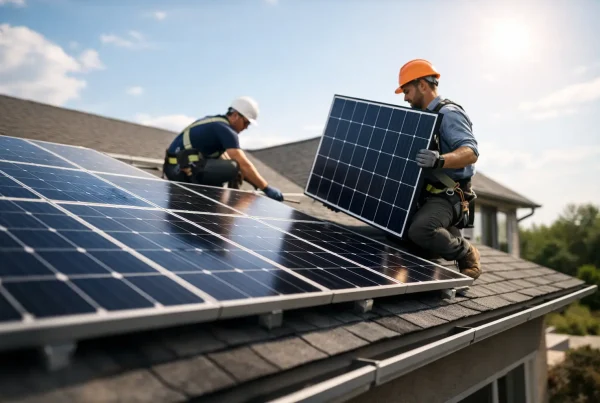
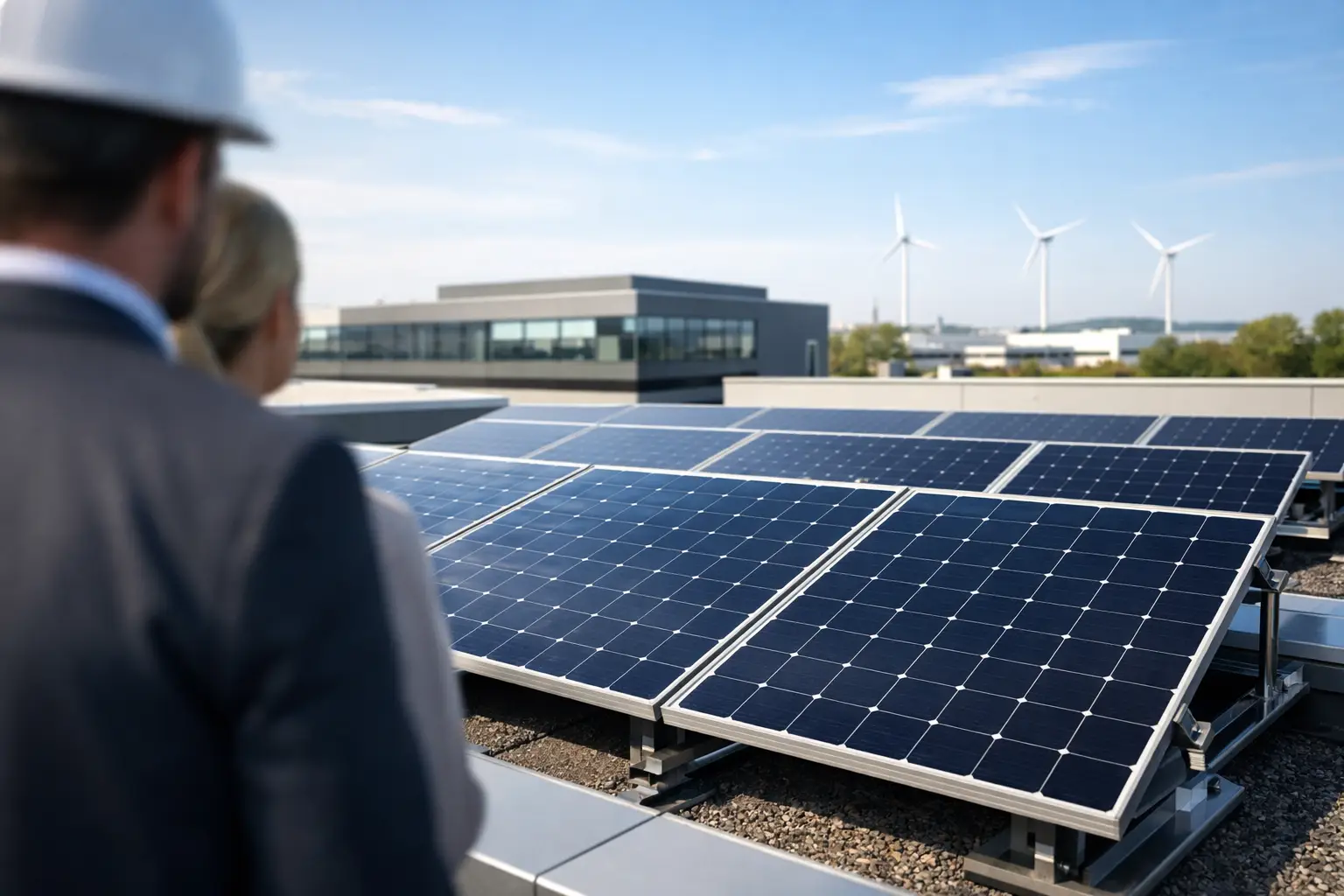
A lot depends on the building itself. Flat and pitched roofs can both work, although the available area, shading and roof condition all affect system design. Large commercial roofs are often attractive because they provide enough space for a meaningful installation without taking up operational land.
Warehouses, manufacturing units, retail premises, agricultural buildings and offices are common candidates. Multi-tenant buildings can be more complicated, but not impossible. If the electricity supply arrangement is split across several occupiers, the project may need more planning around metering and how savings are allocated.
The roof is only one part of the picture. Your business’s opening hours, annual electricity use and future plans also matter. If you expect to add EV chargers, electric heating or more machinery, installing solar now may make even more sense than your current bills suggest.
The main factors that affect return on investment
It is tempting to ask for a simple payback figure straight away, but commercial solar is rarely one-size-fits-all. Two buildings with the same roof size can produce very different returns.
System size is the obvious factor, but not the only one. Your daytime electricity demand has a big influence because power used on site is usually worth more than exported electricity. Roof orientation and shading can change output significantly, and older roofs may need work before panels are fitted.
Installation cost also varies by access, scaffolding needs, inverter choice and electrical upgrades. Some businesses will need a stronger case for export capacity or changes to the existing supply setup. None of these points mean solar is a poor option. They simply affect how the project should be designed and priced.
A careful quote should show expected generation, estimated on-site use, export assumptions and likely savings. If a proposal feels vague on any of those points, it is worth asking more questions.
Buying outright or financing the system
For some businesses, the best financial return comes from purchasing the system outright. That gives full benefit from the electricity generated and avoids ongoing finance costs. It can be particularly appealing for established companies with available capital and a long-term view of the premises.
For others, protecting cash flow is the priority. Finance can spread the cost and still deliver monthly savings if structured well, although the final return may be lower than a cash purchase. Whether that trade-off is acceptable depends on your wider business plans.
If you lease your building, the picture becomes more nuanced. Lease length, landlord permissions and responsibility for roof works all need checking early. A short remaining lease can make the project harder to justify, while a supportive landlord may see solar as a building improvement that benefits both parties.
Should you add battery storage?
Battery storage can improve the value of a commercial solar system, but it is not automatically the right next step. If your premises uses most of its solar power as it is generated, a battery may add cost without enough extra benefit. If there is regular surplus generation and demand later in the day, storage may start to look more attractive.
This is especially relevant for businesses with evening operations, refrigeration loads, security systems or vehicle charging after trading hours. Batteries can also offer a degree of resilience, although they are not the same as a full backup power solution unless the system is designed for that purpose.
The right answer depends on usage patterns, not trend-driven add-ons. A good installer should be willing to say when battery storage is worth it and when it is better left for a future phase.
What to ask before comparing quotes
The quality of the installer matters just as much as the equipment. Commercial projects involve structural considerations, electrical design, permissions and long-term performance, so this is not a job to hand to the cheapest name without checking credentials.
Look for MCS-accredited installers and ask how much experience they have with commercial sites similar to yours. Ask who carries out the survey, what monitoring is included and how maintenance or fault support is handled after installation. If your business cannot afford unnecessary downtime, aftercare is not a small detail.
It also helps to compare more than one proposal. Not because every quote should be driven to the lowest number, but because differences in design, assumptions and service become clearer side by side. For businesses in South Wales and nearby areas such as Cardiff, Newport, Swansea and Bristol, working with vetted local installers can make surveys, follow-up visits and ongoing support simpler.
Common concerns from commercial buyers
One concern is disruption. In most cases, installation can be planned to limit interference with operations, although access requirements vary by site. Warehouses and offices are often easier to work around than customer-facing premises with limited access windows.
Another concern is roof damage. A proper pre-installation survey should check roof suitability before any work is agreed. If the roof is near the end of its life, replacing or repairing it first may be the smarter move. It is far better to deal with that upfront than to remove panels later for unexpected roof works.
There is also the question of aesthetics. Some businesses care very little about how panels look, while others operate from prominent sites where appearance matters. In those cases, design and placement should be discussed early rather than treated as an afterthought.
Why the quote process should be simple
Commercial decision-makers are busy. Most do not want to spend weeks chasing installers, repeating site details and trying to compare quotes that all use different assumptions. A simpler route is to speak with a service that can connect you with multiple trusted, MCS-accredited installers so you can compare options without doing all the legwork yourself.
That is where a business like Solar Planet can add real value. Instead of starting from scratch with individual searches, you can receive up to four quotes from vetted local installers, giving you a clearer view of costs, system sizes and likely savings. It is a practical way to move from early interest to an informed decision without unnecessary friction.
Is now the right time?
If your business has stable daytime electricity use and a suitable roof, waiting does not usually make the project simpler. Energy savings delayed are still savings missed. That said, timing should reflect the condition of the building, available budget and any planned operational changes.
The best next step is not guesswork. It is a proper assessment of your premises, your usage and the options available to you. Solar works best when it is designed around how your business actually uses energy, not around a standard package.
A good commercial solar project should leave you with fewer unknowns, not more. If the numbers look right and the installer quality is there, solar can become one of the most practical upgrades your premises will make for years to come.