

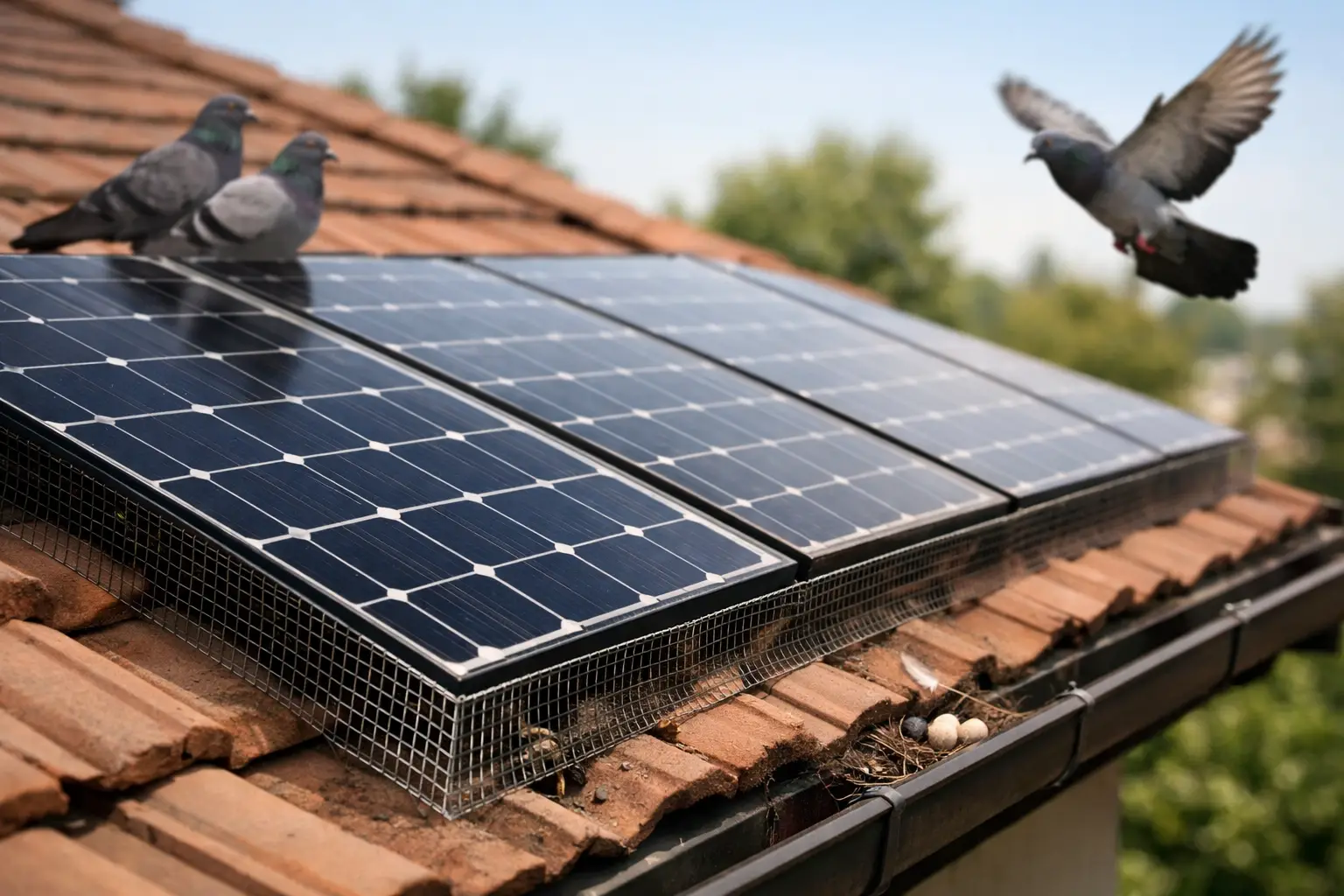
A few feathers around your roofline may not look urgent, but nesting birds beneath solar panels can create a costly problem over time. Solar panel bird proofing prevents pigeons and other birds from gaining access to the sheltered gap between your panels and roof, where they can nest, leave debris and damage cabling.
For many homes and commercial properties, it is a sensible protective measure rather than an optional extra. The right system keeps birds out without harming them or interfering with the performance, drainage or ventilation of your solar array.
Why birds choose the space under solar panels
Solar panels create a dry, shaded and relatively warm space that is protected from wind and predators. For pigeons in particular, it is an attractive place to roost and build a nest. Once a pair has settled in, the problem can grow quickly, especially during breeding season.
The noise is often the first sign. Homeowners may hear scratching, cooing or movement above a bedroom or loft room early in the morning. Others spot nesting material, feathers and droppings collecting in gutters, on patios or around the edge of the roof.
It is tempting to leave the birds alone if the panels are still generating electricity. However, repeated nesting can lead to blocked gutters, stained roof areas and a build-up of waste beneath the array. Birds may also peck at exposed cables or dislodge components while moving nesting material in and out.
What damage can nesting birds cause?
The most immediate issue is mess. Bird droppings are unsightly, can block gutters and may require more frequent cleaning of surrounding roof areas. Droppings and leaves can also collect at the lower edge of the panels, restricting rainwater flow and creating damp spots where debris sits against the roof.
More seriously, nesting activity can put solar cables and connectors at risk. A damaged cable does not automatically mean the whole system fails, but it should be inspected promptly by a qualified solar professional. Faults may reduce generation, trigger system alerts or, in rare cases, create an electrical safety concern.
There is also the question of access. Once debris has accumulated below the array, cleaning it safely is not a straightforward DIY job. Walking on a roof or lifting panels without the right equipment can damage the installation, invalidate workmanship cover or cause a fall. A professional can assess the situation without disturbing parts of the system unnecessarily.
How solar panel bird proofing works
The most effective approach is usually a purpose-made mesh barrier fitted around the perimeter of the solar array. It closes the gap between the panels and roof while leaving the necessary airflow beneath the panels intact.
A quality installation uses clips or fixings designed for the panel frame. The mesh should not be screwed through the panels, forced under roof tiles or attached in a way that could affect the manufacturer’s warranty. It needs to be strong enough to resist weather and persistent birds, yet discreet when viewed from ground level.
Before the mesh is fitted, the installer should check for active nests, remove old nesting material where appropriate and inspect accessible cables, roof tiles and panel edges. This order matters. Sealing birds in, or fitting mesh over an existing nest, is neither humane nor effective.
Mesh is usually better than spikes
Bird spikes can discourage birds from landing on ledges, but they do not reliably seal the space beneath a solar array. They can also trap leaves and look untidy over time. For solar panels, a properly fitted perimeter mesh is generally the more durable and targeted solution.
Other deterrents, such as reflective devices or sound-based products, may offer a short-term reduction in bird activity. They rarely solve an established nesting problem because birds tend to become used to them. Physical exclusion is the dependable long-term answer.
When is bird proofing worth arranging?
Bird proofing is particularly worthwhile if pigeons are already nesting beneath your panels, you are seeing debris in your gutters, or you live near busy town centres, coastal areas or locations with a high pigeon population. Properties in Cardiff, Newport, Swansea and Bristol can all experience this issue, although the need depends far more on your immediate surroundings than your postcode.
It can also make sense as part of a new solar installation. Adding mesh while scaffolding is already in place may be simpler and more cost-effective than arranging a separate visit later. That said, not every property needs it from day one. If there is no bird activity and your roof is in an exposed location that birds are unlikely to use, you may prefer to monitor the area first.
For commercial premises, bird proofing can be especially useful where roof access is more complex and routine maintenance creates disruption. Preventing nesting can reduce the chance of avoidable call-outs and help keep roof drainage clear around a larger system.
Choosing an installer for solar panel bird proofing
The quality of the fitting is as important as the mesh itself. An inexperienced contractor may fit a barrier that loosens in high winds, catches debris or compromises the panel frame. Ask how the mesh will be secured, whether the system is designed for solar arrays and what checks will be carried out before work begins.
Where the work involves inspecting, repairing or altering the solar installation, choose a professional with relevant solar experience. An MCS-accredited installer understands how panels, mounting systems and cabling should be treated, and can identify whether bird activity has caused an issue that needs separate attention.
It is also worth confirming what is included in the quote. Removal of nesting material, gutter clearing, cable checks and replacement of damaged clips may be charged separately. A clear written scope avoids surprises and makes it easier to compare like-for-like proposals.
If you need both bird proofing and solar maintenance, comparing trusted local specialists can save time. Solar Planet can help homeowners and businesses request no-obligation quotes from vetted installers, rather than relying on a general roof contractor who may not be familiar with solar equipment.
Legal and welfare considerations
Bird proofing should always be carried out responsibly. Wild birds, their nests and eggs can be legally protected, particularly when a nest is active. The practical approach is to assess the site before work starts and schedule exclusion work when it can be done without trapping or disturbing nesting birds.
A reputable installer will not simply seal every gap on arrival. They should explain any delay that is needed and recommend the right timing for the work. This protects wildlife and prevents a rushed installation from creating a bigger issue.
Looking after your panels after proofing
Once mesh is in place, keep an eye on the perimeter of the array from ground level. Look for loose edges, leaves collecting along the bottom of the panels or renewed bird activity around an unprotected gap. You should not need to climb onto the roof for routine checks.
Arrange professional solar maintenance if you notice a sudden drop in output, an inverter warning, visible damage or excessive debris around the panels. Bird proofing reduces a common source of trouble, but it does not replace sensible checks of your system’s generation and condition.
A well-fitted barrier is a small addition that can protect the larger investment on your roof. If birds have already found a way beneath your panels, dealing with it early is usually cleaner, safer and less expensive than waiting for a minor nuisance to become a repair job.

