

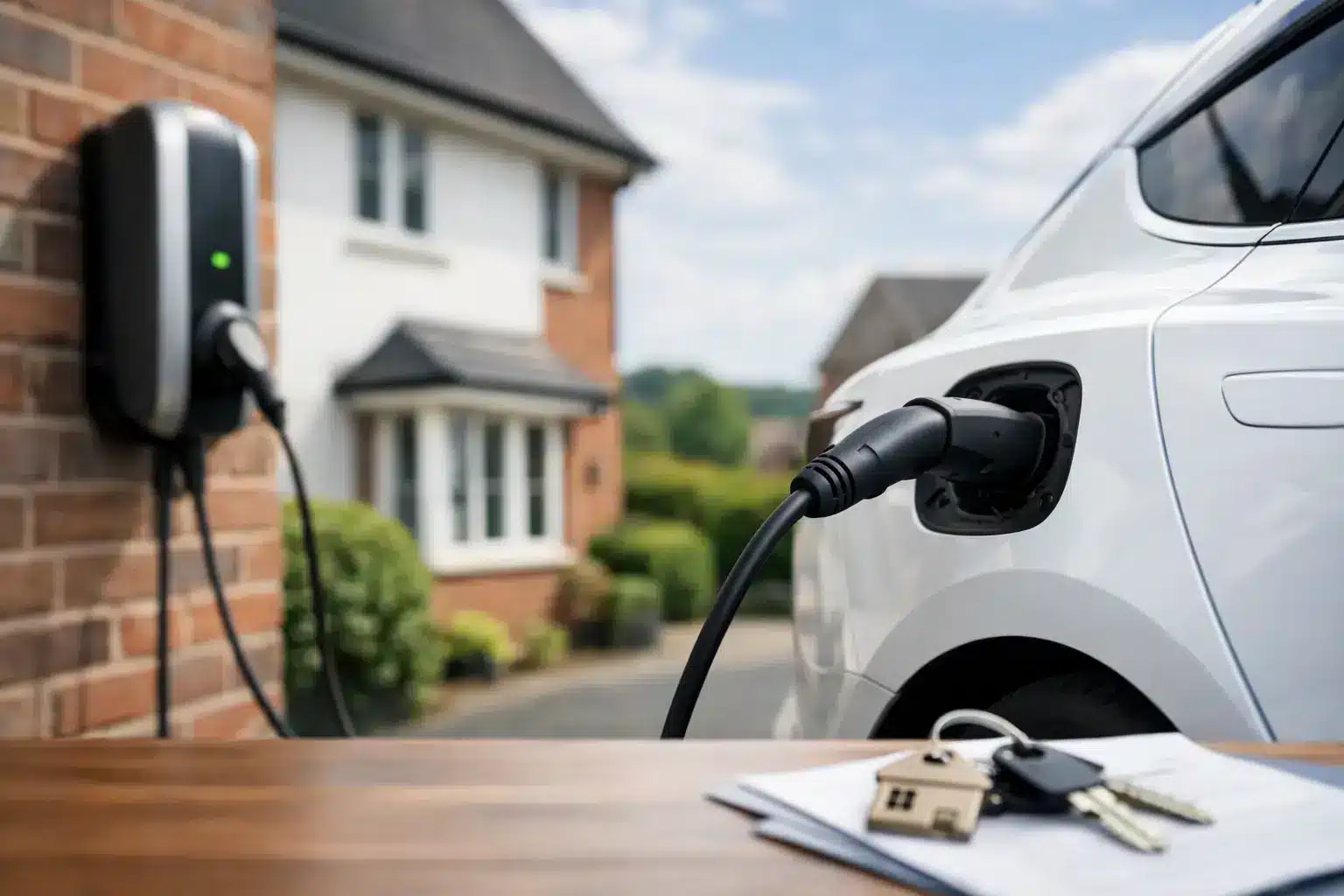
A home charger can make electric driving markedly cheaper and more convenient, but the upfront installation cost still matters. This guide to EV charger grants explains who can receive help in the UK, what the main schemes cover and how to avoid planning an installation around funding you cannot claim.
The key point for most homeowners is straightforward: there is no broad national grant for owner-occupiers of single houses. Support is instead focused on renters, leaseholders, landlords, workplaces and organisations. That does not make a charger a poor investment for homeowners, but it does mean quotes should be compared on their full installed cost rather than an assumed grant.
Which EV charger grants are available?
Government-backed support is administered through the Office for Zero Emission Vehicles, often shortened to OZEV. The schemes and eligibility criteria can change, so always confirm the current rules before commissioning work. In practice, the support most relevant to households and businesses falls into three areas: the EV Chargepoint Grant for eligible renters and flat owners, grants for landlords, and the Workplace Charging Scheme.
These grants usually contribute towards the purchase and installation of an approved chargepoint. They are not cash payments handed to the applicant after the work is complete. In many cases, an authorised installer applies on your behalf and deducts the approved amount from the invoice.
Renters and flat owners
The EV Chargepoint Grant is designed to help people who may find charging infrastructure harder to arrange than an owner-occupier in a detached home. It can be available to renters and people who own or rent a flat, provided they meet the scheme’s property and parking requirements.
Typically, you will need a qualifying parking space, such as an allocated bay or driveway, and the legal right to install equipment there. For leasehold flats, that may mean securing freeholder or managing-agent permission before the installer can proceed. A parking bay on a public road is not normally enough.
The grant can cover a proportion of eligible costs, up to the scheme’s stated maximum per socket. The final saving depends on the charger selected, cable route, consumer-unit capacity and any remedial electrical work needed. It is sensible to treat the grant as a contribution, not a guarantee that the installation will be inexpensive.
Landlords and property managers
Landlords may be able to access funding for chargepoints at residential rental properties and, in certain circumstances, commercial premises. There is also support aimed at infrastructure work, which can be particularly valuable where a block of flats or a portfolio will need more chargers over time.
This is where planning ahead pays off. Installing one charger now may be the quickest option, but installing suitable cabling, containment and electrical capacity for several future bays can prevent disruptive and costly repeat work. The right choice depends on the building’s supply, the number of parking spaces and how quickly demand is likely to grow.
A landlord should also consider who will own and pay for the electricity. A charger connected to a tenant’s own meter is often simpler for a house with a driveway. Shared car parks may require access control, billing arrangements and a clear policy for residents. Grant eligibility does not remove the need for a workable long-term management plan.
Workplaces, charities and public organisations
The Workplace Charging Scheme can help eligible organisations with the cost of installing chargepoints for staff and fleet vehicles. Small businesses, charities and some public-sector bodies may qualify, subject to the scheme’s current conditions and limits.
A workplace charger is not only an employee benefit. For businesses with electric vans, sales vehicles or service teams, charging while vehicles are parked can reduce reliance on public rapid charging and make journey costs more predictable. For customer-facing sites, chargers can also strengthen the appeal of a premises, although the business will need to decide whether use is free, paid or restricted.
Before applying, assess your likely usage rather than simply installing the maximum number of sockets available under a grant. Four lower-powered chargers may suit an office where cars are parked all day. A business with vehicles turning around between jobs may need fewer chargers with higher power, or a mix of charging speeds.
Who is unlikely to qualify?
Owner-occupiers of houses are usually not eligible for the national EV Chargepoint Grant. This catches many people out because older grant schemes were more widely available. If you own a house with off-street parking, you can still install a smart home charger, but you should expect to fund it yourself unless a local scheme is available.
Local authorities, energy suppliers and vehicle manufacturers occasionally introduce time-limited offers. These can be useful, but they vary by postcode, funding round and technology requirements. Residents in Cardiff, Newport, Swansea, Bristol and surrounding areas should not assume a neighbouring council’s scheme applies to them. Check the exact address and application conditions before choosing an installer or paying a deposit.
If you park on the street, a private home-charger grant is unlikely to solve the problem. Some councils run on-street charging programmes, but these are normally infrastructure projects rather than individual household grants. Requesting a public charger may be possible, though there is no guarantee it will be installed near your property.
Eligibility checks to make before requesting quotes
Grant applications are easiest when the practical details are clear at the start. Gather evidence of your tenancy or ownership status, parking arrangements and, where relevant, permission from a landlord, freeholder or managing agent. Businesses should have their Companies House details or charity and public-sector information ready, as required by the scheme.
The installer must also meet the grant programme’s requirements. Using an electrician who is qualified for electrical work is essential, but it is not always sufficient for grant purposes. The installer and chosen chargepoint generally need to be approved for the specific OZEV scheme. Ask this question before accepting a quote, not after installation.
Your proposed charger needs to meet technical requirements too. Approved models are normally smart chargepoints, allowing charging to be scheduled for cheaper, lower-demand periods where your electricity tariff supports it. This can be just as valuable as the grant itself. Overnight smart charging can make a noticeable difference to running costs compared with relying on public rapid chargers.
The application process in practice
A good installer will begin with a site survey, either remotely or in person. They will look at the distance from the consumer unit, the route for the cable, earthing arrangements, available electrical capacity and the location of the parking space. Photographs of the fuse box, meter, outside wall and parking area can speed up an initial assessment.
Once eligibility is confirmed, the installer can recommend a compliant charger and explain what is included. Check whether the price covers the full cable run, groundworks, consumer-unit upgrades, load management equipment and VAT. A very low headline price may assume a short, straightforward installation that does not match your property.
For an eligible grant, the installer normally submits the application and applies the discount to your bill. Keep copies of the quote, permission documents and final invoice. If your circumstances change – for example, a tenancy ends or a parking space is reassigned – tell the installer before work begins.
You should also ask about notification to the local electricity network operator. Chargers can add significant demand to a property, and the installer may need to notify the network or request approval. This is a normal part of a properly managed installation, not an unnecessary delay.
Comparing EV charger quotes without losing the grant
Comparing more than one quote remains worthwhile, even where funding is available. The grant value is usually fixed, while installation standards, equipment quality and aftercare can vary. Look beyond the final figure and compare the scope of work on a like-for-like basis.
Ask each installer whether they are authorised for the relevant grant, whether the charger is approved, and whether the quote includes grant administration. Confirm the warranty for both the unit and workmanship, plus what happens if the charger develops a fault. For flats, landlords and workplaces, ask how users will be controlled and how electricity consumption can be monitored.
Solar panel owners have another useful decision to make. Some smart chargers can prioritise surplus solar generation, while others focus mainly on timed tariff charging. Solar matching can be attractive during brighter months, but a flexible overnight tariff may offer better value at other times. The best setting depends on your driving pattern, battery storage, export tariff and how often the car is home during daylight hours.
Solar Planet can help property owners and businesses compare offers from trusted local installers, making it easier to check practical specifications, grant experience and total cost before committing. For grant-funded work, make clear from the first conversation which scheme you expect to use.
A grant should support the right installation
The cheapest charger is not always the best value, and the largest available grant is not always a reason to install more equipment than you need. Choose a system that suits your parking, electrical supply and likely vehicle use, then make sure the funding is applied correctly. A careful quote comparison now can leave you with safe, dependable charging long after a particular grant scheme has closed.

