

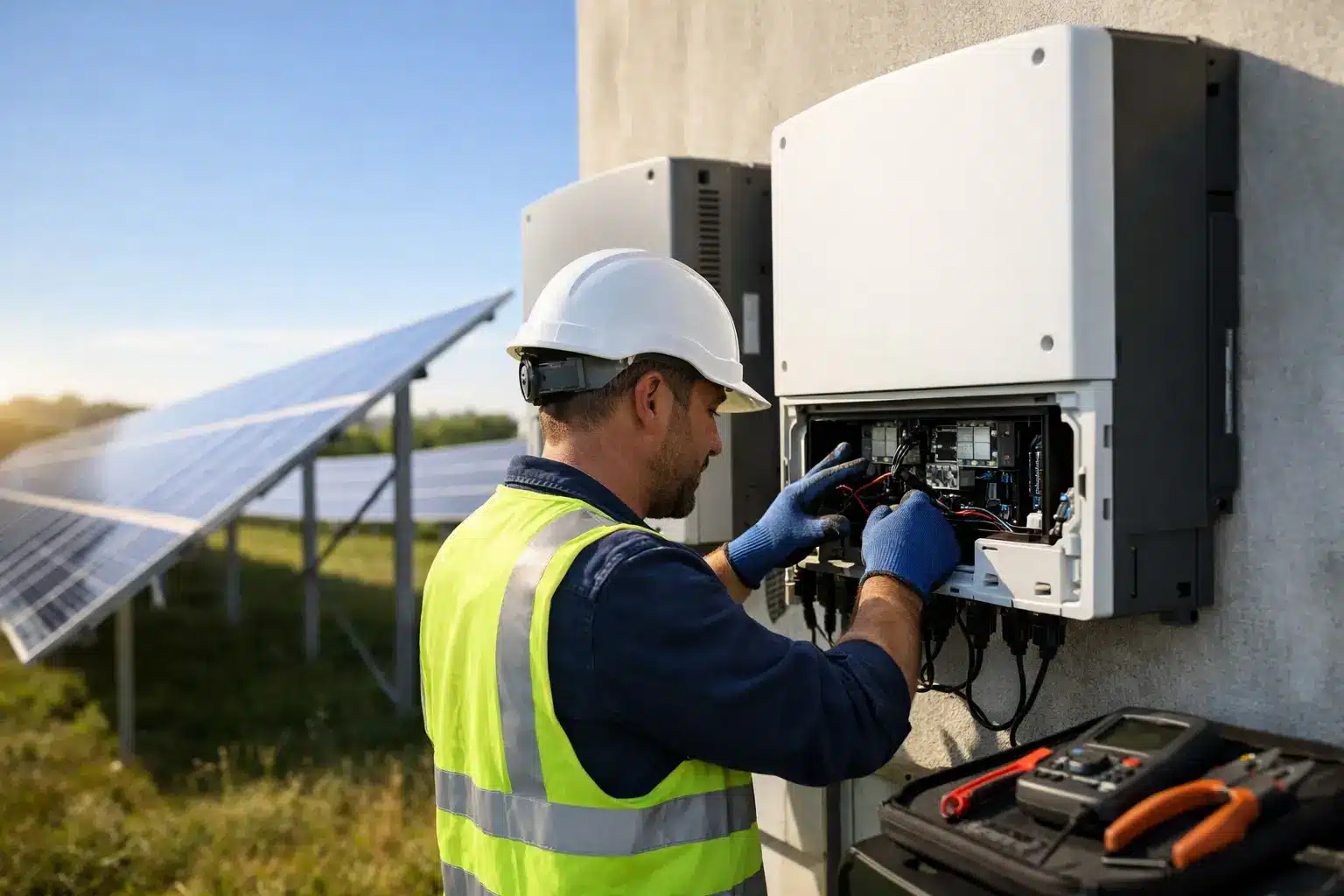
A solar PV system can still look perfectly healthy from the ground while producing far less electricity than it should. The inverter is often the reason. This guide to solar inverter replacement explains when a change is needed, what a suitable replacement involves and how to protect the value of your existing solar investment.
For most homes and small businesses, the inverter is the working heart of the system. It converts the direct current generated by your panels into usable alternating current for your property. When it develops a fault, your panels may stop generating altogether, produce intermittently or send less power to your home than expected.
When should you replace a solar inverter?
Solar inverters commonly last around 10 to 15 years, although performance, installation quality and the manufacturer all make a difference. Panels often continue generating for 25 years or more, so it is normal for an inverter to need replacing during the system’s lifetime.
A blank screen, repeated error messages, warning lights or a monitoring app showing zero generation on a bright day are obvious signs. Less obvious problems include unexplained drops in output, frequent shut-downs during sunny weather or a low humming noise that has changed noticeably. These symptoms do not automatically mean the inverter has failed. A loose connection, damaged cable, shading issue, grid-voltage problem or faulty isolator can produce similar results.
That is why diagnosis should come before replacement. A qualified solar installer can inspect the system, read fault codes, test the electrical components and confirm whether the inverter is genuinely at fault. Replacing an inverter unnecessarily is an avoidable expense, while continuing to run a failing unit can mean months of lost generation.
Repair or replacement: making the sensible call
A repair can be worthwhile where the fault is minor, the inverter is relatively new and parts remain available. For example, an issue with a fan, display, communication connection or internal component may be resolved at a lower cost than fitting a new unit.
Replacement usually makes more financial sense if the inverter is out of warranty, repeatedly failing or approaching the end of its expected service life. Older models may also have limited parts support and fewer monitoring features. A new inverter can offer better efficiency, clearer performance data and compatibility with a future battery, but these benefits should be weighed against the total installed cost.
Check the warranty paperwork before agreeing to any work. Manufacturer warranties vary widely, and some require the fault to be assessed by an approved installer. Keep a record of error codes, screenshots from your monitoring portal and the original installation documents. This can make a warranty claim quicker and give the installer a clearer starting point.
Choosing the right replacement inverter
A like-for-like replacement is not always the best choice. The right inverter must suit the electrical design of your existing array, including the number of panels, their combined capacity, how they are arranged in strings and the direction and pitch of different roof sections.
An installer will consider the inverter’s DC input limits, maximum voltage and current, the number of MPPTs – the inputs that help panels operate efficiently under differing conditions – and the AC output rating. These details matter particularly where panels face east and west, or where an extension has added panels at a different angle.
Avoid choosing solely by the lowest equipment price. An undersized inverter may clip some peak generation, which can be acceptable in carefully designed systems but not in every case. An oversized unit can cost more than necessary and may operate less efficiently at lower output. A proper assessment should explain the proposed sizing in plain English.
Planning for battery storage
If you may want battery storage later, this is the right time to discuss it. Some replacement options are battery-ready or hybrid inverters, which can manage both solar generation and a compatible battery. They may reduce the cost and disruption of a later battery installation.
However, fitting a hybrid inverter simply for a possible future battery is not always the best value. If your current system is straightforward and battery plans are uncertain, an AC-coupled battery can often be added later without replacing the new solar inverter. Ask for both options, including the practical differences in cost, monitoring and backup-power capability.
Protecting export payments and system records
If your system receives Feed-in Tariff payments, replacing an inverter does not normally end your payments, but the work must be recorded correctly and the generation meter arrangement should be checked. Your installer can advise on the evidence your energy supplier or administrator may need.
For newer systems receiving Smart Export Guarantee payments, accurate export metering and account details remain essential. Depending on the replacement and system capacity, the installer may also need to notify the local electricity network operator under the relevant G98 or G99 process. This is not paperwork to overlook. Proper notification helps ensure your system remains safe and compliant with local grid requirements.
What does solar inverter replacement cost?
The cost depends on the inverter size and brand, roof layout, access, whether electrical upgrades are required and the complexity of fault-finding. A straightforward residential replacement will generally cost less than a system involving multiple strings, optimisers, commercial equipment or difficult access.
The quotation should separate the equipment, labour, testing and any additional work. It should also state the warranty on both the inverter and workmanship. Be cautious if a quote is dramatically cheaper than others without explaining the difference. It may exclude commissioning, monitoring setup, paperwork or replacement of ageing DC isolators and protective equipment.
For a useful comparison, ask each installer whether the price includes a site inspection, fault diagnosis, removal and responsible disposal of the old unit, installation, electrical testing, app or portal setup, network notification where required and documentation. These are the details that turn a replacement into a completed, dependable repair.
Why accredited installation matters
An inverter replacement is electrical work, not a simple appliance swap. It involves high-voltage DC cabling, mains connections, isolators, protective devices and verification that the system operates safely when the grid is live and when it is not.
Choose a competent installer with experience of the inverter brand and the type of system you own. MCS-accredited installers provide added reassurance for solar work, particularly when you need clear documentation, insurer-friendly records and confidence that the installation will be assessed properly rather than guessed at.
For properties across South Wales and the Bristol area, comparing more than one vetted local quote can also reveal whether an installer has identified an underlying issue others have missed. Solar Planet can help customers compare up to four trusted, MCS-accredited installer options without the time-consuming task of contacting each provider individually.
Questions to ask before approving the work
Before you commit, ask the installer to confirm the diagnosed fault and explain why replacement is preferable to repair. They should identify the proposed inverter model, its warranty length, whether it will work with your existing panels and monitoring, and whether any upgrades to isolators, consumer unit protection or cabling are recommended.
Also ask what output you should expect after installation. No installer can promise identical daily generation because weather and seasonal light change constantly, but they can provide a sensible benchmark based on your system’s history, size and orientation. Make sure you know who will help if the monitoring app does not reconnect or a fault message returns after the work.
After your new inverter is fitted
Once the replacement is commissioned, check that the display or monitoring app shows live generation and that you can access the account. Save the new serial number, commissioning record, warranty confirmation and any network paperwork with your original solar documents.
It is worth checking generation periodically, especially through the first few weeks. A clear performance record makes future faults easier to spot and helps you understand whether your solar panels are meeting expectations.
A replacement inverter is also a useful moment to look ahead. With the right advice, it can restore lost generation now while keeping your options open for battery storage, EV charging or a wider energy upgrade when the time is right.

