

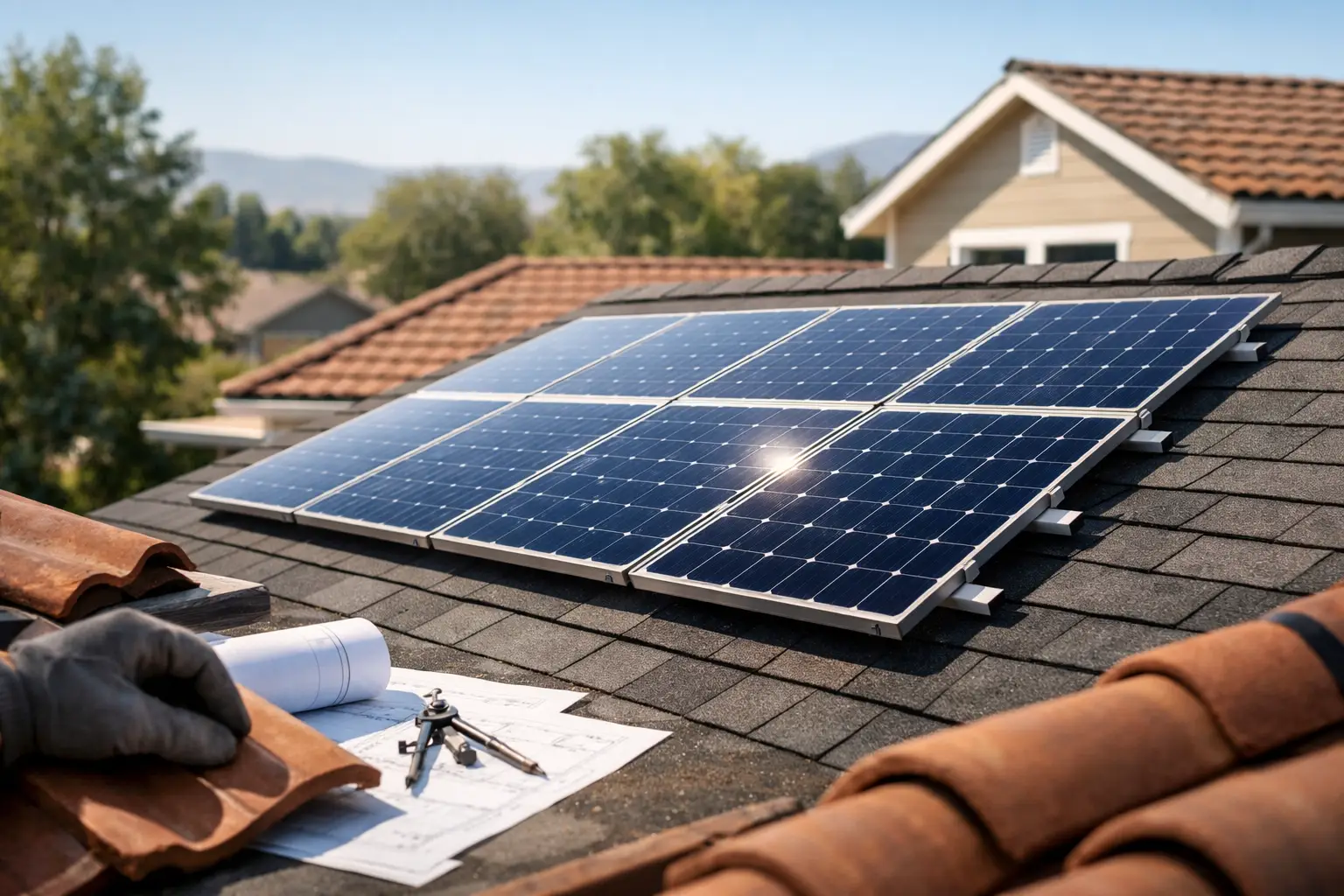
A roof can look perfect from the street and still be a poor candidate for solar. Equally, a roof that seems less than ideal can often work very well with the right system design. That is why roof suitability for solar is not really about one single factor. It comes down to how your roof’s shape, condition, direction and surroundings work together.
For homeowners and businesses, this matters because the wrong assumptions can lead to disappointing quotes, lower savings, or extra costs that could have been planned for earlier. The good news is that most roofs do not need to be perfect to make solar worthwhile. They just need to be assessed properly.
What affects roof suitability for solar?
The first thing installers look at is orientation. In the UK, south-facing roofs usually generate the most electricity across the year, but east and west-facing roofs can still perform very well. In many cases, an east-west split is a practical option because it spreads generation across more of the day, which can suit households that use electricity in the morning and evening.
A north-facing roof is more of a mixed picture. It is not always ruled out, but output tends to be lower, so the numbers need closer scrutiny. If roof space is limited or energy bills are particularly high, it may still be worth considering, but it depends on your property and usage.
Pitch also plays a part. Most roofs in South Wales and the South West are within a workable range for solar panels. A typical pitched roof is often a good match, and installers can account for variations in angle when designing the system. Flat roofs can also be suitable, although they usually need mounting frames to set the panels at a better angle. That can affect cost, loading and spacing.
Then there is shade. Chimneys, neighbouring buildings, dormers and tall trees can all reduce performance. A little shading is not always a deal-breaker, but heavy shade across key parts of the day will affect generation. Good installers will factor this in rather than giving you an over-optimistic estimate.
Roof condition matters as much as sunlight
One of the most overlooked parts of roof suitability for solar is the roof’s condition. Solar panels are built to stay in place for decades, so the roof underneath them needs to be in suitable shape too.
If your roof is nearing the end of its life, it may make more sense to repair or replace it before installation. Removing and refitting panels later adds cost and inconvenience. That does not mean an older roof is automatically unsuitable, but it does mean the structure and covering should be checked carefully.
Tile type can matter as well. Standard concrete and slate roofs are commonly used for solar, but some materials require more care during installation. Fragile tiles, unusual coverings or previous repair work can all influence the fitting method and labour involved. This is another reason a proper survey matters more than a quick online estimate.
Structural strength is equally important. Panels are not usually excessively heavy, but the roof must be capable of supporting the additional load, along with wind forces. For commercial buildings, this can be even more important because roof spans and construction methods vary widely. A reputable installer will confirm whether any structural review is needed before work begins.
Is every roof type suitable?
Not every roof is equally straightforward, but many are more suitable than people expect. Pitched residential roofs are often the simplest. They usually offer a clear mounting surface, good drainage and enough angle for solid year-round performance.
Flat roofs can be excellent for solar because they allow flexibility in panel positioning. However, that flexibility comes with design decisions. Panels on frames need enough spacing to avoid one row shading another, and wind loading must be managed carefully. So while flat roofs can be very suitable, the design needs to be right.
Complex roofs with multiple facets, rooflights or awkward obstructions can still work, but the available panel area may be reduced. This can affect overall system size and payback. Sometimes the best result comes from using fewer panels in the most productive parts of the roof rather than trying to cover every section.
For commercial sites, roof suitability can depend on access, parapets, plant equipment, drainage routes and ongoing maintenance needs. A large roof does not automatically mean an easy installation. It may offer strong potential, but practical constraints need to be considered early.
How shade changes the numbers
Shade is one of the biggest reasons why two similar properties can get very different solar estimates. A roof in an open position may produce far more than one that sits under mature trees or close to taller buildings.
The timing of the shade matters too. Morning shade affects east-facing arrays more, while afternoon shade has greater impact on west-facing systems. Some shading can be managed through careful panel layout or the use of optimisers, but there is always a trade-off between added equipment cost and improved performance.
This is especially relevant in built-up areas where neighbouring properties are close together. In places like Cardiff, Bristol or Newport, rooflines can vary street by street, so a system that suits one home may not suit the next. That is why local knowledge and a proper site assessment are so valuable.
Size and energy usage both matter
A suitable roof is not just one that can hold panels. It should also support a system size that makes financial sense for your property.
If you have high daytime electricity use, more roof space may allow a larger system with stronger savings. If your usage is modest, a smaller array may be enough. This is where suitability becomes practical rather than theoretical. A technically workable roof is only part of the picture. The better question is whether solar on that roof will match how you actually use energy.
Battery storage can influence this as well. A roof that produces well during the middle of the day may become more attractive if excess generation can be stored for evening use. For businesses with daytime demand, battery storage may be less important than for households that are empty for much of the day. There is no one-size-fits-all answer.
When a roof may be less suitable
Some roofs are possible for solar but less attractive once costs and constraints are taken into account. Heavy shading, limited usable space, poor structural condition or a roof replacement due in the near future can all weaken the case.
Planning restrictions may also play a role, especially for listed buildings or properties in sensitive locations. This does not always stop a project, but it can affect what is allowed and how long the process takes.
Access is another practical issue. If scaffolding is difficult, the roof is unusually high, or the layout creates installation complications, costs can rise. None of this means solar is off the table, only that the economics need to be looked at honestly.
How installers assess roof suitability for solar
A credible assessment should go beyond a rough guess based on satellite imagery. Desktop tools are useful for a first pass, but they cannot tell the full story about roof condition, wiring routes or hidden obstacles.
A proper survey usually considers orientation, pitch, shading, panel layout, roof material, structural concerns and electrical setup. It should also look at your usage pattern, not just the roof itself. The best recommendations come from combining site details with your energy goals.
This is where working with vetted, MCS-accredited installers makes a real difference. You want an installer who will tell you if your roof is only marginally suitable, not one who pushes ahead regardless. For customers comparing options, that honesty can save time and money.
If you are at the early stage and want clarity without spending days ringing around, Solar Planet can help simplify the process by matching you with trusted local installers who understand the housing stock and commercial buildings common across South Wales and the South West.
What to do before requesting quotes
It helps to gather a few basics first. Knowing the age of your roof, whether it has had recent repairs, and roughly when you use most of your electricity can make quote discussions much more useful. Photos of the roof and your latest electricity bill can also help installers give more realistic early guidance.
If you already know there is significant shading or an older roof covering, mention it upfront. That does not weaken your enquiry. It helps installers assess suitability properly and avoids inflated expectations.
The right roof for solar is rarely about perfection. It is about whether the roof you have can support a well-designed system that delivers sensible savings over time. A straightforward assessment now can save a lot of uncertainty later, and in many cases the answer is more positive than people expect.

