

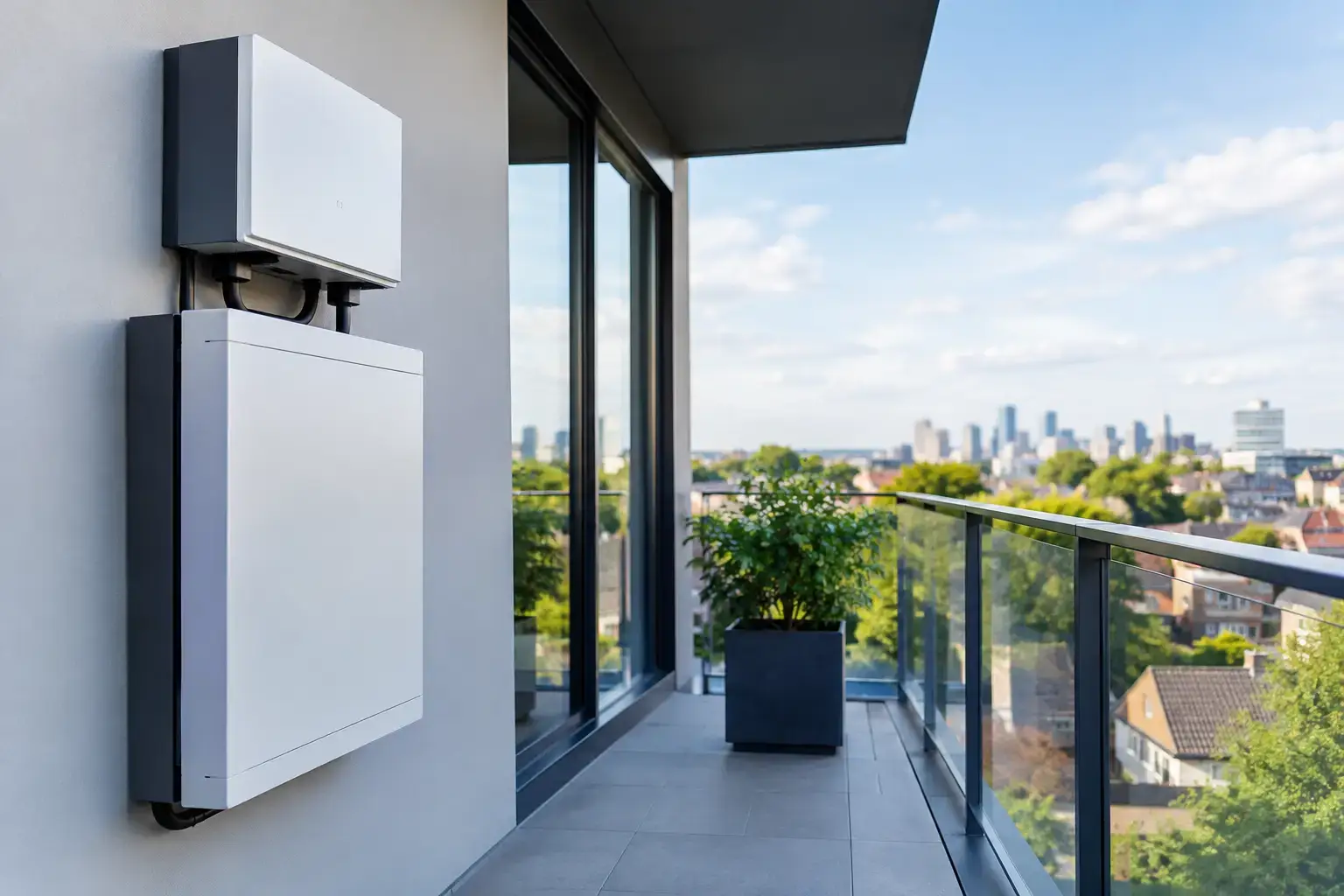
A battery can make solar power far more useful in a flat, but the right choice is rarely the largest unit on the market. The best battery systems for flats are compact enough for the available space, compatible with the building’s electrical supply, and sized around how you actually use electricity – not a headline capacity figure.
For many flat owners, the biggest benefit is simple: store lower-cost or self-generated electricity for the evening, when cooking, lighting and home entertainment tend to increase demand. Getting the details right before requesting quotes helps you compare like for like and avoid a system that is oversized, awkward to install or difficult to approve.
What makes a battery suitable for a flat?
A home battery stores electricity as direct current and releases it through an inverter when your property needs power. It can charge from solar panels, the grid on a time-of-use tariff, or both. This is particularly useful where a flat has limited roof access but the household wants to reduce reliance on peak-rate electricity.
Flats bring a few extra considerations. Space is tighter, electrical cupboards may be small, and the property may be leasehold. A good installer will assess all of these before recommending equipment. They should not simply offer the same battery package used for a detached house.
The strongest options tend to share a few features: a sensible physical footprint, modular capacity, quiet operation and a clear warranty. Lithium iron phosphate batteries are commonly chosen for domestic storage because they offer a long service life and good thermal stability. The brand matters, but the proposed design, installation standard and aftercare matter just as much.
Best battery systems for flats: the main options
There is no universal winner, as a one-bedroom flat with modest electricity use has very different needs from a large top-floor flat with an electric vehicle charger. However, these system types are usually the most practical.
Compact all-in-one batteries
An all-in-one unit combines battery storage and, in some cases, the inverter within a single enclosure. These are a neat choice where wall or floor space is limited and you want a straightforward installation. Depending on the model, they may sit in a utility cupboard, hallway store, garage or another suitable ventilated area.
They are often best for households seeking around 5kWh to 10kWh of usable storage. That is enough to shift a meaningful portion of daily electricity use without buying capacity that regularly sits unused. The trade-off is that future expansion can be more limited than with a modular system.
Modular battery systems
Modular systems use stackable battery units, allowing capacity to be increased later. They suit flat owners who expect their electricity demand to grow – perhaps because they are planning to add solar panels, switch to an electric car or move onto a tariff that rewards overnight charging.
Starting with a smaller battery can control the initial cost. If your usage changes, extra modules may be added, subject to the manufacturer’s rules and the existing inverter’s capability. Ask the installer exactly what expansion would involve, including any future labour costs.
AC-coupled batteries for existing solar
If your flat already has solar panels and an inverter, an AC-coupled battery may be the simplest route to storage. It connects on the AC side of your electrical system, rather than requiring a replacement solar inverter.
This approach can be particularly helpful when an existing solar inverter is still working well. It may cost more than an integrated design in some cases, and the extra conversion stages can have a small impact on efficiency, but it avoids replacing equipment before necessary.
Hybrid inverter and battery packages
For a new solar installation, a hybrid inverter and battery package is often a tidy, efficient choice. The hybrid inverter manages both solar generation and battery charging, reducing the number of separate components.
This is usually most attractive for flat owners who have confirmed rights to install panels on a private roof area, terrace or associated structure. Roof ownership and permissions should be clarified early, especially in converted properties and larger blocks.
Choose capacity around your daily routine
Battery capacity is measured in kilowatt-hours, or kWh. It tells you how much electricity the battery can store, but it does not tell the whole story. Usable capacity, charging speed, inverter output and your tariff all affect the result.
As a broad starting point, a smaller flat with electricity use of around 4kWh to 6kWh a day may be well served by a battery around 5kWh. A household using 8kWh to 12kWh a day may benefit from 8kWh to 10kWh, particularly if it has solar generation or can charge cheaply overnight. These are planning figures, not a substitute for a survey.
It is easy to assume a larger battery always produces greater savings. In reality, a battery that is too large may take too long to fill from your solar generation and may not cycle often enough to justify its cost. A well-sized system that charges and discharges regularly can offer better value.
Power rating is also worth checking. A battery may hold plenty of energy but have a limited output, meaning it cannot cover several high-demand appliances at once. If you regularly cook with an electric oven while running a washing machine and kettle, discuss peak demand with your installer.
Flat-specific checks before installation
The first question is not which brand to buy. It is whether the building and your ownership arrangements allow the proposed work. Leaseholders will often need written consent from the freeholder or managing agent, especially if equipment is fitted in a communal area, changes the exterior of the building or is connected to shared services.
A battery should normally be installed in a location that meets the manufacturer’s requirements for clearances, temperature and ventilation. Avoid treating an under-stairs cupboard or narrow escape route as an automatic option. The installer should consider access, fire safety guidance and whether the location would obstruct a safe exit.
Your electrical supply also needs assessment. Many flats have single-phase supplies, which are suitable for a wide range of domestic battery systems. In blocks with shared infrastructure, however, the installer may need to check metering arrangements, consumer unit capacity and whether any network notification or approval is required.
If solar panels are included, roof rights can be more complicated than the battery itself. A top-floor flat does not necessarily own the roof. Your lease, title documents and managing agent can clarify this before a detailed design is prepared.
Compare quotes on more than the headline price
Two battery quotes can look similar while offering very different value. Compare the usable battery capacity, continuous power output, warranty length, installation scope and any monitoring app. Check whether the price includes the inverter, electrical upgrades, scaffolding for solar work where needed, commissioning and registration.
Warranty wording deserves careful attention. Look for both the number of years and the guaranteed energy throughput or retained capacity. A long warranty is reassuring, but only if the supplier and installer can support you should an issue arise.
For homeowners in Cardiff, Newport, Swansea, Bristol and nearby areas, comparing proposals from MCS-accredited local installers can make the decision less stressful. A proper survey should account for the specific flat, its electricity use and any leasehold restrictions, rather than relying on a generic package.
How to get better savings from your battery
A battery works best when its charging strategy matches your household. With solar, prioritising surplus daytime generation can reduce exports and leave more of your own power available after work. Without solar, a suitable smart tariff may allow the battery to charge overnight at a lower rate and supply power during more expensive periods.
Do not assume every tariff suits every battery owner. Some tariffs have narrow off-peak windows, variable pricing or export conditions that affect the calculation. Ask for projected savings based on your actual consumption data where possible, rather than a broad annual estimate.
The monitoring app is useful here. After installation, it can show when electricity is imported, exported, stored and used. A few weeks of data often reveal simple changes, such as running the dishwasher during a sunny afternoon or scheduling a wash for a cheaper overnight period.
A battery should make life easier, not turn electricity use into a daily chore. Choose a system that fits the space, respects the building’s rules and delivers savings you can understand. The right installer will explain those choices clearly before any work begins.

